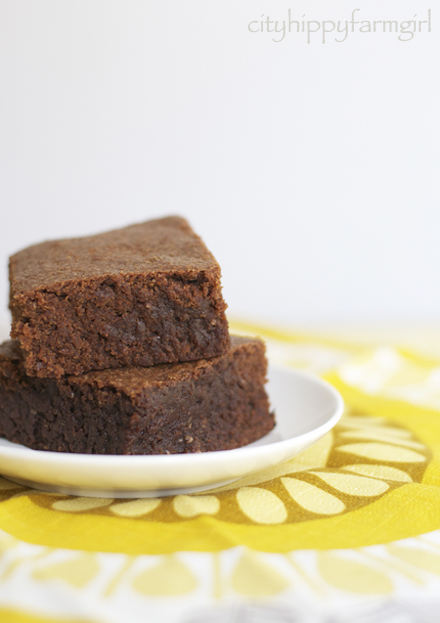
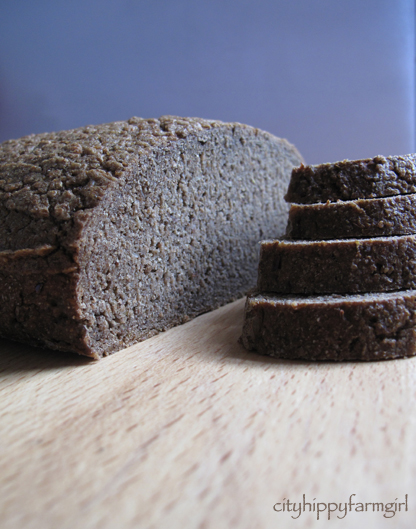
loving that… spelt brownie

speltbrownie

“Often life’s pleasures pass us by simply because we don’t take a moment to focus on them… Make a point of noticing everyday something that uplifts your spirit or tickles your heart… Stop to breathe in the joy of this moment and then tell someone about it. Share your joy and revel in it. When your joy is savoured, and then shared, it is magnified…” ROBIN GRILLE

Weekend get togethers with people that live near and so very far, far away. Time has stretched into years but conversation just flows…loving that.

Deep cups of chai on darkened mornings. Little ones sleep on, just me and my chai and quiet, so quiet…loving that.

Seeing pink faced, sweaty little boys laughing together. Everything is so hilarious… loving that.

Conversations that make you think, ponder, and dig deeper than you would normally venture…loving that.

Seeing her little upturned face to the rain. A joyous smile as rain drops splatter on those soft cheeks…loving that.

Tweaking favourite recipes to incorporate different flavours. Getting the thumbs up from Mr Chocolate, friends wanting the recipe and Monkey Boy declaring me to be the best mama in the world after eating it…loving that.

If anyone else would like to do a ‘loving’ post, (or simply write something in the comments). Please let me know, link back to this post and I’ll do a link up. I would love to know about those little moments in your week that have tickled your heart.

DSC_0306 copy

(For you Karen)

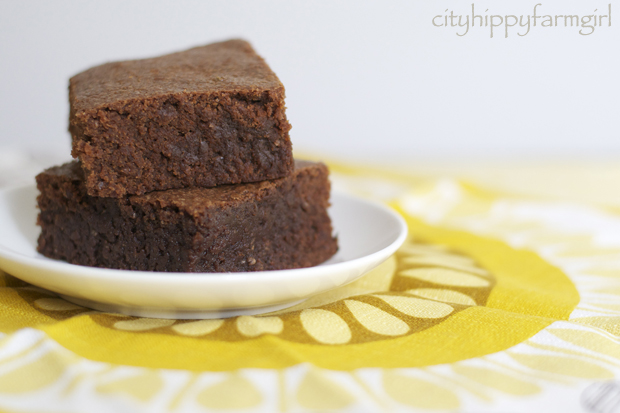
Spelt Brownie

200g chocolate (around about 50% cocoa)

100g butter

100g coconut oil

200g brown sugar

4 beaten eggs

2 tsp vanilla

200g wholemeal spelt flour

In a pot add the chocolate, butter, coconut oil, sugar and vanilla. Gently melt it down and cool it. Add remaining ingredients. Pop into a greased and lined tray.

Bake at 180C for approximately 25-30minutes, and then let it cool in the tin.

**********
Have a look at some of the wonderful food combinations that Kari is loving at the moment.

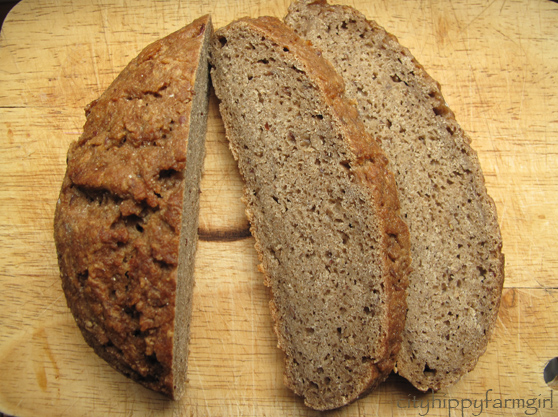
sprouted quinoa sourdough

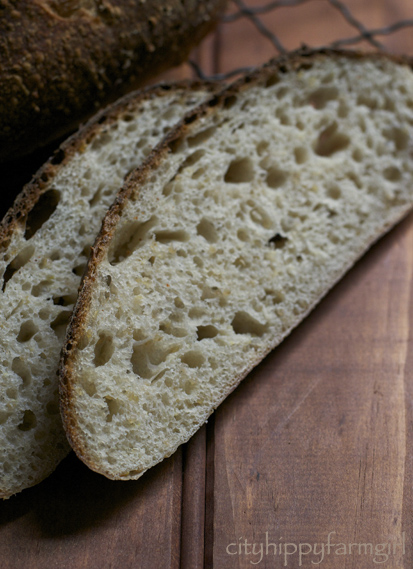
crumb

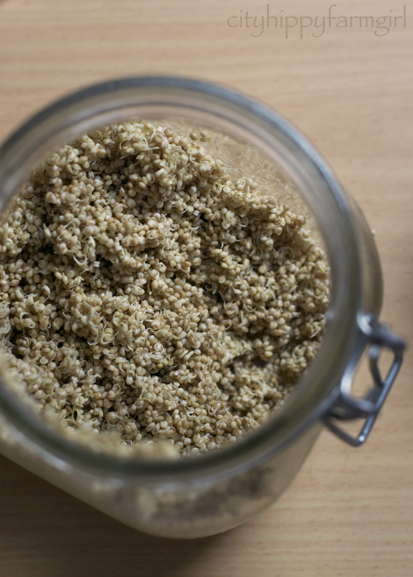
sprouting

The beauty of sourdough is it really is incredibly forgiving. There is no set way that you have to do things. It’s this part that appeals to me, as me and a regular routine don’t usually skip hand in hand.

Fasten it up, slow it down, make it with more water, make it with less water, cook it in a super hot oven, cook it in a slow oven. Leave it for 24 hours in the fridge? Yep, still good to go. Sure with all those changes, it might not have the same delectable taste of the the local sourdough bakery down the road, but your working conditions probably aren’t the same either. Phones get rung, children need feeding, appointments need to be kept and sometimes well, to be blunt you just couldn’t be arsed.

For these many reasons, this is why I love sourdough. It’s adaptable. Pretty much what ever I throw at it, it comes back with a tasty totally exceptable loaf of bread. It might not be winning awards, but it feeds hungry bellies, and it is good and true in a wholesome kind of way.

Putting sprouted quinoa in my sourdough sounded ridiculously wholesome. Thanks to my little friend Instagram, I have a steady supply of inspiring bakers around the world giving me advice, encouragement and all round inspiration that is pretty hard to top at the moment.

Sprouting had been at the back of my mind since I had had some delicious sprouted granola in Byron Bay, and with a steady supply of encouraging pictures via Instagram it was time to jump on board.

I tried sprouted organic brown rice first, delicious. Next up, quinoa it was. Dead easy in our summer, and whoosh… before I knew it they had little tails. Into the bread they went, which  resulted in a lovely moist, chewy crumb.

With a sprouted quinoa sourdough under my belt, now I just have to decide what to sprout next?

sproutedquinoa

Sprouted Quinoa Sourdough

400g starter

750g flour (5 cups)

500mls water

(5 minutes in the mixer)

(30 minutes snooze)

200g sprouted quinoa

2 tsp salt

(5 minutes in the mixer)

(60 minute snooze)

three way fold

60 minute snooze

three way fold and shape

overnight nap of 12 hours in the fridge

bring it back to room temperature

slash

230C preheated oven with steam.

 sprouted

this post submitted to the bready inspiration yeast spotting

making ginger beer…it will put hairs on your chest

That is bloody beautiful…

There had a been a lot riding on that first taste. It seemed I’d passed though, I had passed the dad taste test. My father had many decades before, made ginger beer for several summers of his childhood. Happily filling the garage with his ginger beer bottles, the occasional pop as a bottle exploded and many glasses of bubbly gingery goodness enjoyed. Now it was my time to give it a go.

Last year Mr Chocolate acquired a taste for ginger beer. It was the drink of choice, the bottle to go looking for at the back of fridge. Thirst quenching, refreshing, gingery and really tasty. Of course I wanted to give it a go, I had to didn’t I? If there was another sort of fermentation process to try, I wanted in.

So I researched how to do it, and in doing so, it seemed a bit like making sourdough… 501 methods to choose from. None of the methods I read seemed exactly suited to me, so I thought I would just play and see how it turned out. Several batches in and I think I’m finally at a method I’m happy with.

Ginger Beer

1/2 tsp dried yeast

1 tsp dried ginger

1 tsp raw sugar

1 cup luke warm water

Add ingredients together in something like a large glass bottle. Shake it around a bit. To the top, with a rubber band attach a small square of muslin.

Daily for seven days, adding 1 tsp ginger and 1 tsp sugar each day.

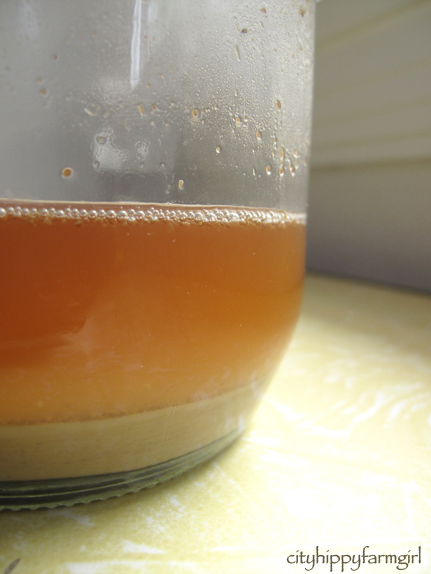
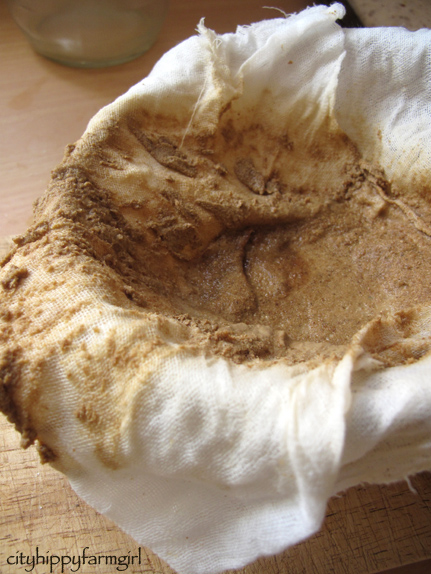
Day eight- strain with a muslin lined sieve, into a bowl.  Using 2 cups of sugar and the  juice of 2 lemons add to the mixture and stir to dissolve. Pour  mixture equally into 2 x 1.5 litre plastic bottles. Top up with tap water, leaving about two inches from the top to allow for gases to build up.

Put remaining ginger sludge (this is called the plant or mother) back into the glass jar with 1 cup of water.

Bottles leave out on the kitchen bench, for 2-3 days (longer in cooler weather). Tip upside down once a day to dissolve any sugar sitting at the bottom. You’ll be able to feel the gases build up by the tightness of the bottle.

Pop into the fridge and chill.

Gingery, sweet and ready to drink.

the nordic return


It had been over a year since I had last made these. A whole year since I had gone all nordic with my reading and eating.

How had a whole year gone by and I hadn’t made them again? Having a baby might have been something to do with it. I got distracted, other things got priorities and slowly time ticked on by.

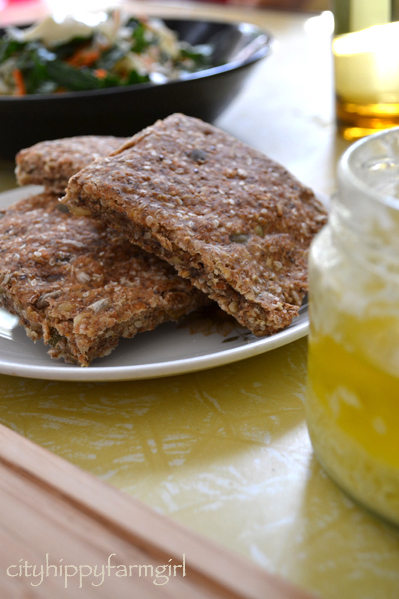
With my recent jumping in to spelt however, it was time to revisit knekkebrod.

These are ridiculously adaptable and now being made continuously again.

Knekkebrod

* I’m not sure how authentic my version is, but they work for me.

1 cup wholemeal spelt flour

1 cup whole oats

1 cup LSA/sesame seeds/pepitas

small palmful of caraway seeds

1 cup water

Mix it all together and flatten out with wet hands, on a lined baking tray. Divide it partially to the size you want them to be- easy to snap after baking then.

Baked at 160-170C until crisp.

******

I’ve also been playing with Cardamom Buns.

A lovely friend married to a Norwegian fella, gave me a recipe for them the same week that Joanna posted about them. I fiddled with the recipe to tweak it a bit to suit me. With the buns baking, I went and looked up cardamom buns in google… 385,000 possibilities! Probably should have done that before I started baking the buns of goodness, as I was a little underwhelmed with how very average mine looked compared to how they could look.

An hour before they were popped in the oven, I had looked at my proving dough all ready to divide and make pretty. I looked, got completely over whelmed with my lack of time, (laziness) and decided a divided slab would be fine. Sure it was fine, but next baking session I think I will try and make them look a little better and allow more time, (less laziness.)

I had also spotted spelt cardamom buns with marzipan thanks to my good friend google. Oh, oh my! Who knew it could be so good?! Spelt…and cardamom…AND marzipan. Clearly I need in on that action. So no recipe for these buns today, but promises of a bun return.

Or perhaps, a nordic return, (again.)

autumn

a changed beat

different air

cool nights and sunny days

autumn is here

along with school holidays

long walks in the park

the crackle of brown leaves under foot

perfect to build up and then run through

changing colours, changing light

changing rhythms

long days and aimless running

 need lots of snacks

healthy ones

Tahini Balls

1 cup whole oats

1 cup desiccated coconut

1/3 cup unhulled tahini

1/3 cup honey

1/3 cup hazelnut meal

1 tsp vanilla

sesame seeds

Mix it all together, add a couple of tablespoons of water just to bind it. Roll into balls with dampened hands,  then roll in raw sesame seeds. Keep in the fridge.


Limoncello

With my recent run of lemons, Limoncello was in the air.

Limoncello is a lovely Italian lemon liqueur, that is best drunk icy cold. Store the bottle in the fridge and pop your glasses in the freezer just before drinking. Before making it, I did a bit of reading through the internet. Trying to find a recipe that sounded authentic, and not too much of a pain to make. I couldn’t decide on one particular one, so I thought I would combine them all together and go with what suited my time frame.

So was it easy and did it work?

Easy yes. Did it work, I really don’t know. I’m not drinking any alcohol at the moment so my usual taste test was passed over to Mr Chocolate. He keeps asking for a glass full at night time, so I think it got the seal of approval. It certainly smells like the real deal, and I have a sneaking suspicion I’ll be making more sooner rather than later.

Pop them into some smaller glass bottles and they will make a lovely homemade Christmas gift.

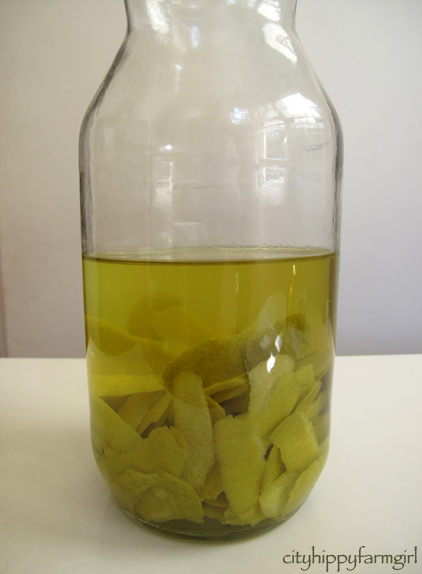
day four- vodka and lemon rind

Limoncello

8 medium sized organic lemons

750mls vodka

400g sugar

250mls water

100mls strained lemon juice

Soak organic lemons in hot water for about half an hour, clean them thoroughly. Leave to dry and then with a vegetable peeler take all the skins off and pop into a large glass bottle or jar. Don’t use any of the pith as it will become bitter. Once peeled, lemon juice can be used for lemon cordial or curd. Alternatively store the lemons in the fridge for later use. Add the bottle of vodka and secure the top. Store bottle in a dark spot and daily give it a bit of a shake, making sure all the peel is moved around.

I did this for nine days and then added the lemon sugar syrup.

In a pot boil the sugar and water together until it thickens a little. Keep stirring, the whole time, as it can bubble over, or become too thick quickly. Once mixture has thickened, turn off the heat and add the lemon juice.

Cool completely (you don’t want any of the alcohol to evaporate) and then add to the vodka mixture. Top on tightly again, and back in a cool dark place. Once a day, give it a swirl and mix it up a little.

Day sixteen, I strained the mixture of all peel, using a muslin lined colander. Handed some to Mr Chocolate to do a little taste test. He thought it was more lemon cordial to try, and drank it quickly. Really quickly… that was funny.

Limoncello is best drunk ice cold. Keep the bottle in the fridge and chill the glasses before hand.

Dark Chocolate Espresso Brownie Parfaits

Something odd happened recently. I had read a post from the delightful Rufus’ Food and Spirits Guide on brownie parfaits, and how there had been some brownie lurking in their freezer to make these up. They certainly looked delicious, but I have NEVER had brownie in my freezer, and probably wouldn’t be having any in there in the near future. Idea pushed aside….

Several days later and I wanted to bake something to take to an important meeting full of important people, as a little thank you. What to bake?….How about brownie? (See the brownie seed had been planted.)

I wanted to make dark chocolate espresso ones, and started baking the afternoon before…. Oh snap, crackle, pop. No eggs! But it’s too late, I’d already done everything except for add the eggs.

Bugger…

Hmmm, ok, eggless brownie seems to work (after a quick scan of the internet) let’s cross eyes and hope for the best. Baked, cooled, cut….and crumble. Loads of crumbles. I think with the high cocoa content I was using with the chocolate (72%) combined with the no eggs, it just wasn’t going to happen.

But, said crumbly brownies would be perfect for say…parfait? Which is how I came to have brownies in my freezer.

A frantic call out to Mr Chocolate for eggs on the way home from work and I made up the brownies again in the evening. This time lowering the cocoa solids percentage (50%) and adding the eggs….ahhh, much better. No crumbles, and everyone at the meeting the next day happily emptied the brownie container, leaving a smattering of satisfied crumbs.

Dark Chocolate Espresso Brownie Parfaits

Layer your glass with brownie (eggless and 72% chocolate or otherwise)

Add mascarpone layer (250g mascarpone, 2 tsp vanilla, 1/4 cup icing sugar, a splash of milk- whisked together)

Thinly sliced strawberries

Eat with enthusiasm and a small spoon.

* I’m not sure that this actually fits in to the definition of parfait, but the alternative was to name the Dark Chocolate Espresso Brownie, layered Mascarpone and Strawberry Thing….

…parfait it is.

Dark Chocolate Espresso Brownie

250g dark chocolate (50%)

250 butter

60mls espresso coffee

2 tso vanilla

200g brown sugar

150g plain flour

50g s/r flour

4 beaten eggs

In a pot, gently melt the butter and chocolate. Turn off and add the vanilla, coffee and brown sugar. Cool a little, then add beaten eggs and fold through flour. Mixture is runny. Pour into a greased, lined baking tray, (23cm-ish) Bake at 180C for approximately 30 minutes.


Lemon and Rhubarb Pie

Tarty. Very tarty.

Not in a fishnets, leather and red stilhetto kind of way. More eye squinty, and lip smackable. Just the way I like it.

When I cook, I usually have someone in mind, with whom I’m trying to appeal to their taste buds. Fried rice, with all the vegetables raw and lined up on the side, that would be The Monkeys. Pasta after a really busy day at work, with floating double smoked bacon, followed by two blocks of his favourite chocolate? Well clearly that would be Mr Chocolate.

This time around though, and it was all about my taste buds. I had pie on my mind, rhubarb in the fridge and a bench full of backyard lemons that were all yelling one thing to me. Make me into something delicious!

So I did. Something for me and my tastebuds. A little selfish? Oh hell no. They get enough Monkey friendly, Mr Chocolate friendly things to eat. Of course they were more than welcome to eat the tarty fruity pie in front of them, and if they didn’t like it… well, not much of tragedy there really is there?

Little Monkey tried it. Monkey Boy tried it.

Both scoffed it down and would like another piece please. Oh…didn’t quite make it tarty enough now did I.

Mr Chocolate tried it, and did the eye squint I was expecting from him, yep, it’s good, but you know it’s not really my thing… thank goodness for that.

Now I just had to muscle the two kids out of the way for that last piece.

Lemon Rhubarb Pie

Pastry

200g cold cubed butter

300g plain flour

110g natural yogurt

50g sugar

1 tsp white vinegar

In a processor add flour, sugar and butter. Pulse until resembles bread crumbs. Tip into a bowl adding the remaining ingredients, mix together and then give a quick  knead on a lightly floured surface then cover and pop into the fridge.

Rhubarb

1 bunch of rhubarb

100g sugar

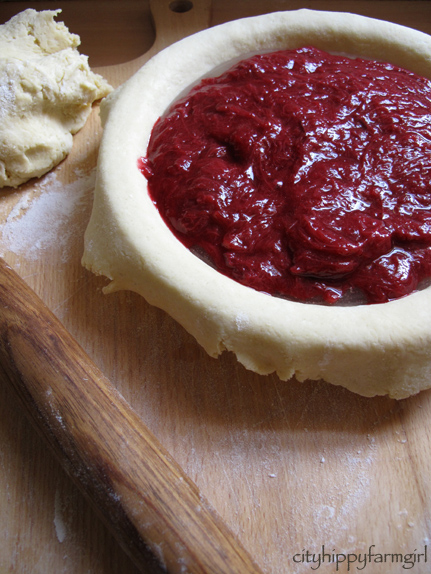
Trim edges, and cut into equal lengths, pop in a pot with the sugar over a medium heat, and cook until rhubarb has disolved to rhubarby mush. Put aside.

Lemon mixture

100mls lemon juice

1/2 cup sugar

2 tbls cornflour

100mls water

Mix cornflour and water together, then add to remaining ingredients in a pot. Whisk over a medium heat until mixture thickens.

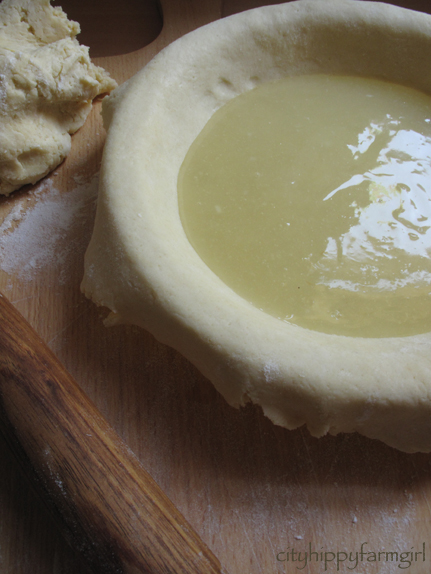
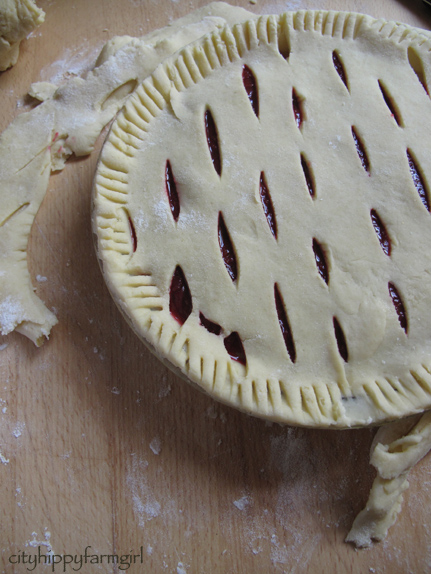
Roll out your pastry on to lightly floured bench, and then line a greased pie dish with it. Layer the lemon mixture on, then the rhubarb. Roll out a second pastry top and slit it, gently pulling it sideways to open up a little. Press down the edges and bake at 180C for about 50minutes.

slowing it down to eat some rye bread


Sourdough is not a quick process. It’s slow, likes to amble. Take its time. Focus it’s energy on the job on hand and then gradually release all of that sourdoughy goodness. Especially slow in winter. I don’t mind though. I’m in no hurry. The bread and I have no place special to be, and if I did…well the bread can wait. Sourdough is like that. Occasionally moody and a little flighty, but regularly reliable, and keen to just make peace with what ever is happening. I like that.

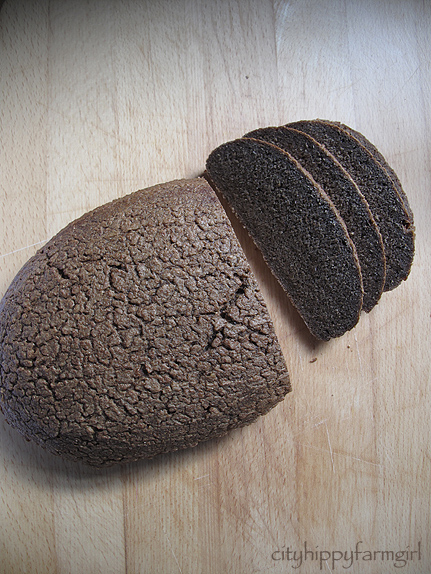
I had started with a 100% rye from Dan Lepard’s The Handmade Loaf. I took my time, didn’t hurry it along. It turned out ok, but I wasn’t thrilled. Mr Chocolate had mistakenly washed up my 2 tablespoons of crucial gelatinized mix to go on top of the loaf, and it all looked a little too floury. I had been nervous about putting the sticky mass dough in my banetton, so had floured a teatowel to line it instead. The loaf just came out looking like a floured teatowel though. Never mind. I’ll try a again.

Trial one

Second time around and I thought I would tweak the flavours a little. I wanted a more in-depth flavour, and also banished Mr Chocolate from my gelatinized mix at the crucial time. Flavour was better, and I didn’t bother with a banetton, just freeformed a rough round shape and pegged the sides of the baking paper to cradle and support it a little. It did rise, the top looked a little glossy, and several cracks developed while rising…. but it wasn’t quite there yet. What was missing?

Trial Two

Third time around, and the weather was cold. It certainly was going to take longer than the 5 hours recommended to let it rise. Once baked, I left it for 48 hours wrapped in baking paper before I cut into it. This really did seem to help in the development of the flavour, but….

Trial three- it’s getting there. The flavour was certainly there, but not quite there yet…

Fourth go. It tastes good.

I’m done.

Trialing and tweaking I’ve enjoyed doing, but I still find it a bit of a pain to make on account of it being so sticky. The taste is there though. It was really cold the day I made this one and it certainly didn’t double in size. It was a loooong cool prove, probably 12 hours on the bench all up plus 12 hours in the fridge. I’m still sticking with the hand shaping and laying on bakers paper rather than a banetton, I didn’t bother checking the temperature of the boiling water asper Dan Lepard’s instructions, (things aren’t that slow round here.) Just whisked when it’s boiled. I also think wrapping it afterwards is very crucial. The taste is a light sour, really tight crumb and I think the linseed and dark malt flour I added give a bit more depth, to which I like.

It’s filling, it’s good for you, The Monkeys won’t have a bar of it, and that suits me just fine. I can eat my way through it… slowly.


My changed ingredient list is as follows, for the method and some other invaluable notes on Dan Lepard’s more original recipe- jump over to Zeb Bakes. The lovely Joanna made this a little while back and it was really interesting to see what she thought of the same recipe.

100% Sour Rye

adapted from The Handmade Loaf
300g rye starter
75mls cold water
450g gelatinized rye mix
400g rye flour
1 1/2 tsp salt
1 tsp cardamom
1 tsp dark malt flour
50g (1/2 cup) linseed meal, or LSA
gelatinized rye mix- 90g rye flour and 360 mls water
**********
The night before make up the gelatinized rye mix, using just boiled water and whisking flour in immediately. Leave two tablespoons aside for the top of the loaf. Whisk cold water into thr rye starter and then also whisk in the gelatinized mix. Then add remaining ingredients.
On to an oiled surface, try and squish it into the shape you want. Smoothing it round and leave it for 5 (ambitious for me)- 12 hours on a baking paper cradle or banetton. Until it’s risen a bit anyway.
Spread the remaining gelatinized mix on, spray with water and pop in the oven at 210C for about 50 minutes.
******
This post submitted to yeastspotting.

how to make bread, for the person who thinks they can’t…but really they can

This is, (I hope) a really basic way to start making your own bread. It’s an adapted version of the Bourke Street Bakery cookbook olive oil dough. I’ve used it a whole bunch of times, and it’s always reliably delicious.
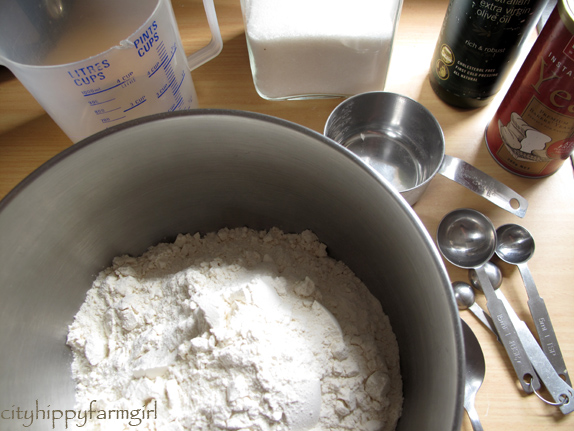
 You will need.

600g flour (4 cups- I use strong bakers flour)

2 tsp dried yeast

400mls tepid water

 3 tbls olive oil

2 tsp salt
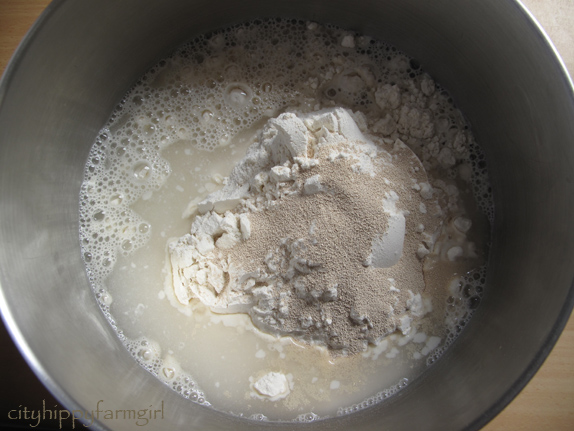
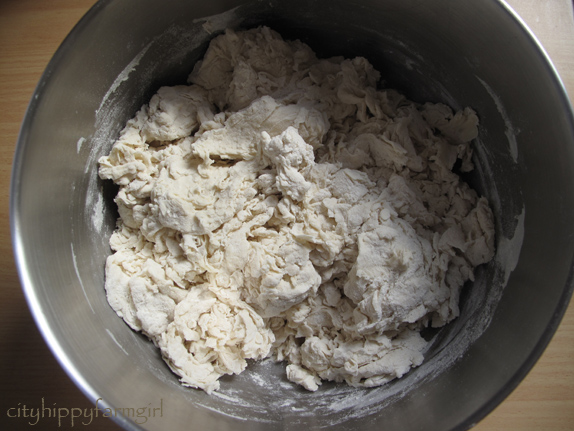
In a large mixing bowl add the, 600g flour, 2 tsp yeast and 400mls water. (The slight warmth of the water will kick start things, don’t use hot; you’ll kill the yeast.)

 mix with a spoon until it all comes together. It will look a little dry and unlikely.

Now leave it for 10 minutes.
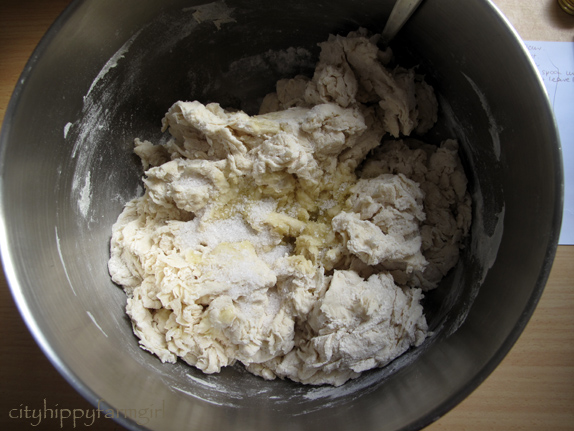
 The dough looks and feels a little different. It’s been doing its thing for the past 10 minutes.

It will feel softer and more workable.

Now add 3 tbls olive oil, and 2 tsp salt
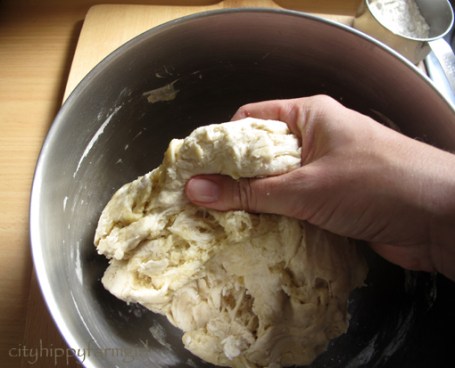
 Mix it through with the spoon initially, for about a minute and then by hand. You will be able to feel it coming together. Now tip it out on to a bench and knead. (I don’t find with this recipe I need a floured surfaced area, but it may depend on the type of flour you are using. If it’s sticking, lightly flour the surface and your hands.

Work the dough until it comes together as a smooth, stretching mass (or use a mixer with dough hook). You want it to feel elastic.
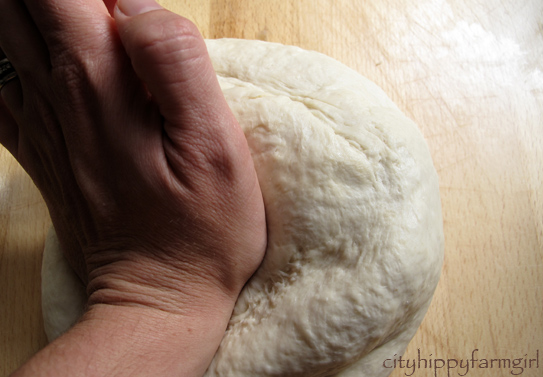
Use the heel of both of your hands for kneading. Finger tips flick the dough up, and heel of hands push down.

 When the dough is soft and smooth, it’s a happy dough. The kneading will probably take about 10 minutes.

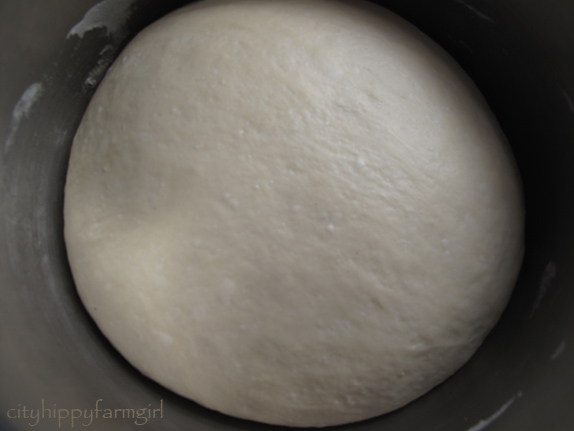
Then pop it back into the mixing bowl, (or a lightly oiled clean one, I just whack it back in the grubby one though) with some plastic wrap (or a shopping bag/wet tea towel) over the top. This stops it from drying out. Let it prove for 30+ minutes.

If the dough is in a warm spot (about 26C) it will just need the 30 minutes, if cooler, it may take longer. If it’s soft, and springs back when you poke it, it’s ready to be folded.
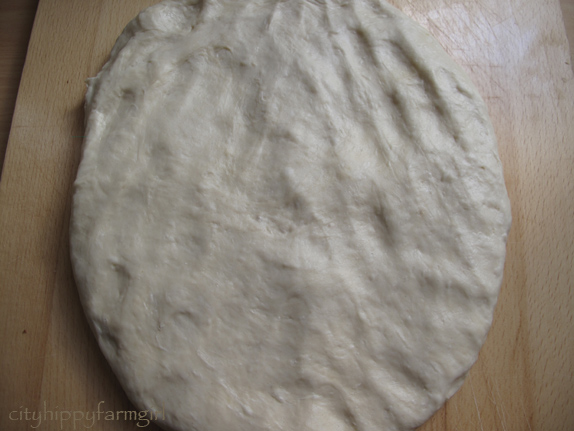
 Pop it out on to your work surface and roughly flatten it. Using your finger tips.

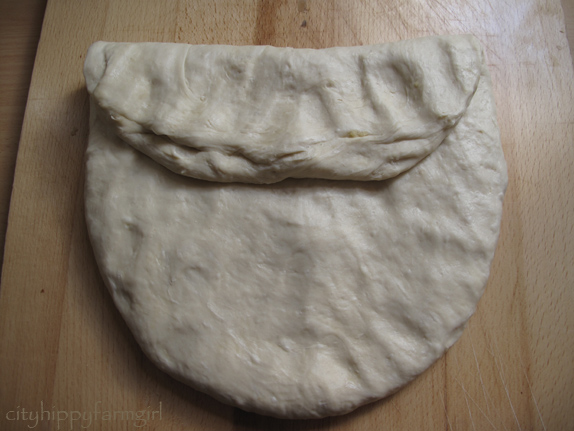
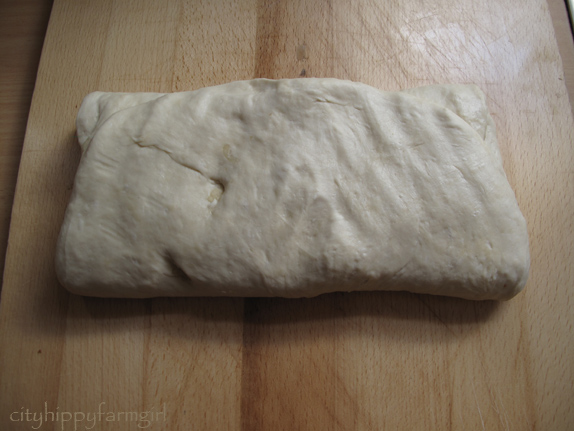
 Fold one third over

Then the other third over. Turn it 90 degrees, and fold it to thirds again. Pop it back in the bowl.
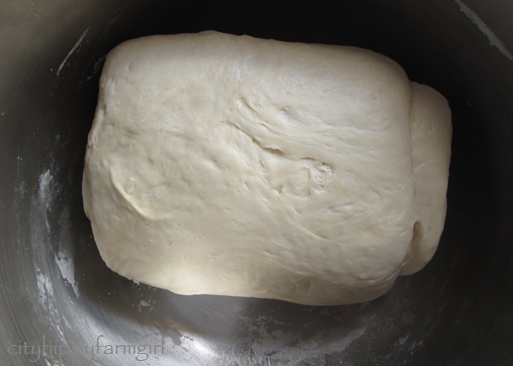
 looking kind of square

Another prove for about 30 minutes, (longer if it’s colder).  Then get it out and press the dough down on the working surface area and shape. Or…
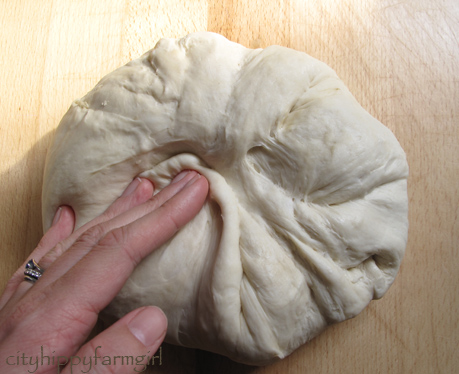
Take the ball of dough out of the bowl and place on the bench. Pulling a side of the circle, and dragging it into the middle and press down. Keep going until you have gone all the way around. Then using one hand to do the same process with the heel of your hand, (side to the middle) and your other hand turning the disc. This process can be used instead of the folding after the initial prove or it can be a way to do a final shape.
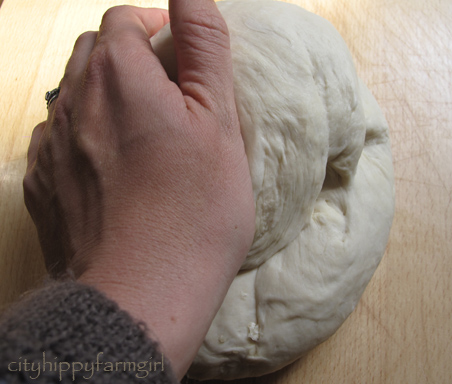
 In to the middle.
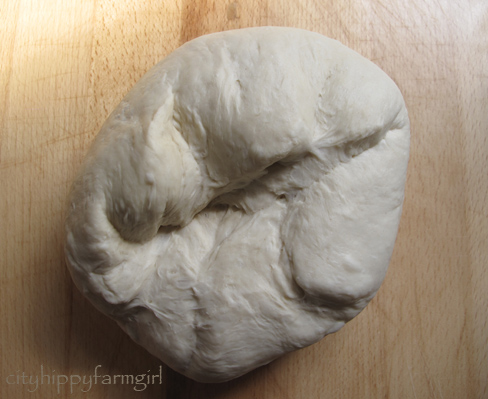
 Looks like that
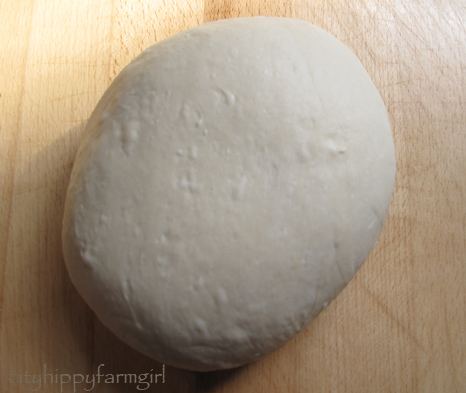
and then flick it over. Should be smooth and round. Once you’ve got the shape you want, pop it on an oiled tray (or a tray lined with baking paper) cover it with a plastic shopping bag and leave it to prove again in a warm spot. Should have risen by about 2/3 and feel/look soft and pillowy. This can take 30+ minutes.
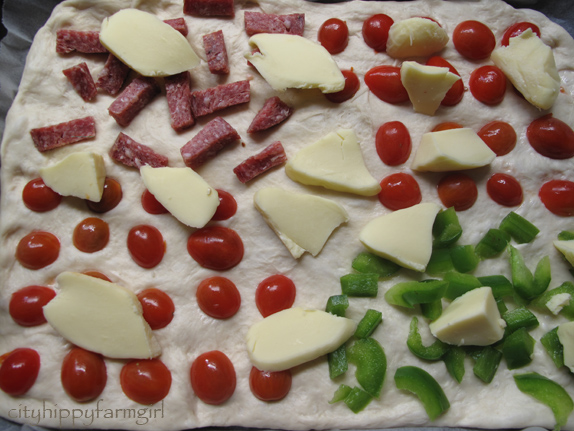
This dough can be  shaped into just about anything. I used it as a foccacia base here, but have used it as a fish, mermaid, sunflower, grissini and bread rolls.
Bake in a pre-heated oven at 240C with steam. I use a water squirter bottle for the steam. 20 squirts in the crack of the door once you’ve popped the bread in or you can use a little dish of water at the bottom of the oven when you turn it on. Baking time depends on the shape you have made. Bread is cooked when dark golden in colour and sounds hollow if tapped.

*****

 The trick with bread is, you just have to practise. Make it, and if there are any problems, write down what they are so you remember for next time and can change it accordingly. I watched my mum make bread my whole childhood so absorbed how to knead it just by watching. If you have never played with dough before though, it might seem a little daunting.

Play with it.

At worst, they will be stone hard burnt unsalted bricks, (and I’ve certainly made my share of them before). Most likely though, they’ll be delicious, and you’ll never want to buy shop bread again.

Books to make you want to play further

Bourke Street Bakery

The handmade loaf

River Cottage handbook- Bread

Online

The Fresh Loaf 

Dan Lepard

Wild Yeast