Blueberry Jam

Blueberry Jam

500gms blueberries

250mls water

bring it to a simmer

now slowly add

500gms sugar

1/2 lime juice

stir

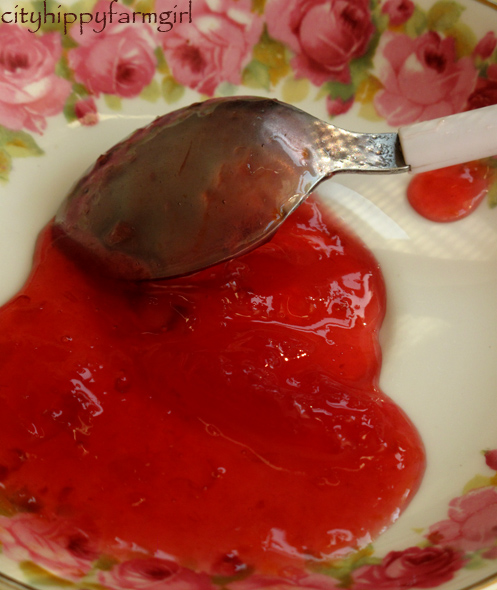
a slow rolling boil until the jam thickens and passes the saucer test.


So what is the saucer test? Grab a small saucer and pop it in to the freezer while your jam is cooking. If you keep casting your eyes over the cooking jam, you will start to see the consistency changing, it will start to look like a thicker rolling boil. If you think it has started to thicken, get the cold saucer out of the freezer and dollop a small spoonful of jam on to it. Swirl it round a bit, and (hopefully) you will see that it has thickened up. Try running a finger through it. If it’s ready it will wrinkle a little and feel thicker.

Coconut Eggplant Curry- Frugal Friday

Coconut Eggplant Curry

In a pot add

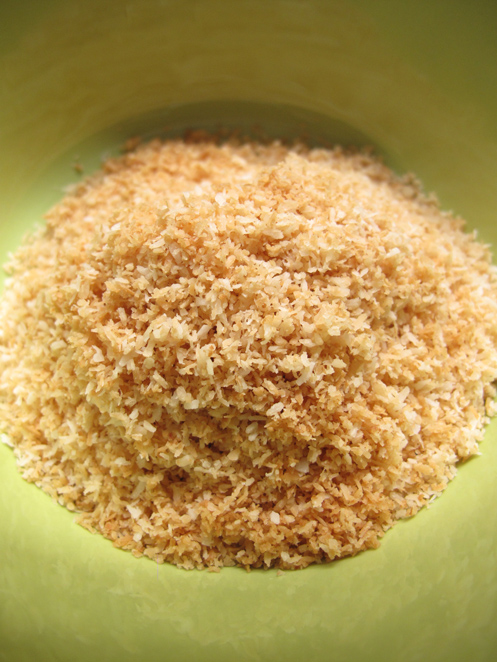
1/2 cup of desiccated coconut, dry fry it until golden coloured and pop in to another bowl.

In your pot add

vegetable oil, diced garlic, onion, knob of ginger, dried coriander, cinnamon, cumin, tumeric.

Cook it up until it smells fantastic.

Now add a diced eggplant, a can of tomatoes, a can of coconut milk or cream, your dry fried coconut and 8 kaffir lime leaves.

Leave the lid on and let it simmer until the eggplant has cooked down. Salt to taste.

Serve it with rice, a squeeze of lime or flat bread.

This recipe was originally a beef curry from The Real Food Companion. I’ve morphed it quite a bit now though so it barely resembles its parentage. The key to the curry is the kaffir lime leaves. I’m lucky enough to get them fresh from my dads tree, which I then stock in the freezer so I always have them available, (they last for months.)  If you don’t have access to these wonderfully fragrant leaves, lime zest could be substituted, or perhaps some other citrus type leaf (?)


Honey Oat Sourdough

I want to be a bread geek.

I want to know everything there is to know about yeasts, and flours. The whole process fascinates me. Every time I pull a loaf out of the oven I am amazed at what I have before me. Particularly the wonderful beast that is sourdough. Every loaf is different, each one with it’s own little personality. I want to play with so many different ingredients, then pull it all together into a simple loaf.

Will I ever get to be a bread geek?…I don’t know. My small to medium sized brain seems to struggle with the why’s, how’s and when’s, but I’m slowly getting better. I know I’m geekier than 8 months ago, when I first started on making my own sourdoughs. I also know there is a lot more to learn. I guess that’s all right though…

Bread is a fairly forgiving staple, my family all enjoy the experimenting and I get to muse on the next concoction of dough that I will play with. Wondering on the how, where and when of the loaf coming together, and  loving every part of it.

Pepper the conversation with hydration levels, protein percentages, lames, banettons, biga, poolish, wild yeast, epis and my interest will immediate be sparked. All words that less than a year ago I would have smiled politely and wondered what language you were speaking, as I hadn’t the foggiest idea what you were talking about.

I can put Mr Chocolate to sleep with my constant mutterings and musings when trying to nut out the next bready dilemma I’m having. Lying in bed I’m trying to juggle flour ratios and proving times, while he quietly says the occasional uhuh…and heads out to sleep land. I only realise he has stopped doing his job (being the sounding board that I like him to be), when my question of what do you think? Is greeted with eyes closed, soft nose whistles and the odd body twitch.

Leaving me to my own bready geek talk.

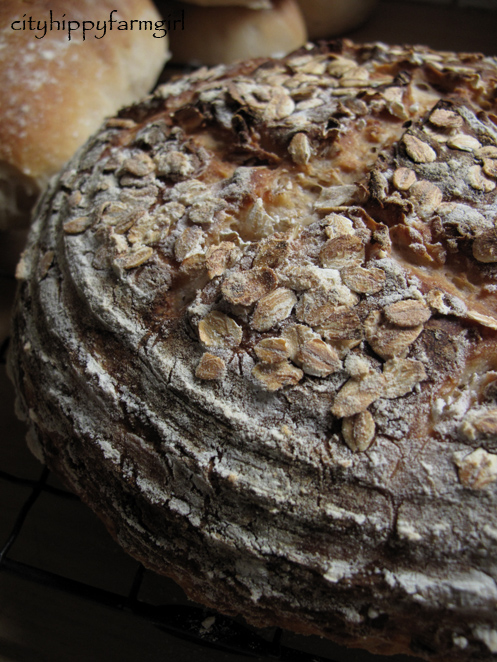
Honey Oat Sourdough

200gms starter

1 1/2 cups strong bakers flour (225gms)

1 cup whole rolled oats (I soaked these in 1/2 cup hot water first)

150mls water (approx)

2 heaped tbls honey

1 tps salt

Mix, prove, fold, prove, shape, long slow overnight ferment in the fridge, bring it back to room temperature. Slash. Bake at 250C with steam.


This post is submitted to the wonderful yeastspotting.


milk and ricotta

I recently bought unhomogenised milk. It had been so long since I had last seen it, that I just stood there and marvelled at it. A layer of cream sitting on the top, the  colour, and the little molecules of fat sitting on top of my tea. It really was worthy of marvelling at…sitting quietly looking into my tea with a contented smile and a slight raise of the eyebrows.

So what does homogenised mean? In a nut shell, it means it’s all been mixed up. All the fat and the milk has been mixed together, so when you buy it, it just comes out straight and white. Why is most milk homogenised? Because it looks better…and that’s the only reason.

There is a lot to be said about really great fresh milk. There is also a lot be said about inferior milk that is sold at really cheap prices.*  Availability is our problem. I can’t always get to somewhere that sells different brand milks. It’s frustrating that the leading super market brands don’t have much variety happening in their milk section. Especially as one of our leading generic brands smells and tastes like mouse. I thought I was the only one to imagine it, but a friend backed me up. Sipping on some milk some time ago and all I could think about was long pink tails, and tiny furry bottoms…No mousey milk for me please.

Looking at my unhomogenised milk, pondering on all the milky goodness I could be making from it. Cheese, yoghurt, ice cream, scones, breads, all using some form of the milk…

Next up I wanted to try making ricotta. Following The Real Food Companion instructions I had my lovely milk (Over the Moon), sieve, white vinegar, pot and wooden spoon all ready. I didn’t have two litres of milk so I quartered the recipe. I knew it wouldn’t result in much but as a first run, I didn’t want to waste a drop of the good stuff either on any mistakes. 500mls of milk in the pot, bring it to a foam (or 90C, not yet boiling) and then add 2 teaspoons of white vinegar to create the curds. There was a little bit of curdling action, but not a lot. The whey hadn’t separated enough. Frowning in to my pot I decided to heat it up again. 1/2 a tps more?…oops my hand slipped, make it 1 tsp more. A little gentle stir and instant separation. Ahhh, that’s better. Gently scooping it out to some muslin and a sieve, I’m left with ricotta. Really, rubbery ricotta…

Checking with the local cheese bloggers Gavin and Christine, I try to work out what I did wrong. Too hot? Too much vinegar? It tasted ok, but it really was a tad rubbery. I sat on it for an hour or two and then decided that I would try it again, other wise it would bug me all day.

Second go. Left it at 2 tsp of vinegar, different milk this time and just a fraction longer on the cooking time. We are talking extra seconds cooking time, that’s all. Those extra seconds made the difference. It was softer, more delicate, and really good….and really quite easy.

(The whey that I was left with, went into some sourdoughs.)

Third time around and I’m definitely getting the hang of it. I can’t believe how easy it is to make and how I hadn’t done this before. I’m also struck by how so many really easy recipes have fallen by the way side in order for things to be convenient for people. Such simple meals that can be made with so little ingredients, if only people knew how. This is the sort of conversation topic that could be passed back and forth over and over until the cows came home, milked themselves and made their own ricotta… but for the sake of airing a little, I’ll continue.

These simple cooking lessons that could be taught to another person in an afternoon seem to be quietly slipping out the door. Things like yoghurt, ricotta, labneh, mascarpone, sour cream, butter and all their lovely by-products, are simple to make and yet they can be quite expensive to buy. Not to mention all the plastic tubs that you are buying along with the products. Some would argue that they are recyclable, and yes they are. But if you can spare an extra 5 minutes to make a kilo worth of yogurt, than you have just saved 52 plastic kilo tubs of yoghurt per year, (going on a kilo a week, even more if you are eating daily individual tubs.) Visualising how much that would be for a single person  or a family, in a life time is….sobering. No more plastic tubs and saving a fair whack of money to boot.

Maybe a reason to go give someone a dairy cooking lesson?

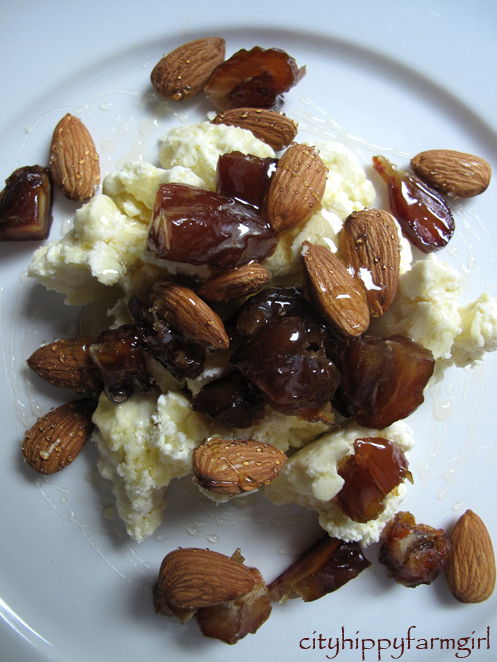
What’s for lunch?

Ricotta

raw almonds

chopped dates

drizzle of honey

* For more information on Australia’s cheap milk problems please read here.

** For a different way to make ricotta and using goat milk, have a look at Linda’s The Witches Kitchen.

summer loving jam


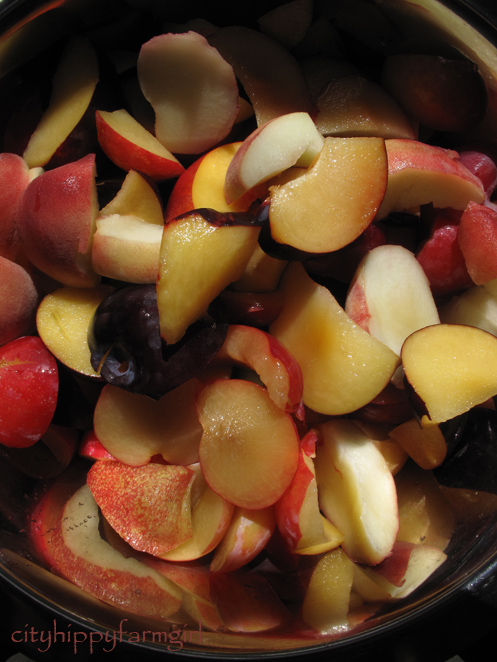
I don’t know if this was the best name for the jam. It’s been such an odd summer. Bakingly hot this week, a huge cyclone hitting the country and catastrophic flooding in recent weeks. The middle of the night being woken by the smell of a fire, it’s certainly been an odd summer. Fruit and vegetable prices are set to increase due to the natural disasters effecting so many farmers, so I actually feel kind of lucky to be able to even make this jam. To be in a position to cook up and store some of summers beautiful stone fruit offerings. Eaten mindfully and enjoying every spoonful that’s for sure.

Jam really is so easy to make. It’s been said countless times before, but it really is such a great way to preserve the season.

Equal parts sugar to fruit, (generally) if needed some pectin of some sort. Cook it up until it thickens and hey presto, done.

Summer Loving Jam

plums- two kinds

peaches

nectarines

juice of one lemon


ratio

1 kilo fruit

1 kilo sugar

500mls water

I just roughly chopped the fruit and then gently with a hand held mixer, blitzed any big lumps. If you don’t have that, cut it finer, (or enjoy your lumps.)

Cooking at a rolling ball, until cold saucer test stage. In to sterilised jars and store.

chevre, it’s a little bit goaty

I’m having a bit of a goaty moment. Not the whiskers on my chin kind, but goat cheese. Otherwise known as Chevre. I had tasted a few really great goat cheeses while I was in Tasmania and I wanted to continue the love when I got home. However, I didn’t want just any old goat cheese. I wanted to see if I could find a great local one. A quick search, and hey presto…I found Willowbrae.

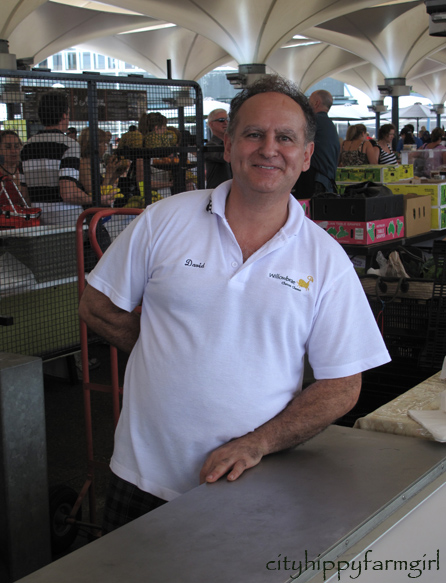
Willowbrae is a family run goat farm, based at the foothills of the Hawkesbury Valley. They produce a number of products; from an unsalted 8 hour cream, the very popular fresh curd, marinated fetta, and mould ripened cheeses.  Talking with David (at Fox Studio Farmers’ Market) who runs the front and back end of the business, (as he described) he milks the goats twice a day, while his wife and daughter do the cheesemaking.

The more I try of goat cheeses, the more I like. The very popular fresh curd is subtle, creamy, and really soft on the palate. I find this kind of cheese is really versatile to play around with. Whether it’s teamed up with a savoury style dish or something sweeter.

So what does Chevre mean? It translates as goat in French, and is a generic term used for any goat cheeses. Musing on this I wondered if Italians called Chevre…well Chevre. Apparently not. Caprino is their term for goat cheese. Again derived from the word capra, meaning goat. I kind of liked the sounds of caprino. (But then as many people before me have said…everything sounds better in Italian.)

Back to the Chevre. Where to buy some of Willowbrae’s delicious cheese? See here for market days and times.

And what to do with it once you have the tasty little goat milk goodness in hand?

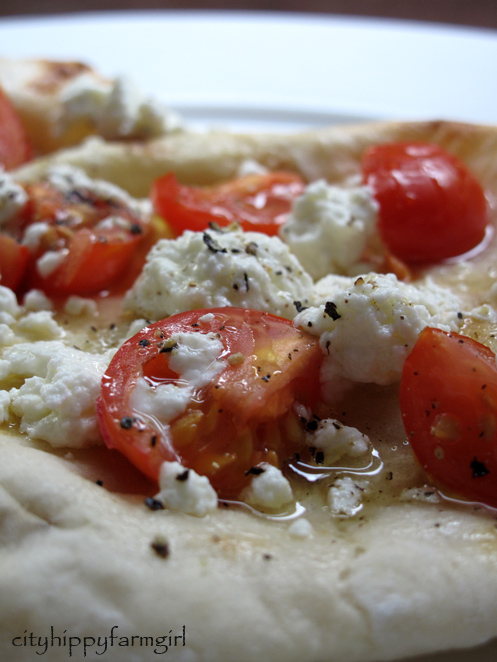
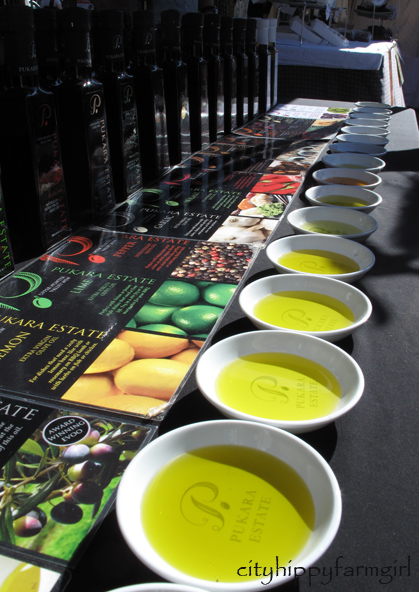
First up, I quickly made up some sourdough flat breads. Some of my dad’s garden cherry tomatoes, (the sweetest I’ve tasted in years.) Some of the creamy chevre, and a drizzle of The Little General’s olive oil.

Simple, I know where it all came from and damn tasty.

How to tell a farmer you love them

Farmers’ Markets. I’ve said it before and I’ll probably say it another 5000 times.

I love them.

Having that contact with the growers and producers makes the food taste so much better for it. Knowing that my rhubarb was picked the day before. My milk comes from a single herd, and my tomato comes from an heirloom variety thrills me to bits. (A feeling I don’t tend to get coming out of the supermarket.)

Visiting Orange Grove Farmers Market recently I was actually quite excited to see the place had grown since I was last there. At 8.45am the place was jumping. Baskets were emptying, queues to pay were forming and independent stall holders were all doing their thing.

With the recent devastating floods around the country, I feel this is the time to make that special effort to support our local producers. By shopping like this I am showing my support for what they do. Giving them some love in the form of our dollar. For an idea of what it is like as a farmer on the other end please read Kate’s, (from Daylesford Organics) recent post. I can’t begin to imagine how hard it must be.

Buying straight from the producers gives you a freshness that just can’t compete with buying in a supermarket. That oddly misshaped heirloom tomato the size of a babies head, you are not going to find it in your leading supermarket. Tasting of summer, with seeds squirting down your chin. Team that up with some locally made cheese and you are in business.

Heirloom, natural, organic, single herd, artisan, picked yesterday, seasonal, fresh, locally grown….it’s all there, just go take a peek. Our job is the easy one, go that extra kilometre, pay that extra dollar and show them your love.


picking your own blueberries

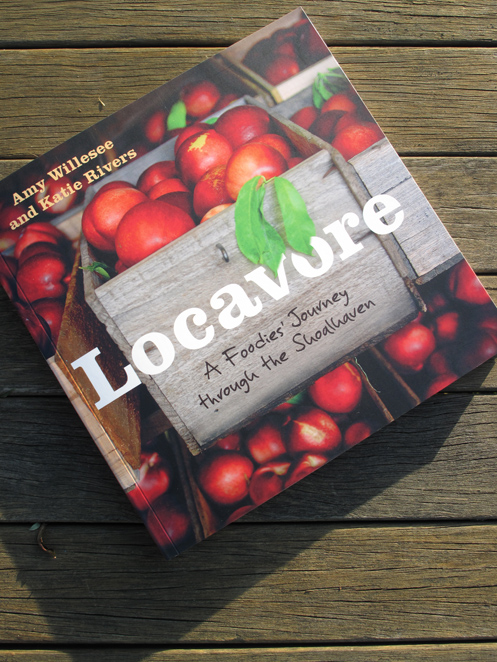
Standing in Berry Sourdough Bakery, waiting for coffee. My eye catches sight of a rather enticing book; Locavore, A foodies journey through the Shoalhaven. Hello, what have we here?..The Shoalhaven is an area that sits just south of Sydney, and according to this book there is a whole wealth of wonderful food deliciousness just within reach. Now I already knew of a few, but to discover more? Well, I had to buy the book didn’t I?

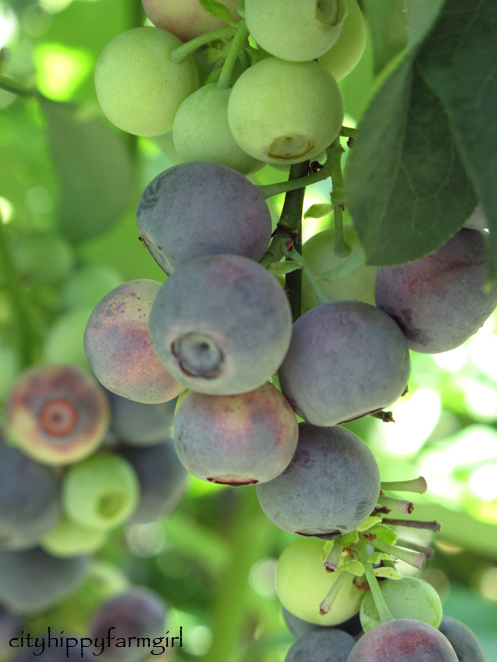
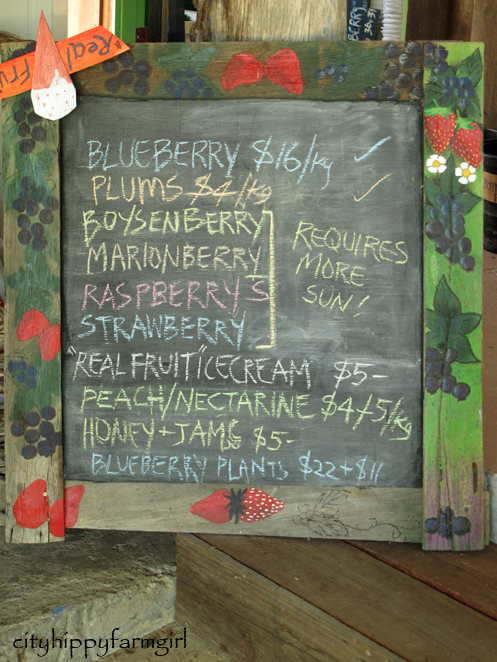
One of the places mentioned is Clyde River Berry Farm. A place where you can pick your own fruit. Primarily a blueberry farm, it also has a variety of other berries, peaches, plums, nectarines, honey and jams.  A slight detour on a dirt road and we were there. Obviously very popular, as the place seems to be rather busy. It’s bakingly hot, the middle of the day and we still had a long way to drive with The Monkeys. We wander through the orchard rows, picking blueberries, nectarines, plums and peaches as we go. At least now, we had something to munch on in the car.

Munch we did. It was so lovely to be able to taste fresh fruit. Really, fresh fruit. Selected by the grubby paws of Little Monkey and Monkey Boy, nothing could be finer.

Some Blueberry tips:

* Let the berries stay on the bush for a week once ripened.

* Once the fruit has been picked, it can stay in the fridge for up to a week plus.

* If still uneaten after a week, can be easily frozen.

* Don’t wash them first before freezing, as they won’t defrost well.

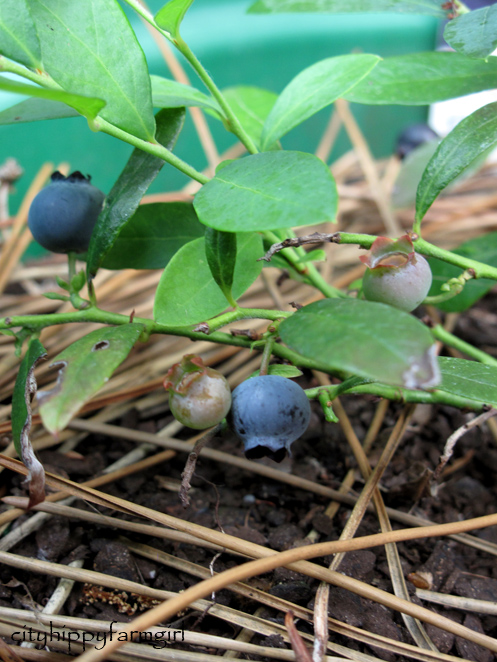
Awhile ago a reader suggested I try growing blueberries after hearing of my rather dismal gardening in pots effort. The next week I went out and bought a bush. I still haven’t killed it, (hooray!) it seems to be quite happy in a pot, no critters have demolished it, and I have now tasted my very own blueberries from it. So Lotte, if you are still reading…Thank you.

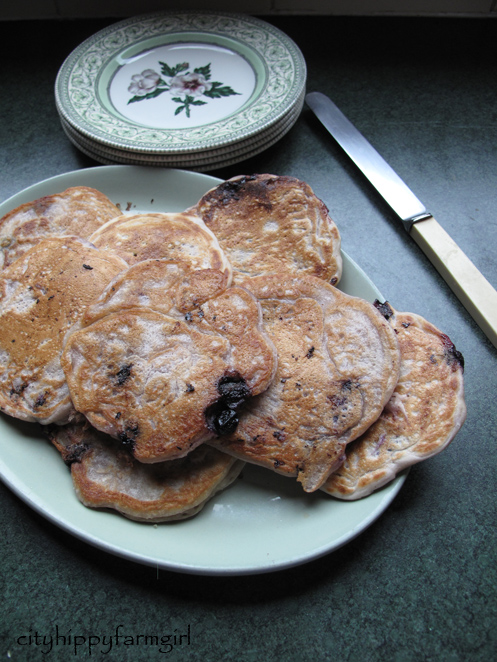
sourdough blueberry pancakes

Clyde River Berry Farm is open December- January. 10am-6pm.

meat…could you? would you?

I have meat on my mind. Not the usual thing on my mind and a little less exciting than the next sourdough to construct, but non the less it’s there.

A few things in blogland had prompted the thinking and also just a natural progression I guess of wanting to know where my meal comes from.

This household doesn’t eat a lot of meat. Monkey Boy and Mr Chocolate really enjoy it, but Little Monkey and I can take it or leave it. Free range chicken, organic minced beef, free range ham, and organic sausages seem to be the usual selection of what we choose from. Nothing too exciting there. Over the years, other meaty items just slowly got bumped off. Canned tuna, daily ham on sandwiches, fresh fish…all for various reasons, now don’t usually find themselves on our every day dinner table.

In my little world, the majority of our meat is bought from the supermarket, butcher, or if I’m lucky enough some farmers markets. Ideally what am I looking for? Meat that has been ethically raised, sustainably produced, not compromised on taste, and at a budget that doesn’t hurt the hip pocket. Is that just too hard though on a day to day level for most people?

Many people can’t argue with the convenience of a supermarket. However there is an increase in buying organic, local, free range pieces. If I can manage to get it, I love being able to buy meat either straight from the producer (easier at a farmers market) or at least knowing the area in which it is from and buying through a middle person.

Some of my recent meaty prompter’s…

Pick a pig– Friends put me on this link from the UK. A system that lets you buy your animal, it’s reared by the farmer, slaughtered and then gets delivered to you in the cuts you ask for. A large up front cost, but….you are getting a whole lot of pig there. Also you know where your pork cuts are coming from. I would love to know if there are any people doing something similar in Australia. On a large scale this is a really interesting way of cutting out the middle man. Another similar scheme again in the UK is Yorkshire Meats

Perennial Plate, an online short documentary style programme on sustainable foods- warning it is a little graphic.

Gourmet Farmer– you know I am a fan. What the man has documented on his show is his journey of going from city fella, to small town living. Rearing animals for his own consumption, learning how to kill chickens, and send his heritage breed pigs to the slaughterer.

Slow Living Essentials- cute fuzzy ducks, and I was thinking dinner.

So whats my beef? (every pun intended.)

Have we become completely desensitized to seeing animals being killed for our plate? I know I don’t feel completely comfortable with it. I would like to think I could do it. Raise an animal, bump it off and then eat it, but could I? I feel if I am willing to eat it, I should be willing to admit that cute little piglet is going to get its head taken off and make some truly delicious ham. It could be a real turning point to vegetarianism for me. However… I would like to think I could rear an animal and either assist in some way in the slaughtering process or do it myself…. Confronting as it most certainly would be.

When you see the meat being sold in the supermarket all wrapped in styrofoam and plastic, all cut up and ready to go. There is usually very little to show you that this pink piece of flesh was once a mooing four legged creature. Feathers still stuck to your chicken pieces? Most people get rather unhappy if this was the case. I remember unloading some groceries from the supermarket in Italy once and there tucked away under the cling wrap and styrofoam was Ms Guinea Fowls head still intact. In my world, I’m not used to that. If I see meat I don’t expect it still to look like the animal it once was. I don’t want any happy memories of a life it once had floating around the room still. But this also seems ridiculous…almost a little precious. It is meat, which means it used to be an animal. Is that as silly as denying a chip in front of me used to be a potato growing in the ground?

Is it merely enough to know what you are eating and where you bought it from? There being no need to kill it yourself, when some one else can do it for you? Will more people begin to choose their meat while thinking of it being sustainably sourced, organically produced, locally harvested and ethically raised. I would like to think so, but feel we have a loooong way to go first. It’s turning around a whole mind set. A whole meat eating culture that needs to be slowly changed.

Should we be taking a moment to acknowledge and honour the life that has been giving up for our plate?

I understand why someone would become a vegetarian for ethical reasons. I also understand why people truly enjoy eating meat. (we still talk about that pork dish at ARIA.) I do think however, that people should know where their dinner came from if at all possible. How many primary schools would teach young children about where their meat comes from? How many parents would talk about it to their young children? How many highschool students would get to study the make up of an animal, different breeds, how to raise them, slaughter, and then cook them? (Agriculture is a chosen subject, in very few highschools.) If this is a part of our every day lifestyle why wouldn’t we be able to learn about it from the beginning.

English, maths, science, food*.

Incorporate it in to learning how to grow, and harvest vegetables. Surely these are important principles that people seem to be so far removed from these days.

I’m still trying to work out where I stand with it all. It’s not easy. Do you eat meat because it’s there, it’s healthy, it’s what everyone else does? Do you eat all parts of the animal avoiding any wastage? I’m not a fan of any kind of offal, however it does seem rather silly to breed a huge beast for consumption and then only eat half of it.

I would like to think that any meat I ate was treated as humanely as possible in their life beforehand. A chance to live as a young calf, piglet, lamb should, before going ‘down town’. Being mindful of every mouthful of meat that I eat. Being thankful that a life has been given up to feed my families belly’s. Thinking about it where it came from and not taking it for granted that I am here and I need and deserve to eat that eat meat! Happy paddock loving animals look differently to large production ones. Australians are one of the top meat eating countries in the world. A weekend BBQ isn’t usually a success unless there is an array of meaty goodies on offer.

Now I could waffle on and on about this meaty topic and go round and round in circles. For the sake of not boring you all to numbing tears I wont. However I will pass this over for discussion. (Feel free to disagree.)

What do you believe in?

Is buying our meat at the supermarket simply progression? Modern times. We have moved on from backyard butchery. A time now of convenience of food…

Do you consider where you meat comes from when selecting it for the dinner table?…

Do you like having that distance between you and that furry beast/ succulent juicy steak on your plate?

Could you rear and slaughter your own animals for eating if you had access to it. (Either via someone elses farm and livestock, or your own.)

…and would you want to?

*******

* I know that in some wonderful schools the Edible School Yard programme or Kitchen Garden programme is up, running and doing really well. This is still a minority in most schools as far as I am aware though. It is also still dependent on the community to get it up, running and maintaining it.
Hobart Farmers’ Market

Second day of my super quick stay in Hobart and I was lucky enough to be staying just a block from the Hobart Farmers’ Market. One of the smallest Farmers Market I have been to for a while, but filled with stalls that I could have happily bought from each and every one. These markets are a little different to my local one, as only the people that actually grow, raise, produce or pick the goodies can sell here. (Got to love that.)

Two stand outs for me were…

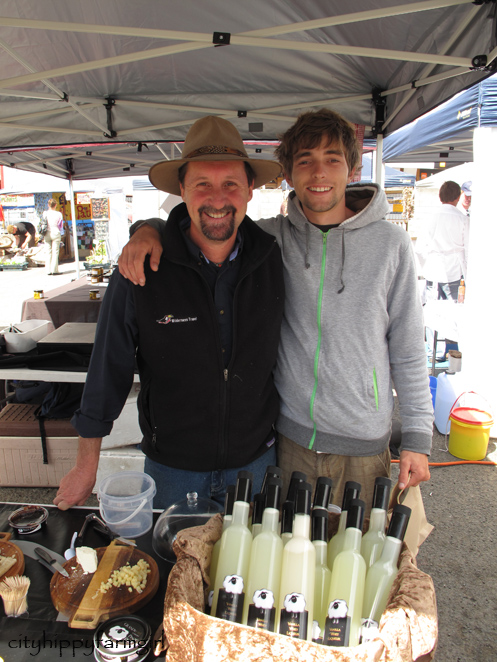
Grandvewe Cheeses– a certified organic sheep cheesery located in Birchs Bay. The cheeses truly delicious, but the Vanilla Whey liqueur…ooo la laa! Holy smokes that was tasty. After a little rearranging of my hand luggage, a bottle of this delectable beauty was popped in. I’m a big fan of anything vanilla, but this took vanilla to another level. If you had told me before I had tasted it, I would be grasping a bottle of fermented sheep’s whey, (a by-product from cheese making) infused with vanilla bean… I would probably have cocked an eye brow and looked a little sceptical. Sold by the lovely James and his charming French companion, (whom I rudely forgot to ask his name). A bottle of this stuff would be worthy of either visiting the markets for, or stopping off at The Cheesery door. Great on ice cream, a dash in an espresso or just straight.

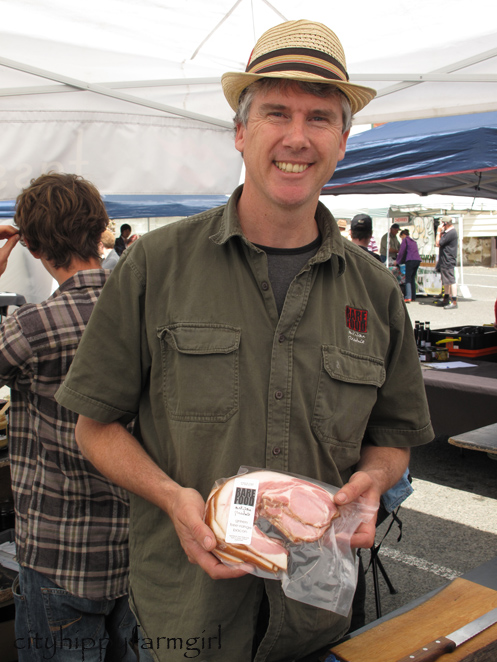
My second stand out for the Farmers Markets was meeting and talking with Matthew Evans. *sigh* Yes I got to meet my idol. I managed to not turn in to a puddle of nerves…just, and would have happily grilled him with questions for the whole morning on all things rare breed, slow food, sustainable and Tasmanian living. However, at the risk of looking like a complete crazed stalker… I didn’t. I also didn’t get to taste any of his Rare Food free range piggy products as I had a plane to catch, (but they did look delicious). Looking over the products, reminded me of what bacon was supposed to look like. I can only imagine how it would taste. Matthew and his business partner Ross, use heritage breed pigs for their products, (at the moment Wessex Saddleback and Berkshire) and this week these same pigs would be fed a tasty diet of cherries, to enhance that delectable sweet meat on their ample bodies.

So why am I a Mr Evans fan? Because watching his series, (and reading his blog) Gourmet Farmer gives me hope that one day my family and I can achieve something similar. A city person learning to do things from scratch. Anyone that is willing to swap a city life to one of rare breed rearing, artisan producing and taking a stand for what they believe in regarding what goes on a dinner plate…I have to applaud.

This is the life I aspire to. A life in the stunning Tasmanian countryside, peppered with some of the best food products in the country. Not a life of ease and convenience, but one of taste and ethics. Real food, that is simple, and yet complex and intricate on the palate. Real food that’s produced by that fella down the road or that lady over the hill. All enhanced by like minded people in a community setting that inspires others to strive to do what they feel passionate about.

The fact that Matthew Evans and his fellow food producers seem to be doing this, inspires me.

So for the moment, he will continue to be my ‘pin up’ Gourmet Farmer. As this lets me dream, of a land with hundreds of varieties of heirloom apples and free range heritage breed pigs when I am standing on a busy city intersection, waiting to cross and engulfed in car exhaust fumes.

Taste Festival

TASTE FESTIVAL– Hobart, Tasmania. 28th December- 3rd January

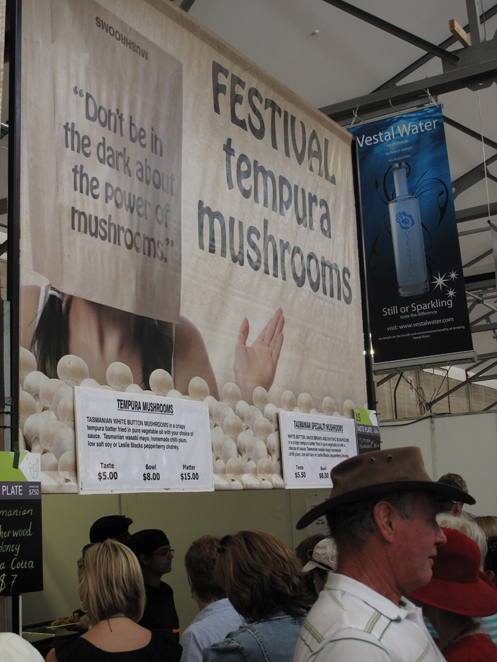
A wonderful week long foodie festival that I was lucky enough to enjoy for the first time, I was there over two crammed days and one night. A festival showcasing some of Tasmania’s delicious locally produced foods, with a dash of music, busker action and children’s area thrown in for good measure.

Why was I there for such a short time and where on earth were my usual entourage of The Monkeys? Back home stepping out with Dadda for the weekend. Mama was having a little ‘me’ time and enjoying the best Christmas present ever from her husband.

So many tastes to linger on… but where to start?

Taste Theatre– Running sessions throughout the day. Presenters talked of what they know and love best. From local chefs, artisan food producers, and wine makers. Tetsuya Wakuda even popped in. I managed to catch two presentations. One with Sally Wise demonstrating how easy it is to make your own preserves and scones. The other, an interesting talk on Slow Food within Tasmania. Both great and well worth the tiny entrance fee ($5 and gold coin donation respectively).

Another great thing to do at the festival was the Red Hat Tours. Run by volunteers, (mine was done by the lovely Peter and Margaret, members of Slow Food). $15 for a guided talk around some of the stall holders, whilst also sampling some of the deliciousness they have to offer.

I did ‘Mad about Cheese’ which covered four local food producers. Two of the stand outs being, Bruny Island Cheese Co. and Tasmanian Highland Cheeses.

Bruny Island Cheese Co. is run by Nick Haddow, artisan cheese maker. He’s taken his back ground of cheese making around Europe, and put in to his Bruny Island business with a Tasmanian touch. These were some seriously delicious cheeses. From day old soft cheeses (O.D.O.) to the  rather exciting new Raw Milk C2. This was the first time at the festival, that a raw milk cheese (that had been legally recognised) has been available to the public in Australia. I can only hope that this opens more doors in the raw milk industry as this was a truly wonderful cheese. (You can read more about raw milk within Australia here.)

If only I had an esky and larger hand luggage allowance, I think I would have been coming home with rather a lot of cheese goodies.


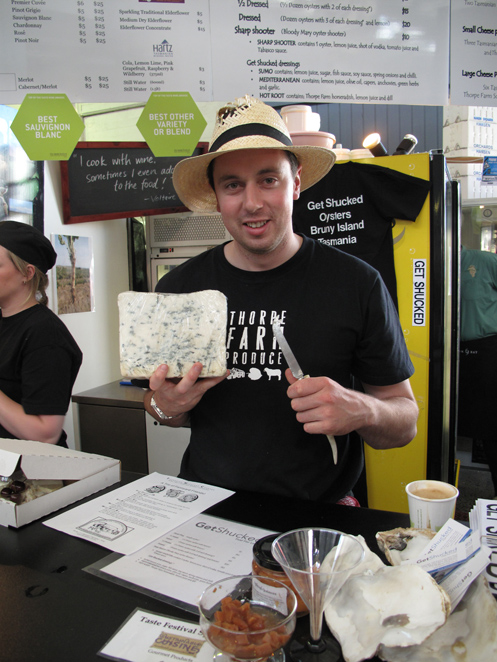
Thorpe Farm- Tasmanian Highland Cheeses is a family run business that has seen 7 generations of family members passionate about farming. John Bignell recognised the fact that his family needed to diversify from farming just sheep, and started expanding with wheat, wasabi, horseradish, venison and also on to cheese. Now perfecting their cow, goat and sheep milk range of cheeses, the charismatic Will (his son) was selling at the Festival. Also truly tasty cheeses. Marinated fettas and secret recipe Blue Cheese being amongst the tastings. There was also the aptly named “2 Sexy Twins” goat chevre which was a perfect way to end the day with a cracker or two. (Again, the esky!)

This stall was 50 people deep every time I went by. I still didn’t get to taste them, but judging from the keen crowds, they were good, really good.

If you like your wine, Taste was certainly the place to be. Buy a glass at the start, (or bring along last years one) and off you go. (As a greener option, I loved this. No plastic glasses!) With more stalls then you can shake a wine glass at, there was plenty to choose from.

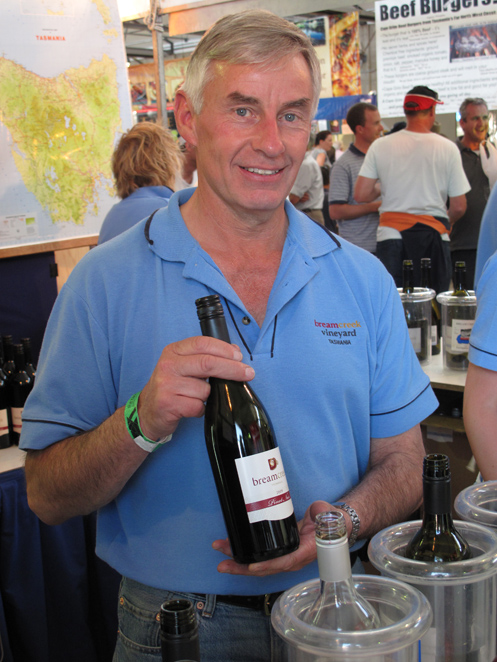
A stand out wine maker for me was Bream Creek Vineyard. The winery is located on Tasmania’s South East Coast, and produces some excellent cool climate wines. Talking with the lovely Fred Peacock, (it had been a long day/week and he was still more than happy to answer all my questions). He has owned the family run vineyard for the past 20 years. My favourite drop was the rare variety, Schonburger…”rose petal and subtle tropical fruit/lychee characters. The palate is persistent…” (Just like me, I persistently came back the next day to buy a bottle.) All grapes are hand picked and with the offer of a set aside pair of secateurs for me, I say who needs to go to Italy or France for a working holiday?

The over whelming feeling I got from the festival, from the producers and volunteers involved. Was passion, and a whole lot of it. Passion for the area in which they are in, and the world class foods that are coming out of it. I can’t help but feel a little in awe of someone that is willing to put their everything into food and wine they so obviously believe in. From trialing, diversifying, willing to risk and perfecting. I think they are on to some bloody great winners here.

Most of these products I focused on at the festival aren’t readily available on mainland Australia. However there are a few ways and means, and availability in a few selected mainland stockists. This to me just makes it even more special. More of a reason to come down and seek them out. Everyone knows things are enjoyed more if you have to make an effort to get it. If that means a flight, a ferry, a day long car trip, a mail order system or a holiday that factors in a food festival. Well then that’s what it takes. But.. to be honest, I think it’s definitely worth the effort, and your belly, mind and palate will thank you for it.
locavore biodynamic wine

I hadn’t bought a bottle of wine for a very long time, but Friday night I had decided was wine night, (well this Friday night was anyway.) I needed some antioxidants!

Walking in to the local bottle shop, they had a really big array of wines to choose from. Gosh, how to choose? Its been so long since I had a vague clue as to what was good and what wasn’t. That clue had long since flown out the door, and left with my choices being white or red?

G’day, do you have any organic, biodynamic and or local wines here?

The assistant sprang in to action, and explained he didn’t usually work there but he thought there were a few that would fit my description. Flying all around the shop, he could only come up with one locally produced one (within 160kms). He offered to ring the owner who had stepped out for a minute to ask him if there were any others, but I said that was fine and kept perusing. Apparently requests such as mine only come in about every 1:1000, so demand wasn’t high.

The owner came back and straight away directed me to a biodynamic locally produced family run winery. He was very knowlodgable and didn’t even take a second blink when I repeated my request of what I wanted.

I like that… Not feeling like a complete leper all the time with my requests.

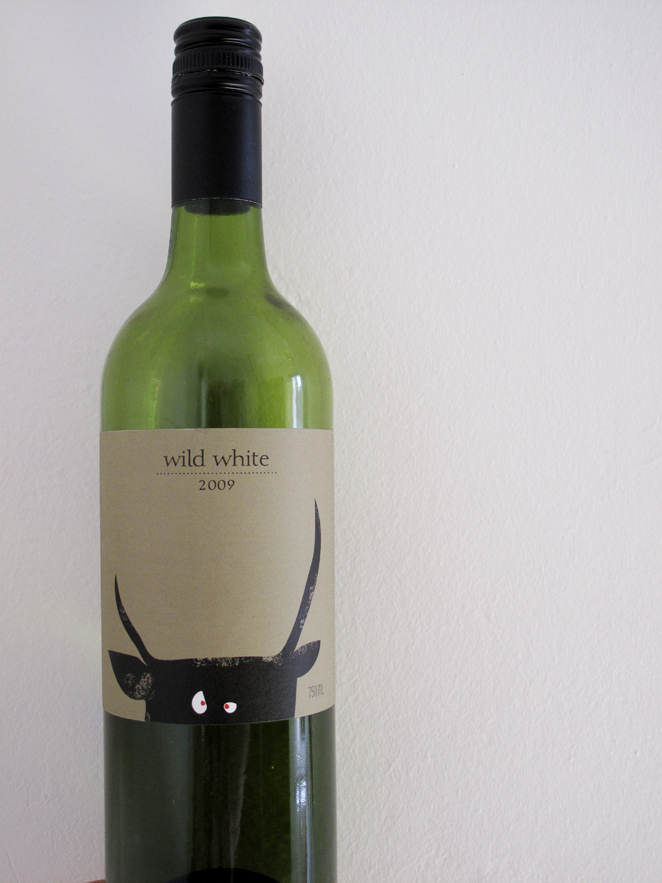
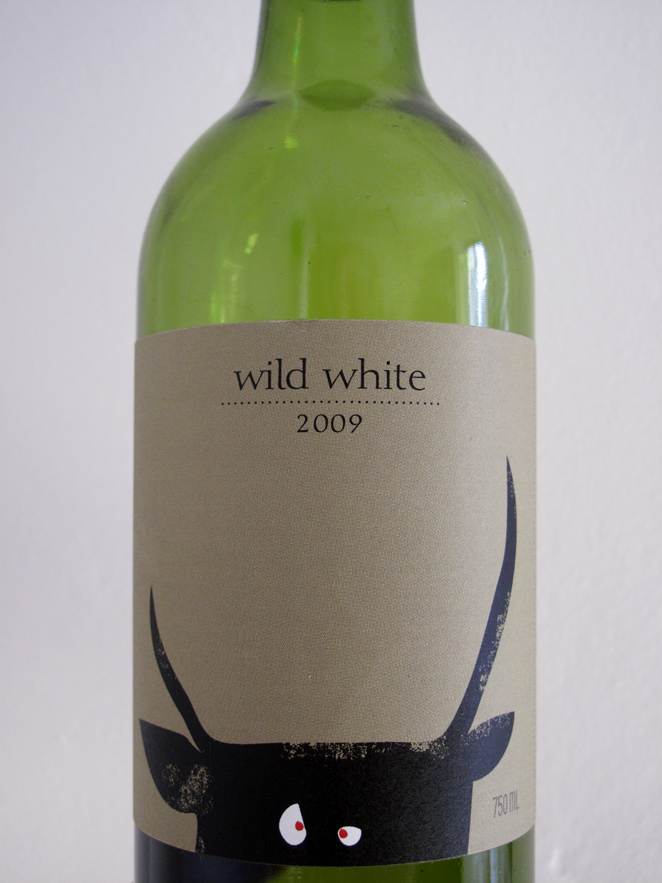
Wine bought ‘Wild White’. Produced by Krinklewood Biodynamic Vineyard– located in the Hunter Valley.

Taste- pretty darn good. I’m no wine expert, but I like it when I like it and don’t when I don’t. I’m complicated like that. I think it would have gone perfectly with a cheese platter or as we did with a light dinner.

I would love to know how much of a market there is out there for these sorts of wines. Organic, biodynamic, or locally produced. Is it something that crosses peoples minds when they are purchasing? Availability? At $18 a bottle it’s not the cheapest of bottles available but certainly not expensive either. And for a person that very rarely buys wines, I am more than happy to support biodynamic farming practices within my locavore area for an infrequent bottle buying.