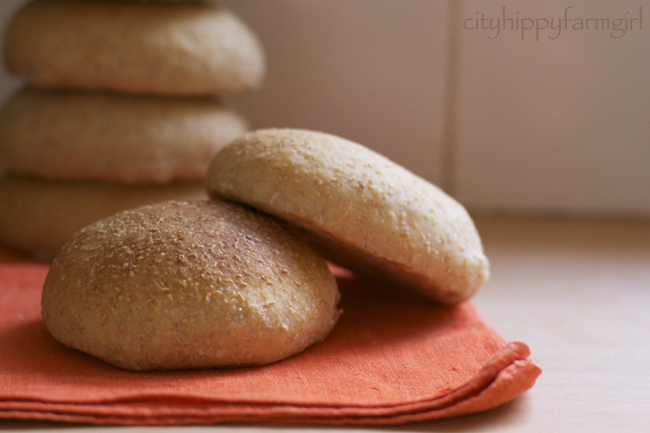
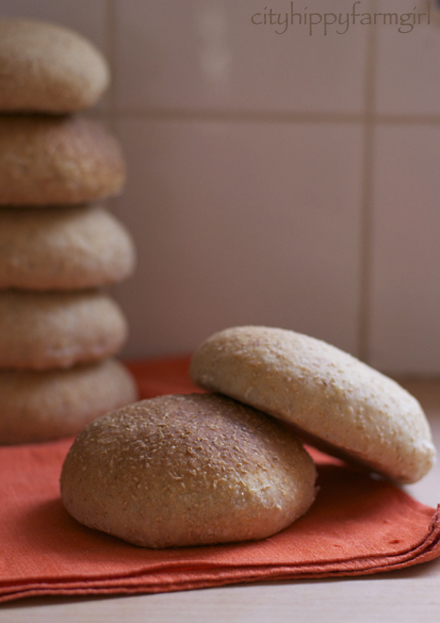
everyday rolls

rolls

If you are a regular reader of this blog, you might have noticed I bake a little bread… ok, rather a lot of bread.

Bread making doesn’t have to be a chore. Once you get the hang of it, it can just become a part of your weekly routine. I make bread about twice a week these days, the kind of dough always varying depending on my time, tastes and what I might have on hand to chuck into the dough.

These everyday kind of rolls frequently pop up though. They are quick to make, always reliable, and easy to throw into the freezer to be retrieved later for school or work lunches.

Making your own bread keeps costs down and you get to decide what goes into it. No paragraph of “stuff” in my bread please.

For an easy ‘how to’ post, see here (how to make bread for the person who thinks they can’t, but really they can.)

Now this ratio is entirely adaptable. If you don’t want bran in it, simple replace it with flour or something like linseed/ sunflower kernels.

No olive oil? Replace with a little extra water.

If you don’t have a starter, just replace the 150g with another tsp of commercial dried yeast. (If you would like to make your own starter- like the lovely Laura did recently- step by step instructions are here. )

cityhippyfarmgirl

Everyday Bread Rolls

150g starter

1 tsp dried yeast

300mls water

1/2 cup unprocessed bran

2 1/2 cups flour

1 1/2 tsp salt

3 tbls olive oil

Add starter, yeast and water together. Whisk and leave for 10 minutes or so. Mix remaining ingredients together and leave for about 30 minutes. Add the salt and then mix or knead again, (I use my mixer.) The dough needs to be smooth and elastic. Leave to prove for a couple of hours, with a couple of knock backs in between.  Shape into rolls and place on a lined tray, allow to prove for another hour or so.

Cook for about 15-20 minutes at 220C-230C with steam.

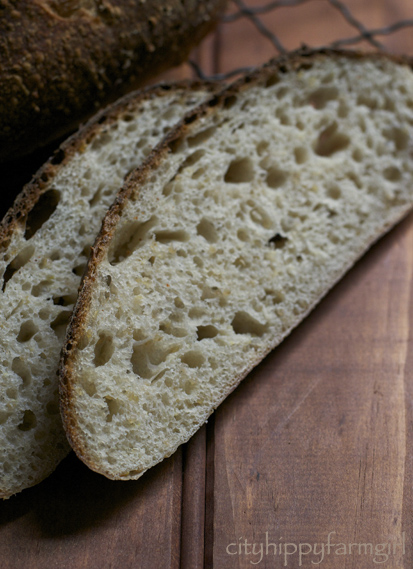
sprouted quinoa sourdough

crumb

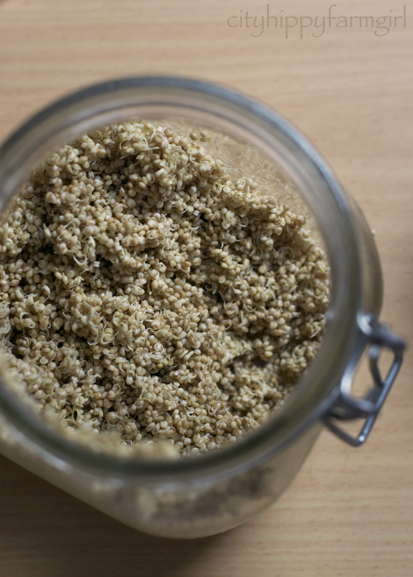
sprouting

The beauty of sourdough is it really is incredibly forgiving. There is no set way that you have to do things. It’s this part that appeals to me, as me and a regular routine don’t usually skip hand in hand.

Fasten it up, slow it down, make it with more water, make it with less water, cook it in a super hot oven, cook it in a slow oven. Leave it for 24 hours in the fridge? Yep, still good to go. Sure with all those changes, it might not have the same delectable taste of the the local sourdough bakery down the road, but your working conditions probably aren’t the same either. Phones get rung, children need feeding, appointments need to be kept and sometimes well, to be blunt you just couldn’t be arsed.

For these many reasons, this is why I love sourdough. It’s adaptable. Pretty much what ever I throw at it, it comes back with a tasty totally exceptable loaf of bread. It might not be winning awards, but it feeds hungry bellies, and it is good and true in a wholesome kind of way.

Putting sprouted quinoa in my sourdough sounded ridiculously wholesome. Thanks to my little friend Instagram, I have a steady supply of inspiring bakers around the world giving me advice, encouragement and all round inspiration that is pretty hard to top at the moment.

Sprouting had been at the back of my mind since I had had some delicious sprouted granola in Byron Bay, and with a steady supply of encouraging pictures via Instagram it was time to jump on board.

I tried sprouted organic brown rice first, delicious. Next up, quinoa it was. Dead easy in our summer, and whoosh… before I knew it they had little tails. Into the bread they went, which  resulted in a lovely moist, chewy crumb.

With a sprouted quinoa sourdough under my belt, now I just have to decide what to sprout next?

sproutedquinoa

Sprouted Quinoa Sourdough

400g starter

750g flour (5 cups)

500mls water

(5 minutes in the mixer)

(30 minutes snooze)

200g sprouted quinoa

2 tsp salt

(5 minutes in the mixer)

(60 minute snooze)

three way fold

60 minute snooze

three way fold and shape

overnight nap of 12 hours in the fridge

bring it back to room temperature

slash

230C preheated oven with steam.

 sprouted

this post submitted to the bready inspiration yeast spotting

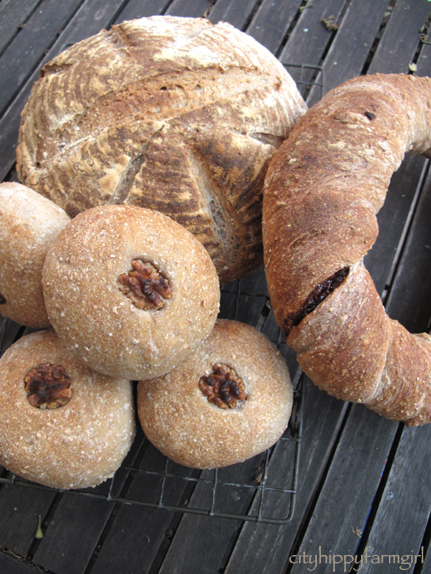
Cardamom buns

cardamom buns

almond and sultana buns

almond and sultana cardamom buns

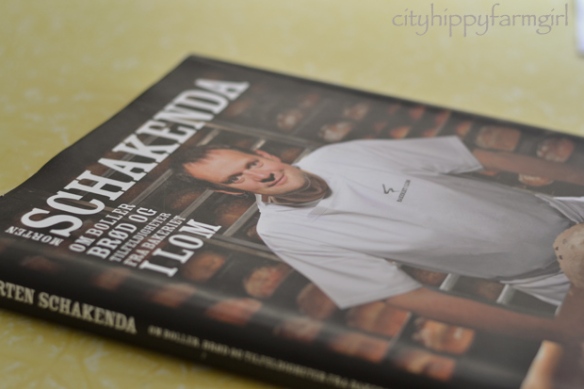
 schakenda

One of my baking friends lent me this book recently.

I didn’t want to give it back.

It was the sort of book that I would quite like to sit on my book shelf and flick through for inspiration now and again. The sort of book I like to bring the pages up nice and close, scrutinise, trying to work out how the devil they made it.

It’s that sort of book, because one- it’s got gorgeous baked goodies in there and two…well I don’t speak a word of Norwegian so scrutinising the pictures is the best way to try and understand what on earth I have to do next.

I reluctantly gave the book back.

With scribbled down notes and mutterings of, more…I must try more, I then did a search for his famous bakery in Lom. The Hairy Bikers visited, and going on the surrounding scenery, the local peoples obvious enthusiasm for the baked goodies and the fact that I’m still having a quiet love affair with all things Scandinavian. Well clearly, I need to go there and eat cardamom buns, probably quite a few. I also possibly need to ask for a short apprenticeship and at the very least, need to keep watching this same segment over and over, so I can get them down pat.

Until then I’ll also keep playing with my own semi sourdough version of them. It’s a versatile dough, that doesn’t mind having things added to it (or eaten just as it is.)

bunss copy

Cardamom Buns

(adapted from Morten Schakenda)

250g sourdough starter

1 tsp dried yeast

600g flour

250mls milk

200mls water

100g sugar

100g softened butter

1 tsp cardamom

1 tsp salt

Add starter, yeast and water together. Whisk and leave for an hour or so. Mix remaining ingredients together and then knead until dough is elastic (I use my mixer)  on a lightly floured surface or until well incorporated and dough is smooth. Leave to prove for a couple of hours, with a couple of knock backs in between.  Shape into rolls and place on a lined tray, allow to prove for another hour or so.

Bake at 180-190 for 15-20 minutes.

blueberry and creme fraiche

blueberry and creme fraiche cardamom buns

This post submitted to yeast spotting

Honey Spiced Spelt Scones and other spelt goodness


I’m having a love affair with spelt at the moment. I’d been meaning to for quite some time, and then finally I bought some, the love affair could begin.

I had dibble dabbled a little before but not like this. Not 10kg bag fulls of the wholesome goodness that it is. Sourdough loaves were switched to spelt, a variety of scones were made with spelt, caramelised onion sourdough rings were ripped apart, toasted spelt muesli was munched on, spelt and walnut bread rolls were teamed up with swiss cheese and inhaled. Spelt knekkebrod was revisited and spelt pancakes were jostled over. Slowly my bag full of spelt, got smaller and smaller.

It’s an ancient grain that has seen a relatively recent revival. Giving a slightly nutty flavour, I’ve just been substituting it with my regular flours and decreasing the liquid in the recipes. The Monkey’s haven’t noticed anything different funnily enough and still eating everything with boyhood enthusiasm. All baked goods have got a thumbs up from Mr Chocolate, and me?

Well I just think it’s a whole bundle of spelt goodness.

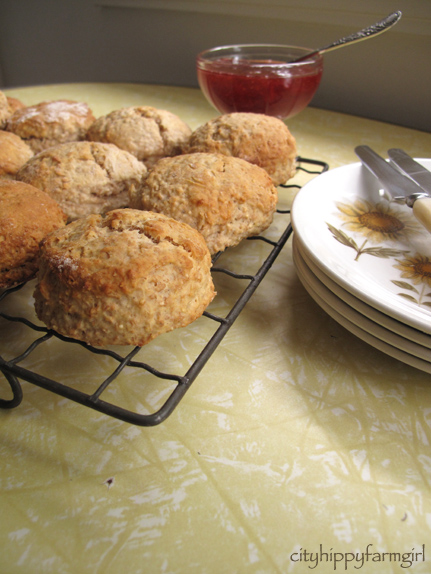
Honey Spiced Spelt Scones

1 1/2 cups s/r flour

1 1/2 cups wholemeal spelt flour

a pinch of salt

a pinch of cardamom, cinnamon, ginger

1 cup cream

1 cup water

2 heaped tablespoons honey

Lightly mix wet ingredients to dry, and turn out to a really well floured surface. Lightly knead using your finger tips mostly, bringing it all together (you don’t want to handle it a lot.) Cut into circles (an upturned glass works well.) and place on a greased or lined baking tray. Bake at 220C for approximately 20 mins or until a light golden.

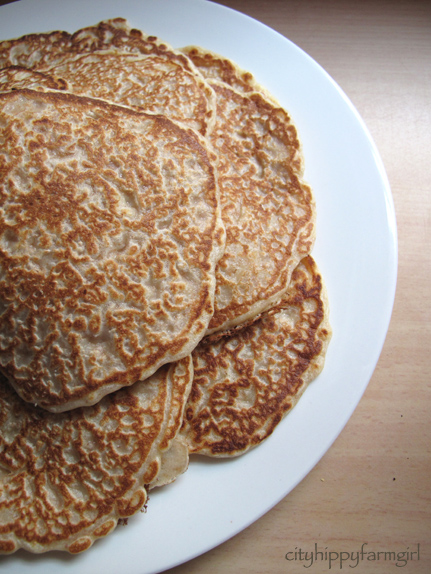
Spelt Pancakes

50g melted butter

1 beaten egg

1 1/2 cups spelt flour

1 1/2 cups milk

experimenting- sometimes it pays off and sometimes…

Sometimes my experimenting in the kitchen pays off, sometimes…not quite so much.

Take it from me, mashed wasabi potatoes with purple carrots doesn’t work. It should have, but it didn’t. It really, really didn’t work.

I should have taken a picture of the gluey mess that this dish was. Just for the comedic value of how badly  it lay on our plates. I’m not sure what was the clincher, but it was like eating funny tasting soupy playdough. (With out the fun of having played with it before hand.)

The Monkeys refused to go near it, purple wasn’t for them. Mr Chocolate bravely tried to plod through it until I told it was ok, he really didn’t have to be so brave.  I also gave up after the multiple sips of water in between, just trying to get the sucker down.

So no, I won’t be trying that one again, (and perhaps I shouldn’t have been experimenting on Mr Chocolate’s birthday.)

Lucky for me (and lucky for everyone else involved) these scrolls I have also been experimenting with lately didn’t have the same effect as the purple wasabi playdough.

Pesto Parmesan Scrolls

150g starter

1 tsp yeast

60mls tepid water

100g melted butter

125mls milk

1 1/4 salt

3 cups flour (450g)

pesto

parmesan

Add starter, yeast and water-  together. Whisk and leave for an hour or so. Mix remaining ingredients together and then knead for 5 minutes on a lightly floured surface or until well incorporated and dough is smooth. Leave to prove for a couple of hours. Roll out to a rectangle. Spoon pesto on, grate some parmesan. Roll up dough, slice into portions. Place on a lined tray, allow to prove for another hour or so. Bake at 190 for 20-25 minutes.

miracle Pumpernickel

I was in the middle of making this pumpernickel bread and all I could think of over and over again was…. it would take a miracle. (Said in the voice of Miracle Max from The Princess Bride.) For it really was going to take a miracle for this little loaf to work.

I had scanned and then re-scanned recipes for it, and either the recipe wasn’t what I was after or I didn’t have access to some of the listed ingredients. I re-read some more, until all I felt was, like a dog chasing it’s tail. Funny for someone else watching but rather annoying for the poor dog.

What?… How?… Maybe?… Oh crikey.

Nothing else for it. Jumping in and back to hack basics 101. I had a general idea of how it was supposed to be cooked, and I had a pretty solid idea of how I wanted it to look and taste, so off to the kitchen it was.

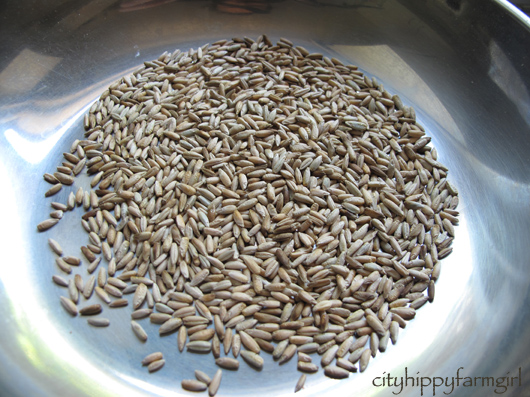
First I got some rye grain, as I couldn’t get the kind of rye flour or rye meal I was after. Then popped it in my Kitchenaid blender and pulverised it to make a course flour… pickle me in ginger if that didn’t work. I didn’t even know my Kitchenaid could do that. Whoosh!

With flour now in hand, I started on the rest of the loaf. I really felt out of my depths with this one, just because I was solely going on instinct and guessing and not following someone else’s tried and true pumpernickel recipe. Hence, the many mutterings of …it would take a miracle.

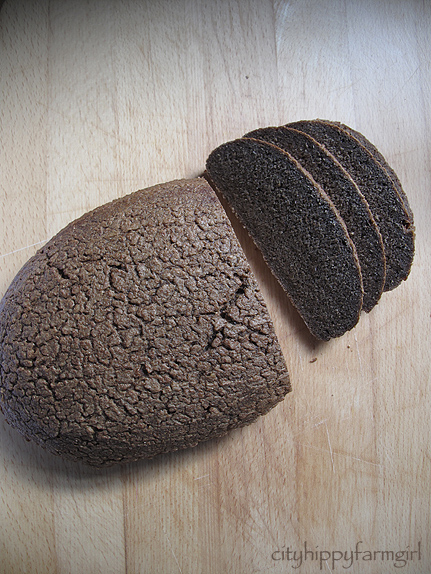
But it did work, and I was really happy with it. Dense, flavourful and definitely one I will be making regularly. It had both sweet and sour flavours, very little crust, and quite sustaining for a small slice. It’s not a quick loaf and does take a bit of preparation but I would much rather be eating a pumpernickel coming out of my kitchen as opposed to an imported one coming from Europe, (as that is a LOT of food miles for a small amount of bread.)

Pumpernickel

250g rye flour

200g starter (100%)

50g linseed meal

50g sunflower seeds

25g unprocessed wheat bran

1 tsp dark malt flour

handful pumpkin kernels

200mls boiling water

120mls natural yogurt

1 tsp salt

In a bowl add linseed, sunflower seeds, dark malt flour, wheat bran, pumpkin kernels and boiling water. Whisk together and leave to soak for several hours. Then add starter, rye flour and yogurt. Mix slowly a couple of times, with 10 minute rest intervals in between. Then add the salt and mix well again. In an oiled and lined with baking paper tin spoon mixture in. Making sure there is no gaps. Cover and prove until risen by about a quarter. This took for me about 7 hours, will depend on the room temperature though.

Cover with aluminium foil and bake at 220C for 15 minutes, then lowering the temperature to 190C bake for approximately 35 minutes.

Cool in tin for 15 minutes, keeping the aluminium on. Then remove from tin, and cool on rack. When it’s cold, wrap it in baking paper for 24-48 hours before eating.

*******

and just because I can….

this post submitted to the wonderful yeastspotting

decluttering and a ploughman’s lunch

I’ve been decluttering.

Really decluttering this time.

I am constantly talking of decluttering and even get rid of a small bag or two of ‘stuff’ fairly regularly. However this time around, it’s the big guns. Everything must go. Well not quite, but everything must be re-evaluated and re-assessed to see whether it really is needed or wanted.

Living in a small living space, requires constant reassessing of said ‘stuff’. I try to be very careful of what comes in the door, but still the ‘stuff’ mounts up. And mostly it’s just stored away, under the ‘maybe we will need it one day’ label. With another baby on the way, space is kind of important. Not that babies take up much room, but I know I’m going to enjoy an empty draw or a cleared shelf space a whole lot more once the decluttering as ended.

One thing I have been going through is all my resource folders. I had actually forgotten I had them, as there was a pile of other ‘stuff’ in front of the cupboard door for so long, so much so, that I couldn’t open the door. Front pile gets smaller and shifted. What’s behind there oh…more ‘stuff’. Goody.

Resource folders like,

House ideas- still haven’t bought that house.

Gardening how to’s- I’m still just making do with pot plants, that large secret garden is still a while off.

Massage Therapy notes- too many years ago, am I really going to look at it again?

Old work stuff- come on, it’s been awhile…quite a while.

A years worth of French notes- Parlez vous anglais?

And a whole lot more.

One good thing to come out of all of this, is just moving it somewhere else. Not another folder or another shelf, but online. Having stopped myself from using Pinterest since I heard about it, (as I did not need another digital distraction) I’ve decided that quite frankly it’s a bloody good idea, and now all my scrappy pieces of paper instead of cluttering up my flat, can now clutter up cyberspace. Ahhh, quite liberating really.

So while I don’t need to add any more screen time to my life, I’m loving having a place to store all those ideas that don’t take up my living space and doesn’t gather dust… and I’m quite happy with that trade off.

So what’s all that got to do with a ploughman’s lunch? Not a lot really, but a girls got to eat, and I had had a ploughman’s lunch roll on my mind for quite some time.

Time to get that thought on to my plate.

Ploughmans Lunch Roll

seeded bread roll

lettuce

your favourite strong cheese

apple slices

chutney


Ploughmans Lunch Bread Ingredients

300g starter (100%)

50g (1 cup) unprocessed bran

50g (1/2 cup) linseed meal

3 tbls LSA

2 tbls chia seeds

100g spelt flour

300g strong bakers flour

300mls water

1 1/2 tsp salt

Make it up in your favourite bready fashion.

(I gave an overnight prove, shaped, and proved again. Sprayed rolls with water and then baked at 240C with lots of oven steam.)

******

This post submitted to yeastspotting

red food dye? I don’t think so

He was scampering that was for sure. Up and down the hall with an obvious focus to those little feet. He caught me watching him and seemed to push away the raised eyebrow look and what are you up to question on my lips. I couldn’t hear anything that I shouldn’t be and he really was quite busy. So I left him to it. Back and forth, back and forth. Scurrying like a little bug, taking huge bundles 4 times his body size and wrangling it to his chosen destination.

Little Monkey was building a castle. He called out, declaring he was ready now, and in I went to inspect the wall building. Foundations looked a little shonky, brick work was a little sloppy, but there he was sitting on top of his castle, pleased as a 3 year old would be…sitting on top of his castle. Every cushion, pillow, blanket, soft anything had been dragged in and utilised. Just perfect for a mama to make a flying leap on to….

Now if you are the kind of person that likes looking into what you are eating or what your kids maybe eating, you may have looked up red food dye before. You may have also heard, that just like my little cushion carrying bug of a son, red food dye can be made from a certain bug… Or it could also be made from a coal tar derivative. Either way, these days I don’t particularly want to ingest anything that is fire engine red unless there is a really good reason to.

So with that in mind I was mighty annoyed to get a jar of tandoori paste home a while back. Only to find out, that one of the main ingredients was red food dye!

Not a tomato ingredient in there. All that lovely red was thanks to some good old red food dye. I was annoyed, as I would never normally buy a jar like this but was feeling generous as I had been at some great farmers markets and was seduced by all the lovely food stuffs around me… the seduction however, had not carried over to the tandoori paste I had just bought home.

Surely I could make something that wouldn’t give me the heebie-jeebies just looking at the colour?

Let’s give it a crack…

Tandoori Paste

In a pan add

a couple of slurps of vegetable oil

diced onion, knob of ginger, and a couple of cloves of garlic

1 tsp cumin

1 tsp coriander

1 tsp turmeric

1 tsp cinnamon

1 tsp yellow mustard seeds

2 tbls tomato paste

salt to taste

chilli to taste

fry it all off for a couple of minutes, until fragrant. Then whizz to a smooth paste with a hand held mixer.

*******

Now authentic? Perhaps not, but I think a whole more so than a jar full of red food dye, and salt.

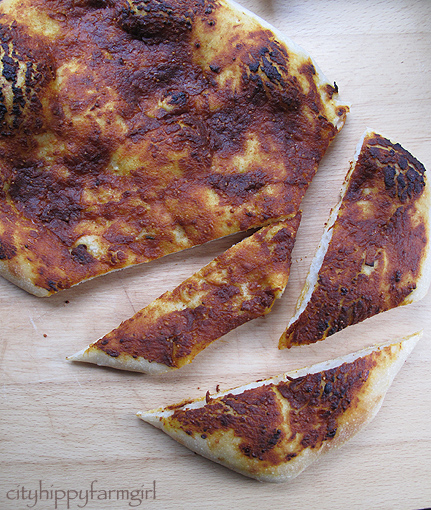
 I cooked this up with the obligatory chicken and yogurt dish, but I also had some left over and sourdough on the go. So Tandoori Flat Bread it was.

Just the thing to go and snack on while sitting on top of a castle.

Purple Carrot Bread

Now if I had a back yard garden I would have rows and rows of heirloom carrots growing. Not because I have an over whelming taste for carrots all the time, (although I do quite like them.) But because there are so many different colours you can grow. Orange, yellow, white, pink and for todays bread, the lovely purple.

I don’t often see them for sale, however my local farmers market has been stocking them the last few weeks so I’ve been stocking up. The Monkeys needed a little convincing they were indeed still carrots. A raised eyebrow and a sceptical look that only a 3 and 5 year old can give on being told, ‘of course they were carrots, taste them’.

So why should you eat an heirloom variety carrot?

* They taste fantastic. If you are comparing it to an insipid supermarket pale old orange carrot- well, there is no comparison.

* Encouraging genetic diversity. 

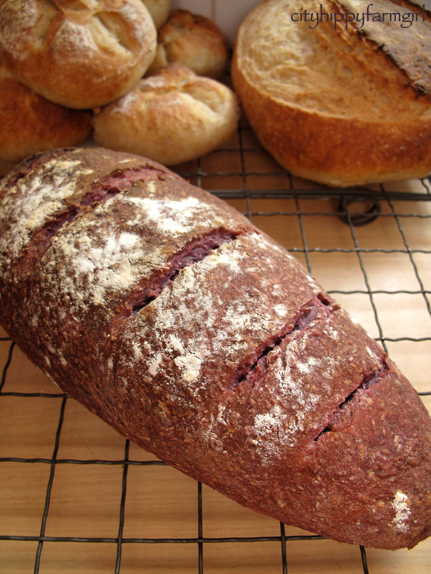
 * The purple carrots are full of antioxidants, and… they make things a pretty purple colour, (like this bread.)

Purple Carrot Bread

150g sourdough starter

150g purple carrots- steamed/ mashed

25g wheat bran

125mls water + purple carrot water from cooking

225g strong bakers flour

1 tsp salt

I did an over night prove in the fridge for this one. Baked at 240C with steam.

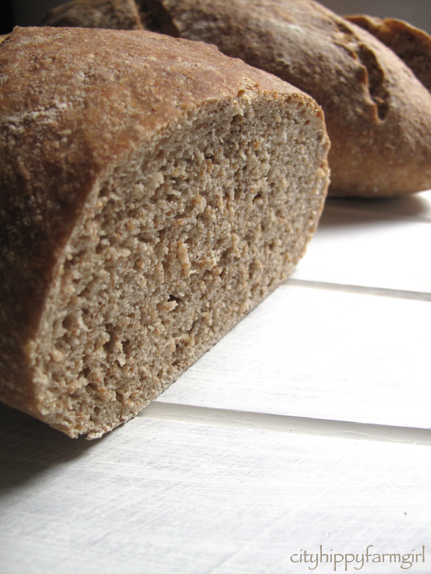
The result is a soft, chewy crumb similar to adding oats in a dough. The purple cooking water from the carrots adds to the intensity of the colour. The next lot of bread I made was just with the carrots, and no cooking water- resulting in a slightly less intense colour.

Next stop, Purple Carrot Cake…

This post submitted to yeastspotting.

Time, sourdough and a little Pecan and Prune Bread

Sourdough seems to put a lot of people off by the time factor of it all. Before I started making it last year, I liked the idea of sourdough, but even making the  starter seemed too lengthy, too time consuming, and a whole lot of hassle really. When I finally jumped in and just made the thing, it was a ohh, is that all? So with the starter bubbling away, I jumped in and away I swam with my sourdoughy… err… dough.

So is it time consuming?

Does it take a lot of work?

Does the convenience of sliced shop bread lure me over some times?

Time consuming, I don’t think of it as. (Saying that, I’m not trying to fit in with a paid job that requires my attention away from home for the majority of the day.)

You do have to plan a little. I don’t wake up in the morning and think ohh, today I shall make sourdough and have it on the table by lunch time. It’s usually a 3 day process, but it certainly doesn’t take 3 whole days to make it.

Sourdough is using natural yeast, so it works on its own time. Some times that sourdough is a sprightly young energetic woman with places to go and people to see. Bubbly and so full of spirit.

Some times that dough is a lethargic old man, shuffling along in worn out old slippers and a battered zimmer frame. You get stuck behind him, and you just know you can’t over take, as it would be rude. You just have to slow yourself down some and let the old fella set the pace.

Either way sourdough is boss. You can fiddle and tweak a little by finding a cooler spot to get it to slow down some or finding a sunny warm spot  to fasten things up a little. It all depends on the activity level of the starter, the flour and the room temperature though.

So does it take a lot of work?

No, not really. A starter feed= 1 minute. Wait 8-12 hours, feed again. Wait 8-12 hours, feed again. Wait 8-12 hours, mix up dough with a mixer and dough hooks. A plain dough=5 minutes of getting ingredients together and mixing. Go do something else more exciting for about 40 minutes, then mix again adding the salt. A quick 30 second knead. Leave it on the bench to think about things for a while. Read The Monkeys a story, have a shower, eye off some dark chocolate and then whack it in the fridge over night. In the morning, shape it (5 minutes), pop it on some trays and let it come back to room temperature- 4ish hours, slash. Bake.

1+1+1+5+30 sec+5  

That’s 13 minutes and 30 seconds of hands on time with the dough (a basic, nothing crazy loaf) over several days+ waiting and baking.

Some times I have to wait for the rising dough and sometimes it has to wait for me, we both have to be a bit flexible, which is the wonderful thing about sourdough, it is flexible. You can adapt the whole bread making process to suit you. I’ve mentioned this as one of my methods on making it work, but there are many other ways that other people do it, some that work for me and some that don’t. If it doesn’t fit in with your life style it’s going to become a pain. You don’t want it to become a pain.

So do away with the watch. Judge your bread on how it looks and just fiddle with it until you find out what works for you. Sometimes my loaves aren’t the greatest. Sometimes that extra 3 minutes baking turns into 15 and dark and crusty have a totally new meaning. Sometimes I don’t feel like washing yet another doughy mixing bowl, but… I always enjoy eating it and so do my family.

And that’s the trade off.

So jump in, give it a go, and if it doesn’t work out for you, it might later down the track.

*********

…and does the lure of sliced shop bread ever tempt me?… No chance. 

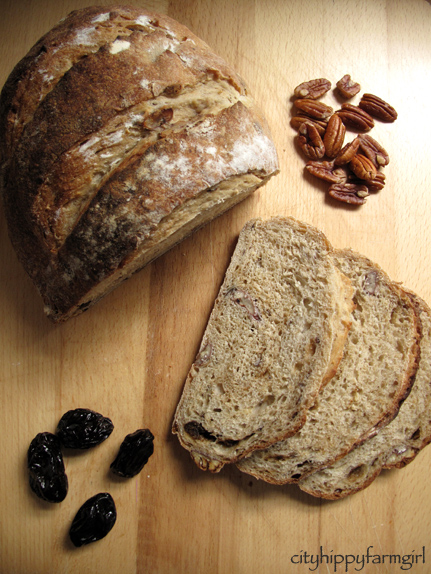
Pecan and Prune Bread

200g starter

50g oats

8 pitted and chopped large prunes

80mls hot water

large handful of chopped pecans

300g strong bakers flour

200-250mls water

1 tsp salt

Starter at 100% hydration. The 80mls of hot water to soak the oats and prunes beforehand. Mixed together and using a method that suits you.

(Baked at 240C with steam.)

* This post submitted to yeastspotting

Apple and Oat Bread

I quite like the process of trying to work out what to put in a new bread every few weeks.

There are the regulars of course, like a well worn pair of slippers that I know how to just slip on. Making it is straight forward, I can easily do it with out that much thought behind it, and I know for the most part how it’s going to taste (sourdough does like to keep me on my toes a little though.) When I’m fiddling with different flavours though, I like the balancing act, the unknown factor…

It’s a bit like ordering from a menu in a foreign language. You think you get the idea of what it will taste like, and what it is that you might be ordering but there is always that element of surprise just waiting to be brought to the table.

Now in the past, I had played with using fresh apples a few times. I had cooked them beforehand, thinly sliced them, made them into chunks, grated them, but I think I’ve decided I like finely diced the most. You still get the apple-y taste, without it getting soggy and overly all apple. Grating the apple, while I like the moistness it gives to the loaf, I do find by doing this it loses the flavour a bit. So diced it was for this one, add some soaked oats, a little spice and we are away…
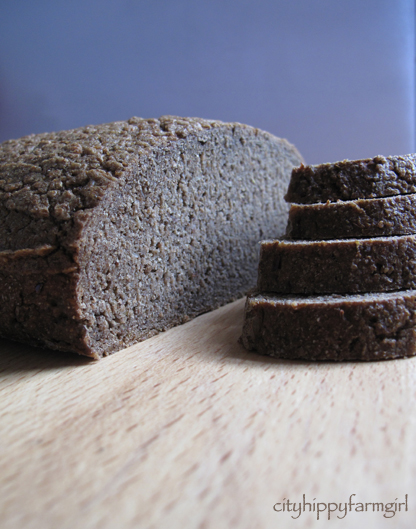
 Apple and Oat Bread

200g starter

100g finely diced apple

425g bakers flour

100g whole oats

50mls hot water

200mls water

1 tsp cinnamon

1/2 tsp coriander

1 tsp salt

Soak oats in the hot water until they plump up. Add all ingredients except salt. Mix well, let if it rest for about 40 minutes, add the salt mix again.

Proof for awhile, quick knead, proof, shape, proof. Bake at 240C with steam.

This post submitted to yeastspotting.

slowing it down to eat some rye bread
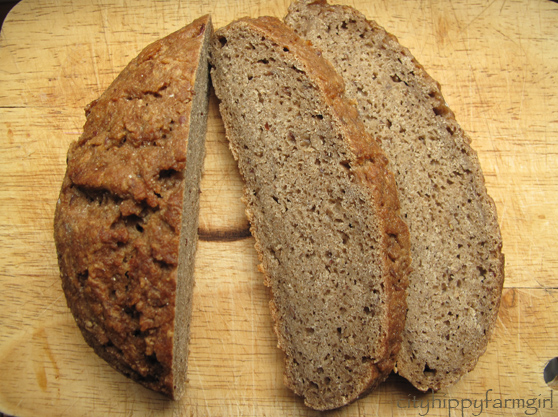
 

Sourdough is not a quick process. It’s slow, likes to amble. Take its time. Focus it’s energy on the job on hand and then gradually release all of that sourdoughy goodness. Especially slow in winter. I don’t mind though. I’m in no hurry. The bread and I have no place special to be, and if I did…well the bread can wait. Sourdough is like that. Occasionally moody and a little flighty, but regularly reliable, and keen to just make peace with what ever is happening. I like that.

I had started with a 100% rye from Dan Lepard’s The Handmade Loaf. I took my time, didn’t hurry it along. It turned out ok, but I wasn’t thrilled. Mr Chocolate had mistakenly washed up my 2 tablespoons of crucial gelatinized mix to go on top of the loaf, and it all looked a little too floury. I had been nervous about putting the sticky mass dough in my banetton, so had floured a teatowel to line it instead. The loaf just came out looking like a floured teatowel though. Never mind. I’ll try a again.

Trial one

Second time around and I thought I would tweak the flavours a little. I wanted a more in-depth flavour, and also banished Mr Chocolate from my gelatinized mix at the crucial time. Flavour was better, and I didn’t bother with a banetton, just freeformed a rough round shape and pegged the sides of the baking paper to cradle and support it a little. It did rise, the top looked a little glossy, and several cracks developed while rising…. but it wasn’t quite there yet. What was missing?

Trial Two

Third time around, and the weather was cold. It certainly was going to take longer than the 5 hours recommended to let it rise. Once baked, I left it for 48 hours wrapped in baking paper before I cut into it. This really did seem to help in the development of the flavour, but….

Trial three- it’s getting there. The flavour was certainly there, but not quite there yet…

Fourth go. It tastes good.

I’m done.

Trialing and tweaking I’ve enjoyed doing, but I still find it a bit of a pain to make on account of it being so sticky. The taste is there though. It was really cold the day I made this one and it certainly didn’t double in size. It was a loooong cool prove, probably 12 hours on the bench all up plus 12 hours in the fridge. I’m still sticking with the hand shaping and laying on bakers paper rather than a banetton, I didn’t bother checking the temperature of the boiling water asper Dan Lepard’s instructions, (things aren’t that slow round here.) Just whisked when it’s boiled. I also think wrapping it afterwards is very crucial. The taste is a light sour, really tight crumb and I think the linseed and dark malt flour I added give a bit more depth, to which I like.

It’s filling, it’s good for you, The Monkeys won’t have a bar of it, and that suits me just fine. I can eat my way through it… slowly.


My changed ingredient list is as follows, for the method and some other invaluable notes on Dan Lepard’s more original recipe- jump over to Zeb Bakes. The lovely Joanna made this a little while back and it was really interesting to see what she thought of the same recipe.

100% Sour Rye

adapted from The Handmade Loaf
300g rye starter
75mls cold water
450g gelatinized rye mix
400g rye flour
1 1/2 tsp salt
1 tsp cardamom
1 tsp dark malt flour
50g (1/2 cup) linseed meal, or LSA
gelatinized rye mix- 90g rye flour and 360 mls water
**********
The night before make up the gelatinized rye mix, using just boiled water and whisking flour in immediately. Leave two tablespoons aside for the top of the loaf. Whisk cold water into thr rye starter and then also whisk in the gelatinized mix. Then add remaining ingredients.
On to an oiled surface, try and squish it into the shape you want. Smoothing it round and leave it for 5 (ambitious for me)- 12 hours on a baking paper cradle or banetton. Until it’s risen a bit anyway.
Spread the remaining gelatinized mix on, spray with water and pop in the oven at 210C for about 50 minutes.
******
This post submitted to yeastspotting.