green hair

A few months back now, I had a little hair dilemma.

My head had decided it would no longer tolerate the stuff I was trying to wash my hair with. No. Instead my head decided to cover itself with painful red lumps that would only go away if I switched shampoos. Ok, so I had developed an odd little/big reaction to my normal shampoo that I had  been using for quite some time.  So I switched…and I switched….and then I switched some more. Nothing was quite right. All the ‘greener’ options either made my hair look the end of a fox’s tail (which is fine if that’s the look you are going for…but I wasn’t.) Or didn’t quite clean as I had hoped for, leaving hair greasy after consecutive washes.

What to do? What to do?

Then two lovely bloggers that I follow, (Multiple Mum and Bruise Mouse ) posted in the same week of using bicarbonate soda and apple cider vinegar for hair washing. It was a sign. I had nothing to lose but some greasy locks and a few painful lumps or two right?

I had read about this method a long time ago but hadn’t taken the plunge yet. I had also read that it might take a few days/weeks to adjust to the new method, but from my experience it was fine from the beginning. Actually it was more than fine. It was great! Clean hair, no residual smell, hair is soft, and has more oomph than it’s had in a long time. Swish, swish, swish…

The method I’ve been using is-

1 teaspoon of bicarbonate soda mixed with about 80mls of water to make a runny solution. I work that in to the roots and scalp then rinse out with water. I do it on dry hair initially as the bicarb doesn’t lather up at all and if it’s done on dry I can tell where I have ‘shampooed’.

2 tablespoons apple cider vinegar mixed with about 700mls water poured over ends. Leave for a few minutes and then rinse out with water.

* Since starting this I have found these two combinations can be a little drying to my hair, so have worked out the best solution for me at the moment is to use regular conditioner alternately with the apple cider vinegar. 

A few weeks in after switching and the lovely Christine also posted on her method for conditioning using rosemary and apple cider vinegar here.

Three months later, and I couldn’t be happier. It is kind of funny that I use the same product for washing my hair, cleaning my bathroom and making my Anzac Biscuits, but hey…it works, and it works really well.

**********

Now while I’m talking of green hair, let’s have a little peek at green hair removal, now I’m not talking of hair on the top of your head…

Hair. Some people love it. Some people hate it. Some people have it. Some people don’t.

Hair options are many.

Shaving, waxing, laser, threading, sugaring, epilation, depilation are some of the methods to take it all off.

Or you can simply grow it.

Hair removal options

Shaving– reusable razors with disposable heads or disposable plastic razors. The disposables make up a huge amount of plastic landfill each year. Hair starts growing immediately.

Waxing– Lots of different brands out there. Some plant based and some petroleum-based. Hair gets sparser as waxing continues. Cotton strips, plastic strips, wooden strips can all be used for slapping the wax on.

Laser– long term hair loss results. Lots of equipment used.

Depilation– creams that dissolve the hair with a whole lot of stinky chemicals at skin level.

Epilation– hair taken from just below the skin’s surface. Electronic or battery operated machines usually used.

So what are the ‘greenest’ hair removal options?

Sugaring-sugar waxing”, hair taken from the root using sugar, water and lemon juice or vinegar.

Threading– a piece of cotton used, takes the hair from the root level. (I love this one. Small thread of cotton a few twists and whoosh!)


Or simply…

Grow it– grow it and be proud.


just how hot is hot?

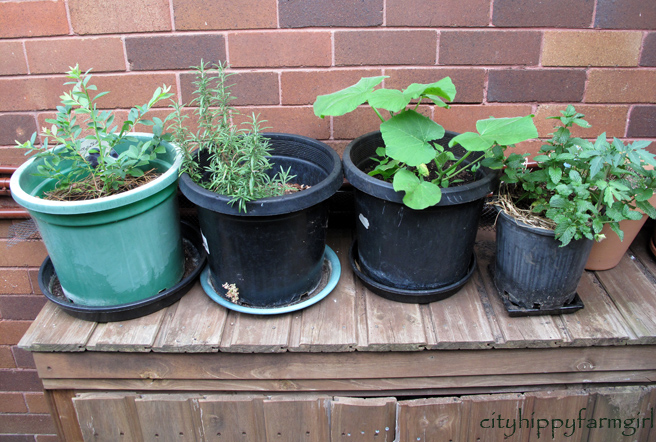
I did a post at the end of summer on my tiny gas metre box garden. Nothing flash. Just a few pots of greenery that keep me centred. The chilli plants happily flowered and grew, they even got through the Noah’s Ark of winter rain thrown at them. Then they turned red, actually they are still turning red. Slowly changing from subtle green, to come on- I dare you red.

Now when I planted these little fella’s I wanted something a little feisty. The packet said hot, actually it said piccante. It was an Italian heirloom variety. So anything labelled piccante, and I have high hopes.

Not gaspingly, oh for the love of god, find me a river and submerge my firey mouth.

 But, hey…Oooo, yep, that’s a bit hot right there.

Something like that anyway.

So they have been turning red, and I’ve slowly been collecting them on my kitchen window sill. A little fiery red mountain growing. Each day I wonder, just how hot they are.

these look like a completely different variety, but I'm sure they came out of the same packet.

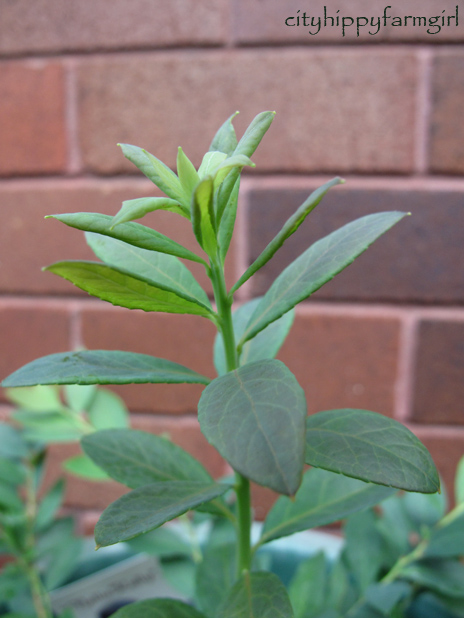
Blueberries are also flowering. Last season there was just a tiny handful of flowers that seemed to take six months to actually develop the fruit. This year with quadruple the flowers, I’m hoping the fruiting doesn’t take quite so long.

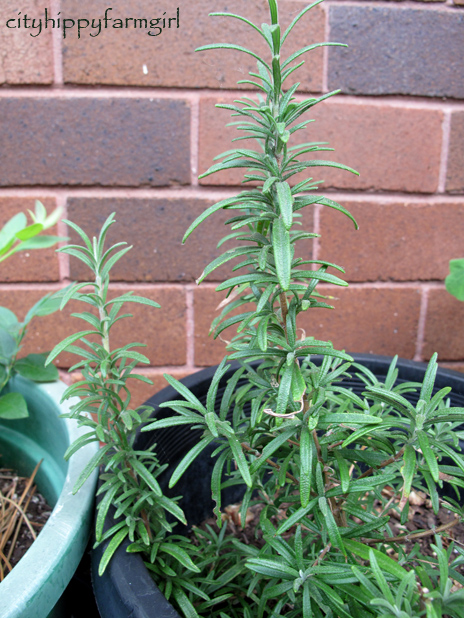
Rosemary is also happy. I just have to remember not to remember it. It’s never happy when I give it too much love and attention. Neglect, and the odd whisper of I’m still watching you, and it seems to thrive.

There are some other pots as well that look empty, but have sleeping seeds in them. What’s in there though and I wouldn’t have a clue. I planted them one evening and then got rushed inside. Distracted for the next few days, I never quite made it back out to write what I had planted and where. So now, wouldn’t have a clue what was in there.

Never mind, who doesn’t like surprises….especially the plant kind.

Now, speaking of surprises, I think it might be time to find out just how hot that chilli really is…

Just how hot is hot?

the weight of the steak


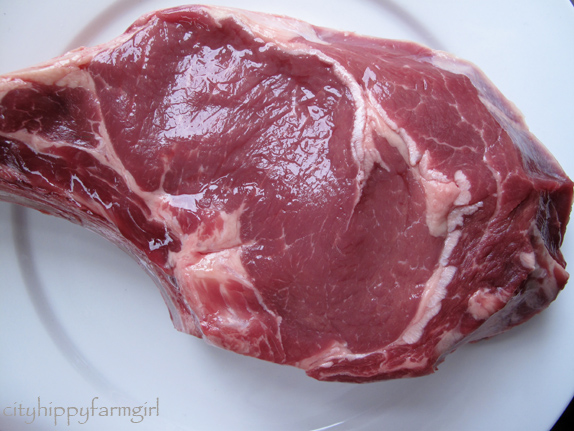
When I was researching what piggy options a city girl had, I discovered Feather and Bone, in Rozelle. A supplier of sustainably raised meat. I started getting their weekly emails filled with interesting meaty information and what’s on offer at the moment. From there, I went to one of their open days and got to see for myself at how it was all done, coming home with a weighty little number that had cook me up just right, written all over it.

I’ve written before about knowing where your meat is from and asking whether you would be prepared to do the killing yourself. Reading back on that post I realised that even in the last not quite 6 months our meat buying habits have changed since then. I’m fine with that, I like evolving. I now very rarely buy any meat from a super market or butcher. Instead, the meat intake has dropped even less, and the majority of it is now coming from farmers markets. If those markets are few and far between because I can’t get there or the meat isn’t available, then so is the meat eating. Why? Because I really want to know where it’s from. I want to know more of how it was raised before slaughter, who reared it and if possible, what their farming philosophies are like. I simply can’t get this if I’m buying from the supermarket.

Meat has been the topic of choice in this fair country of ours for the last few weeks. Ever since the ABC’s Four Corners program was shown about the live cattle export business to Indonesia, people have had things to say. A lot of things to say. The footage was graphic, confronting and got people into action to get things changed.

It might have changed Indonesia’s meat eating habits for a bit as the supply from Australia has almost stopped, but would it be enough for people to question their own meat eating habits here within Australia? Could that daily/weekly slab of meat become less? Could it become just a special occasion meal?

Back to the weighty number in my possession, and I had a little treat in store for Mr Chocolate. Special occasion, yes it was. After visiting the warehouse of Feather and Bone, I came home with a steak. Not just any steak but a Chianina steak, aged for 6 weeks, rib eye cut, weighing 673g and costing $45. There was, a small intake of breath, (you can’t fight history right) at the cost of it, but overall I was more than happy to hand over the cash for the hefty piece of meat. I knew where the beef was coming from, I knew how long and where it was aged and butchered, (Feather and Bone.) I also knew that this steak was going home to my loved one as part of a twice a year meal of steak, (the last one being at Aria.) It was also going to be enjoyed by him, (I hoped.)

Now on getting that steak home, I started to sweat a little. Not from the weight of the thing, but the pressure to cook it the right way. (To clarify, I don’t eat steak, which means I don’t cook steak.) This however, was a treat. It had to be cooked just right. I had quizzed Grant, (at Feather and Bone) when I purchased it and then also made a frantic phone call to my friend who proudly has Meat on her bookshelf. Plan put into action and I’m off.

Plates at the ready, the steak was brought back to room temperature, salted, seared, into the oven, and then rested for the same amount of time it had cooked for. The pressure was high, the weight of the steak was sitting firmly on my shoulders, and geez, it was a hefty one.

No cooked pictures, as that was the last thing I needed was to try and get a ‘good’ picture in the fading light and building anticipation of Mr Chocolate about to cut into his rib eye.

But how did it taste?

Let’s just say… if Mr Chocolate was about to leave the earth tomorrow and he could choose any meal to end it, this steak cooked by me (*nervous giggle*) is now top of the list.

I think that just might be a success.

Isola (producer)

Chianina Beef

6 week aged

Rib eye

673g

green takeaway coffee cups

I like coffee. I really do. I don’t think I have a coffee habit, I just really like the stuff. Good coffee, (I don’t bother wasting my time with bad coffee.)

For our home coffee I can only get from one place in the whole city. Kind of restrictive yes, but that’s what the palate dictates. It’s fairtrade, it’s local-ish, (from East Timor) and tastes just fine.

Mr Chocolate also likes coffee. He didn’t before he met me though. Before me he was a tea drinker. Ha!…not now though. Long work hours, two pint sized Monkeys, and a coffee brewing wife all point towards kissing that tea goodbye a long time ago.

All those long work hours, requires the odd pep up from his favoured local barristas during the working week. Always on the go he needs a coffee to match so it needs to be a takeaway coffee. Last year The Monkeys gave him a reusable coffee cup (KeepCup) for those weekly coffee pickups. Instead of using a disposable cup, sucking back the black liquid, and casting the cup aside. He could now hand the cup over, get it filled, suck back the black liquid and wash it for next time.

There are a few different reusable coffee cups out there on the market these days. As more people spread the word and hand over their cups to their local barristas, I hope this will just become the norm for takeaway coffee drinkers.

One less thing to be dumped into landfill.

bottled water

Some useful links…

Go Tap– lots of reading on the environmental impact of bottled water, opinions and stats.

Cheeki Stainless Steel drink bottles

The Story of Bottled Water– (same creator of ‘the story of stuff’)

“Drinking water in Melbourne or Sydney costs around $1.20 a tonne,” says Mr Kiernan. “Australian bottled water costs around $3000 a tonne. And Italian bottled water? About $9000 a tonne. It’s more expensive than petrol…” The Age article.

soap nuts

soap nuts

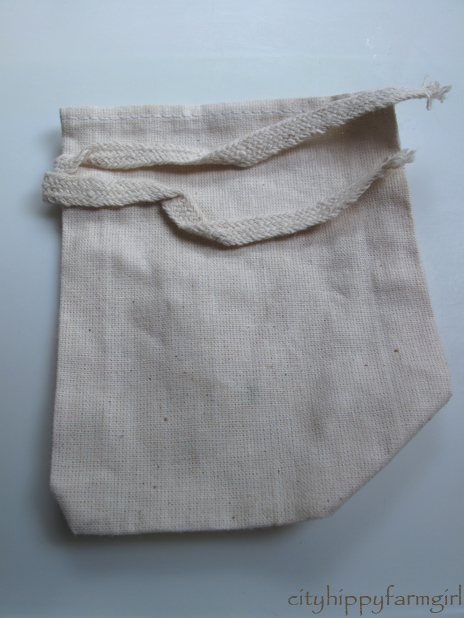
little cotton bag you put them in

Soap Nuts


So what are they?

“Soapnuts ( Sapindus mukorossi ) are an environmentally friendly, sustainably produced, bio-degradable and compostable alternative to commercial laundry detergents. Grown wild in India, for centuries these nuts have been used for many purposes, from laundry to cleaning jewellery and treating contaminated soil. They are most widely recognised as being an effective and environmentally friendly natural detergent, but can be used for a wide variety of other uses.” New Internationalist

Do they work?

Yep, they do. The clean just as well as any other laundry liquid I was using. There is no lingering soapy smell. There is a tiny and pleasant clean, fresh smell when I first get the washing out of the machine. You have to really stick your nose in the fibres to get it though and nothing residual once the clothing as dried. They also leave everything quite soft. No need for any fabric softners, (if you use it.) There is a really great indepth post here comparing the nuts with regular washing powder. The Monkeys don’t play neatly, and it manages to get all the grime off their clothes.

How expensive are they?

Not all. You only need to use 6-8 of the nut shells in a load and then they are then re-used for another 4-6 times. All you need to do is dry them out in between washes and peg the little bag up when you dry your laundry. So the 500gm bag lasts for ages. New Internationalist (where I got mine) claims they will last for about 6 months doing about 200 loads. That seems to be fitting in with how I’m using them too.

What do you need to do?

Put 6-8 shells in the little bag (3 are included) pop it into some hot water for a minute (I stick a bowl of water in the microwave) and then put the bag and water in with the load of laundry.

Is it too much of an extra effort to do it all the time?

Nope, not all. A minute to warm the water, and a few seconds to empty the bag to dry it and the shells. Super easy.

Can you use them for anything else?

I’ve only used them for laundry, but you can apparently use them instead of regular shampoo, hand wash, cleaning jewellery and pest control in the garden.

What to do with them when you are finished?

They can go in the compost or used as mulch in the garden.

Any problems?

No problems for me. I’ve been really happy with them, and will keep using them.

Some places to find them

new internationalist Australia

Wildsoapnuts.com Australia

www.soapnuts.co.uk

piggy options for a city gal

To market, to market,

to buy a fat pig

home again, home again,

jiggety jig…

Today it’s all about the pig.

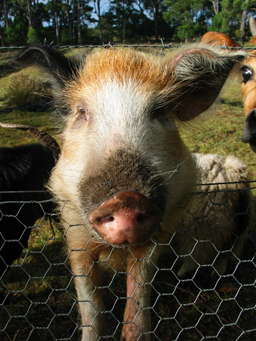
It’s been a lengthy porcine process, searching and asking around, and it’s still far from over. What I wanted, was to find some piggy products coming from a pig that has had a chance to frollick in the paddocks, rolled in the mud and has nuzzled the earth. A pig that has been farmed in an ethical fashion. Has a taste a good pig should and can be bought without handing over a small mountain of money. A pig, that I could find out a bit more from the people who had reared it, and of the whole process of birth to abbatoir for the ham intended pig.

Could I do it? What piggy options does a city girl have?

Living in the city surrounded by more city, shopping in city food areas… is it possible to get that kind of information and pay those kind of dollars without it becoming a pain in the pig trotters?

Let’s see.

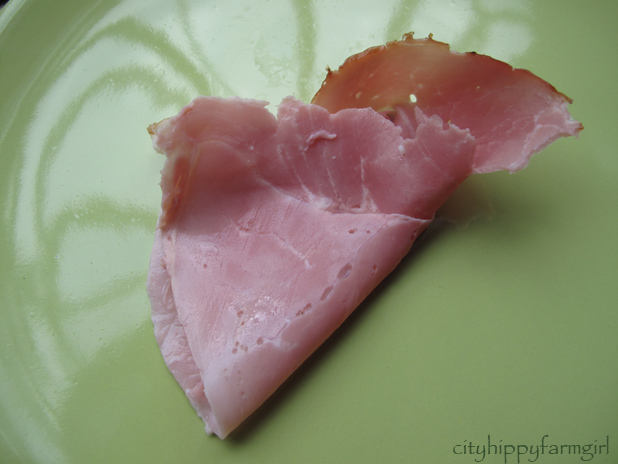
probably the best tasting ham I've had

First up. Pig products are available everywhere. A lot of people like their porcine products. Bacon and ham get regular look ins for many family meals. Butchers and super markets sell a whole range of products for reasonable prices. The ham, salami, pork products that are readily available however, usually come from conventionally farmed beasts. Animals that are farmed intensively, with breeds selected for their rapid growth and maximum dollar.

A taste comparison between the two is easily distinguished. From what we had bought in the past, a comparison between a wet salty pale ham compared to a much more flavourful darker sweet meat, was really hard to compare. They weren’t even in the same field…*ahem*

I was looking for free-range, heritage breed pork products that I could access relatively easily. I didn’t want it to be eaten every day of the week but as a special occasion in small amounts every few weeks or so. A bacon, lettuce and tomato roll once a month, yep that would do nicely.

Supermarket, nothing to be found there, standard pork products. Butchers in my local area… The conventional ones either raised an eyebrow and scowled at me, within an indignate no, they didn’t know where exactly the pig was from, and yes of course it was free-range if it says it is. Now I don’t want to be a poop, but if it’s free-range, I’d love to know where it’s from and what sort of breeds they are using. If they don’t know, could they find out. Difficult. One organic butcher in my area came up with the goods though. Pasture Perfect ham and bacon, yes ma’am, up north somewhere they come from. With a little googling around, yes indeed. Pasture Perfect is based in Ashford, NSW. (Have a peek at that their website if you would like to see some truly cute pictures of their black Berkshire  pigs.)

I liked what I saw but what other options are there within my area, so I delved a little deeper.

Feather and Bone– Suppliers of sustainably raised meat. Has a large range of regular products along with some seasonal meats. Sign up for a really informative weekly email and they’ll also let you know what’s on offer for the week, and importantly where the meat has come from.

Melanda Park– located in Ebenezer, NSW. “A marriage of heritage and modern breeds…” Distributed by Feather and Bone.

Ormiston Free Range Pork– located in Mudgee. Offers farm visits and runs pig handling courses. Products can be delivered to certain neighbouring areas and are sold through one Sydney retail outlet along with Pyrmont Growers Markets.

Tewinga– located in northern NSW. Distruted by Feather and Bone.

Pasture Perfect– Certified organic pasture raised Berkshire pork. Stockists to buy from.

At the farmers markets I’ve been going to lately, pork products is not something I’m regularly coming across, it seems to be a bit hit and miss. Some times the products are there and sometimes not. I did see a stall a few days ago that had a range of products from South Australia. When I was in Hobart Rare Foods also had a great looking range, but not a lot since. Maybe with customer demand the market will increase and I will see more of these products (and local ones) regularly at my usual haunts. Or maybe I just haven’t searched hard enough. Unfortunately I don’t feel I can just accept “free-range” without questioning exactly how they’ve been kept and how free range that actually means.

Our food environment seems to be rapidly changing and it’s really hard to keep up with what’s happening. For the moment it seems generally most people are happy to eat conventionally farmed pig, in time to come I’m wondering whether this will change. For me, I would much rather pay more for my meat, eat it sparingly and know where it has come from. Knowing how and where the animal was raised, and what sort of breed it was. Compared to not knowing and paying less. Yes, it takes more of an effort, and may not be as convenient as buying at the nearest supermarket or corner butcher…but maybe things weren’t meant to be so convenient?

Piggy Interests-

Black Berkshire– Kuro (black) Buta (pig)- A heritage breed of pig originating from Britain. Prized meat in the pig world.

Rare Breeds Trust of Australia

* From one corner of the world, to another. I know I’m lucky enough to have readers from all over and this company information won’t be relevant to a lot of people. So please feel free to mention a local company that is truly free-range, organic or you know more about the particular breeds used and how they are reared. It may help others in your own local area find these great products, that are quite often harder to find.

Sustainable Seafood

http://www.youtube.com/watch?v=LWJM1uIsmJc

Some useful links…

Slow Fish– Slow Food International’s Slow Fish campaign.

Fish Fight– Hugh Fearnley Whittingstall’s campaign.

Greenpeace International Seafood Red List.

Sustainable Seafood Guide– Australia.

Tuna– Industrial tuna fishing brings in big money as people love the stuff. It’s a cheap, tasty form of protein that appeals to many, either in the form of the handy little cans or eaten fresh and whole.

Greenpeace’s Canned Tuna Guide. Which brands to aim for and which ones to dodge.

http://www.fish-4-ever.com/ A UK based company, that uses skipjack tuna caught in the Maldives. Line and pole method.

A short snippet of what line and pole method actually means. (I found this fascinating!)

What you can do

Read more about the topic

Blog about it

Send a letter

Start a conversation about sustainable fishing

Vote with your dollar.

upcycling to gift tags

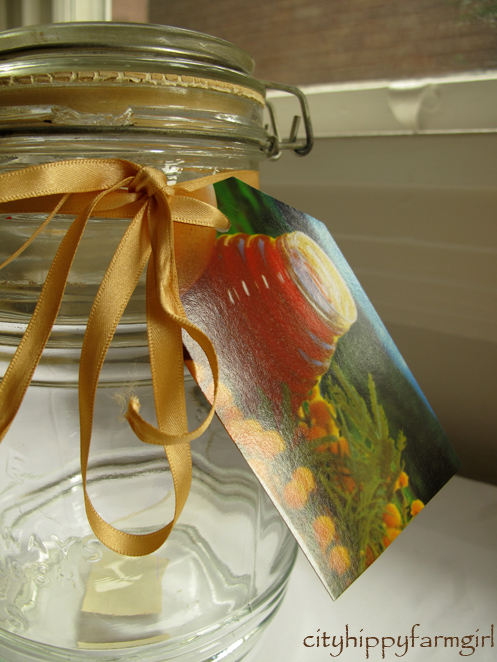
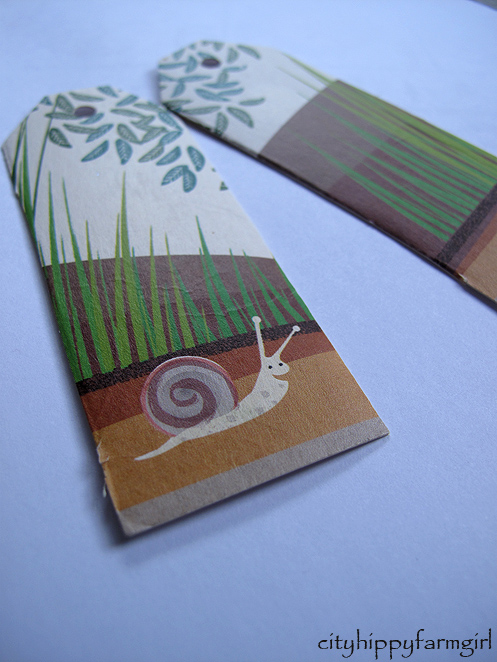
Gift tags are such a simple thing to make. You can upcycle so many things to make instant eye catching tags that re-cycle something, look pretty good and don’t cost anything. Scissors, a hole punch and imagination are all that’s needed.

Christmas cards are a great thing to chop up, (thanks to Tricia for the point in the right direction with this one). Just make sure there is no writing on the other side.

Gift to match: Anything Christmassy.

Cereal boxes. I know that sounds a bit odd, and it would depend on what cereal you buy maybe… but with the right gift, I think it works.

Gift to match: Jar of muesli/granola, box of muffins.

Chocolate wrappings. Ok, this isn’t going to work if it’s a mars bar. But if you are buying some tip top chocolate once in awhile, it seems a shame to spend all that money on some delicious chocolate, for it not to get a second go doesn’t it? (See this post, on how to make wrapping paper and cards from chocolate wrappers.)

Gift to match: Anything, it looks a bit different.

Biscuit/Cookie boxes. Again, maybe not for any old box, but given the right one and it can look rather interesting I think. I was given these as a gift and loved the box so much it just sat there empty for a few months on a shelf. The Monkeys had been told to keep their little mits off it until I had decided what to do with it.

Gift to match: Something lovely.

So many things can be turned into a gift tag, or used as a small card. Perfume boxes, old calendars, pasta boxes… lots and lots of things to have fun with and give a new life to.

a new monkey hat

Thankfully Little Monkey is still young enough to want to wear most things I put him in. I’m sure if I strapped a pancake to his head, secured it with a ribbon and it kept out the sun, he would still wear it.

I think…

Pancakes aside, but with this philosophy in mind, I started crocheting my first hat.

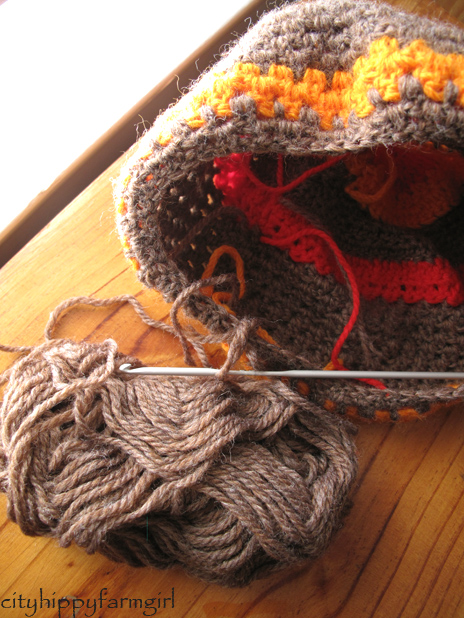
I had the wool, I had the hook, and I had the image of a lovely warm colourful number. A hat to keep small ears warm, with the little imp running around and looking  rather dashing in his new hat at the same time.

Now I just had to harness that imagery and put it into practise. Crochet and I were new friends, quite new friends. I was still practising and wasn’t quite sure how to make a hat rather than a… well, a pancake.

Now, how do I make it all go in again?…

Ah well, lets get cracking anyway.

Reclaimed wool from my mum, who in turn had reclaimed it from someone else. Stolen moments at the playground after school to crochet, and a week and a half later Little Monkey can now wear his new pancake… I mean hat.

a tiny gas meter box garden

This, to many people with lovely edible gardens, back yards, ample sun, and green fingers will probably not be the post for you. This is a story of a couple of happy pots that despite their partial sunny aspect, and unlikely sitting position (on top of a gas meter box) are surviving.

When we first moved here, I was desperate for some greenery. I spent quite a bit of money on containers, seedlings, soil, potting mix, mulch, and hangers to go off the fence. The Monkeys and I trawled the streets looking for more containers we could grow things in. Carting them back home with high hopes of a sea of green down the side of our flat. Time went by, and I did grow things. I tried to companion plant, I looked up seasonal planting guides and tried to make smart choices with what I chose to grow. Some things grew, some things were eaten to stumps by usually slimy creatures of one kind or another. I looked up natural ways to get rid of pests. I went out at night with a torch to protect my little patch of green. I would check on these same pots as soon as I woke, looking anxiously out my window to see if they had survived the night.

Unfurl yourself slithery beast from those delicate green tendrils. Begone, and never darken my gas meter box again!

Time went by and I had got to the point where I was putting more and more money into my poor little pots. I was getting nothing back in return except for disappointment and frustration. Getting the right levels of acidity, sunlight, depth of potting mix was getting too tricky. Edible gardens in pots was just too hard for me with the partial sun aspect and resources that I had.

I gave up.

I planted flowers. Flowers that would hopefully attract bees. Maybe that would be something, a tiny something I could do.

Time went by and the pots slowly called to me again. I really wanted to grow something on that darn gas meter box and falling down paling fence. I didn’t have an acre, or a backyard. All I had was a bricked sideway apartment block.

I thought I would try with just one pot. Don’t worry about the rest of the pots sitting stacked up. Just focus on the one.

Rosemary. I popped in some worm castings, gave it some daily whispered love to its green stems… and bless my Birkenstocks if it didn’t grow!

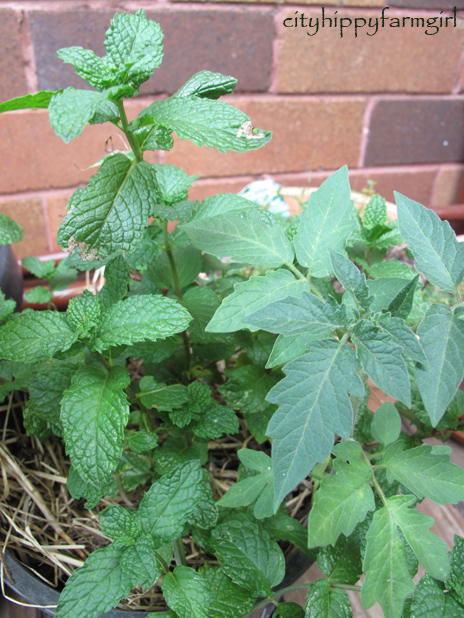
It is growing, still growing. I tentatively added a blueberry, and it still survives. My dad gave me some mint. Despite being eaten to green stumps by minute caterpillars, it’s still with me too. (I went out and plucked the caterpillars off twice a day until there was none left.)

Mama, why are you throwing the caterpillar towards the road?

It needs to go for a WALK!

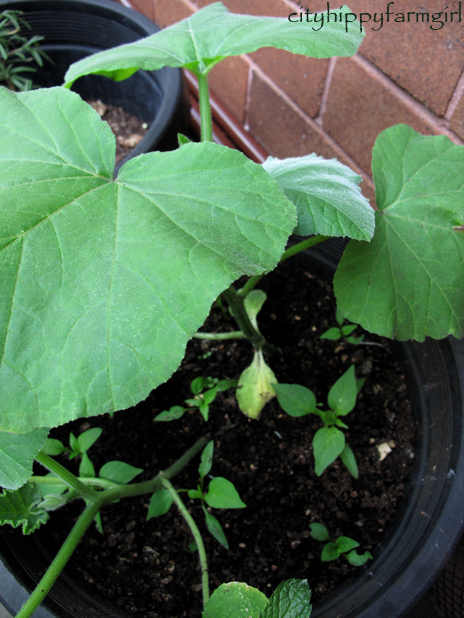
I got optimistic and planted some Italian chilli seeds, within a week green shoots were coming up. Big green leaves…hmm, I might not have the greenest thumb around but unless I’m wrong, Italians don’t grow chilli in the shape of cucumber leaves. (Presuming that’s what it is)

I also had a geranium in a fence container, two capsicums sprung up as a surprise package and seemed to suck out all of the life of the geranium while it looked pretty good. They then battled for top dog, couldn’t decide who was going to be boss so it seems they both have given up and are now looking a little exhausted from the whole ordeal and worse for wear. Never mind, I can console myself with my little patch of greenery to the right.

My little green gas meter box garden.

******

* If anyone can answer a couple of my ‘I’m not so sure’ questions, I would be very thankful.

1/ What should I do with my chilli/ cucumber plants? Should I haul one out? Which one? (Given, that it’s a miracle they both look happy, and I’m a little nervous about moving either while they look so…alive.)

2/ Is it really a cucumber? Zucchini…god forbid in that tiny pot, pumpkin?

Bubbles, bubbles, bubbles…

Bubbles Recipe

Glycerine    1 part
Dishwashing liquid    2 parts
Water   7 parts

(Recipe is approximate. You may have to play with the ratios a little.)

Most kids get a kick out of bubbles. Actually I like bubbles, so perhaps there are a few adults out there too that would be keen for a bubble recipe. I just use my kids as an excuse to use them.

Bubbles love a wet environment. So if it’s humid, rainy kind of weather, perfect for bubbles. In the bath, with the bathroom door shut (trapping that moist air in ) perfect for bubbles. Snowing outside…I have no idea, but give it a go. It could  be perfect for bubbles. When the bubbles pop straight away they are drying out, the glycerine helps to stop that, and the moisture in the air as well.

Make your mixture up and leave it a few hours, or even over night (I’m not sure why, but it seems to work.)

You can use anything as your bubble maker. We had an empty container that had been given to us previously, but an old wire coat hanger twisted in to a circle can work just as well. Bigger bubbles!

Now go get to those bubbles.

(they also make a great inexpensive gift.)


* Where to buy glycerine from? Your local chemist. Not expensive and will do you quite a lot of bubbles.