Bonjour, my little brioche

The Monkeys and I were on a mission. Early to the farmers markets and then home again before it got too hot.

With Monkey Boy on the scooter, Little Monkey in the pram and me running, we actually got there in reasonable time. The sun was out, the sky was blue. Talks about turtles and all their merits while we ran and scootered along. A good start to the morning.

I had chevre on my mind, so once at the markets I set out for the Willowbrae stall. Eeeek, it wasn’t there! I scan again, sigh, there will be no goat cheese to be had this week for us.

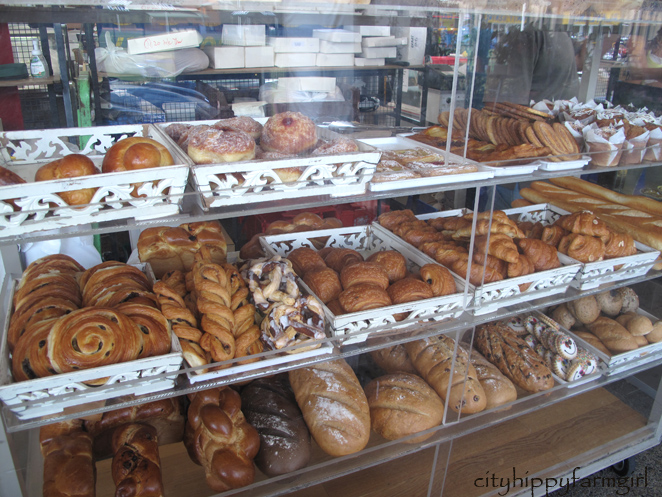
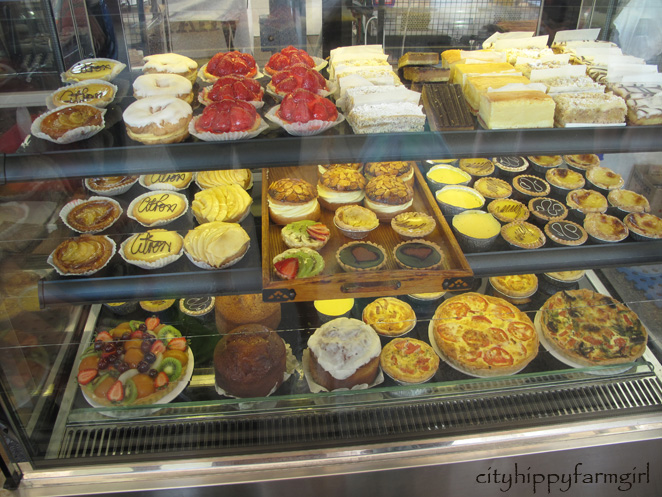
To my right I hear a cheery “Bonjour”, it seems I have paused outside the French Patisserie stall…these things happen sometimes. The very friendly Malik entices Monkey Boy with a brioche. His eyes light up, eyebrows raise, as he starts to nod enthusiastically.

Actually Mama, Little Monkey can have that one, I’d like a chocolate croissant instead.” He says eagerly.

It’s hard to resist all the delicious looking pastries…

If I half close my eyes and breathe in deep perhaps I can be magically transported away to a French countryside village. A small curb side table, my back to the warming autumn sun. My cafe au lait is being carefully brought out on a little tray accompanied by my still warm from the oven brioche. Pierre my waiter, pauses for a second first to ensure that everything is ok, his gentle old hand lightly touches my elbow. His eyes follow to where mine have drawn, we both gaze out over to a field of sunflowers on one side and rows of grapes on the other. Oui, oui…tres bien…

ACTUALLY, I want that one Mama!

Snapped back to reality I am back in the markets, Monkey Boy is pestering me for his croissant and Pierre, his brioche and cafe au lait are gone.

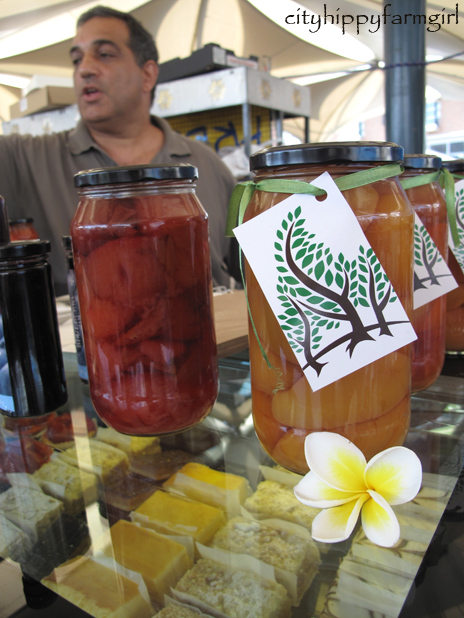
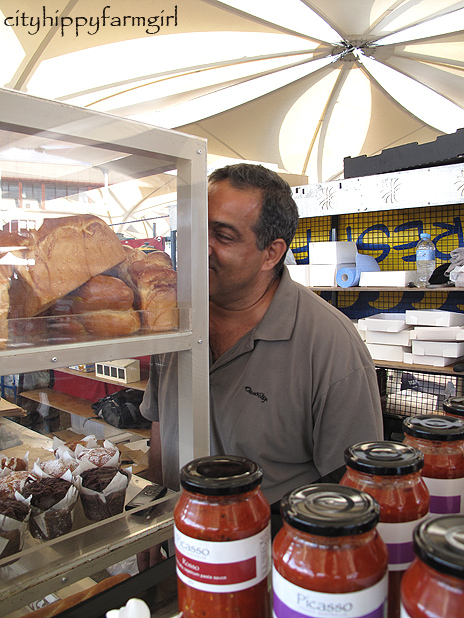
I do instead have the very friendly Malik. Malik has a cake or pastry for every palate that comes through the markets I’m sure of it. Starting his family run business 8 years ago, he saw a gap in the market for really great French patisserie goodies. He divides his time between 3 lots of farmers markets within Sydney, as well as supplying various retailers throughout the city. He is also soon to open a shop in Abbotsford, that will  include some of their organic range produce as well as those dream enducing brioche.

.

he’s a bit shy…


Blueberry Jam

Blueberry Jam

500gms blueberries

250mls water

bring it to a simmer

now slowly add

500gms sugar

1/2 lime juice

stir

a slow rolling boil until the jam thickens and passes the saucer test.


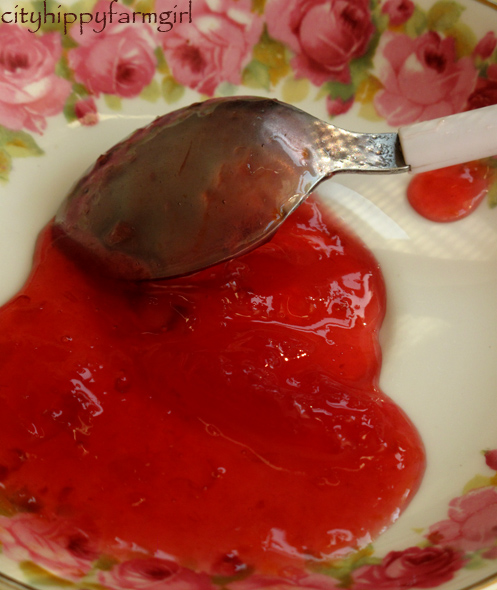
So what is the saucer test? Grab a small saucer and pop it in to the freezer while your jam is cooking. If you keep casting your eyes over the cooking jam, you will start to see the consistency changing, it will start to look like a thicker rolling boil. If you think it has started to thicken, get the cold saucer out of the freezer and dollop a small spoonful of jam on to it. Swirl it round a bit, and (hopefully) you will see that it has thickened up. Try running a finger through it. If it’s ready it will wrinkle a little and feel thicker.

Armenian Nutmeg Cake

I had a vague recolection of eating this cake once as a kid. It had popped back in my mind and the kitchen wasn’t going to be a happy place until I knocked one off.

Boy am I glad I did. So easy, and quite, quite tasty. The yogurt in it keeps it lovely and moist, letting the cake still taste just as good about 5 days later, and the nuts give it a bit of texture. It does puff up quite a bit with the bicarbonate soda in it, so don’t as I did, open the door and to peak inside, as it will deflate a little.

Also where ever you are, change the nuts on top to what’s local to you. I’m sure a lot of different kinds will taste just as delicious.

Armenian Nutmeg Cake

2 cups brown sugar

2 cups s/r flour (300gms)

125gms softened butter

mix it all together, until it looks like fine bread crumbs. Halve it. Placing one half in a greased and lined tin (approx 23cm- I used a springform), press it down firmly.

with the other half add

1 cup natural yoghurt

1 egg

1 tsp bicarbonate soda

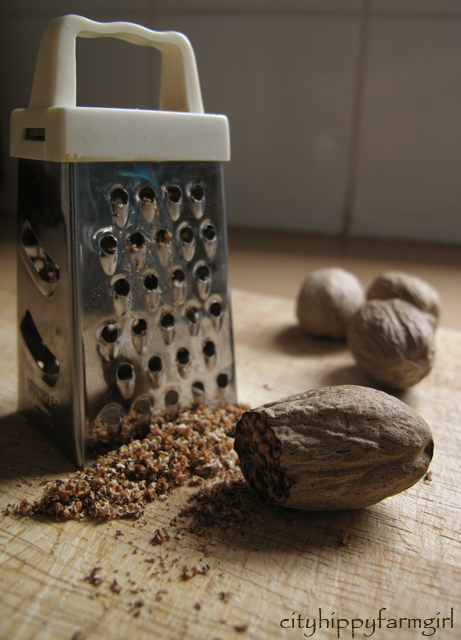
2 tsp ground nutmeg

1 tps cinnamon

mix it together, and pop it on top of the other mixture

decorate with whatever nuts are in your area, I used macadamias.

Bake at 180C for approximately 50 minutes.

Coconut Eggplant Curry- Frugal Friday

Coconut Eggplant Curry

In a pot add

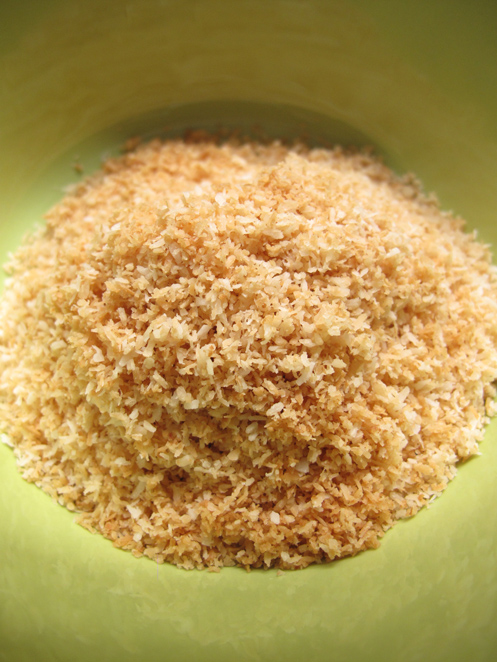
1/2 cup of desiccated coconut, dry fry it until golden coloured and pop in to another bowl.

In your pot add

vegetable oil, diced garlic, onion, knob of ginger, dried coriander, cinnamon, cumin, tumeric.

Cook it up until it smells fantastic.

Now add a diced eggplant, a can of tomatoes, a can of coconut milk or cream, your dry fried coconut and 8 kaffir lime leaves.

Leave the lid on and let it simmer until the eggplant has cooked down. Salt to taste.

Serve it with rice, a squeeze of lime or flat bread.

This recipe was originally a beef curry from The Real Food Companion. I’ve morphed it quite a bit now though so it barely resembles its parentage. The key to the curry is the kaffir lime leaves. I’m lucky enough to get them fresh from my dads tree, which I then stock in the freezer so I always have them available, (they last for months.)  If you don’t have access to these wonderfully fragrant leaves, lime zest could be substituted, or perhaps some other citrus type leaf (?)


landshare Australia

Last year some time I wrote about communal gardens and roof top vegetable patchs in the city. From there I was put on to the organisation Landshare in the UK, brought together by River Cottage (Hugh Fearnly- Whittingstall). That in turn led me to the Australian Landshare project, which hadn’t yet launched…(still with me?) Well now it has launched. It’s off and racing and needs peoples support for it to be as successful as the original one.

So what’s it all about?

“Landshare Australia brings together people who have a passion for home-grown food, connecting those who have land to share with those who need land for cultivating food. The concept of Landshare began in the UK, launched through the River Cottage television program in 2009, and has since grown into a thriving community of more than 57,000 growers, sharers and helpers across the country. Now that Landshare is here in Australia, we welcome you to come and take part in this fantastic initiative.”

Landshare is for people who:

  • Want to grow vegetables but don’t have anywhere to do it
  • Have a spare bit of land they’re prepared to share
  • Can help in some way – from sharing knowledge and lending tools to helping out on the plot itself
  • Support the idea of freeing up more land for growing
  • Are already growing and want to join in the community

Landshare Australia

milk and ricotta

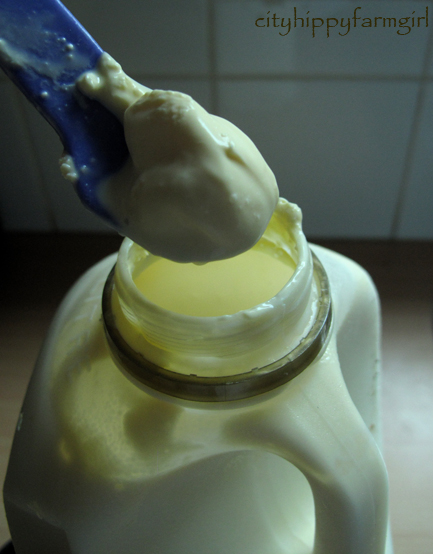
I recently bought unhomogenised milk. It had been so long since I had last seen it, that I just stood there and marvelled at it. A layer of cream sitting on the top, the  colour, and the little molecules of fat sitting on top of my tea. It really was worthy of marvelling at…sitting quietly looking into my tea with a contented smile and a slight raise of the eyebrows.

So what does homogenised mean? In a nut shell, it means it’s all been mixed up. All the fat and the milk has been mixed together, so when you buy it, it just comes out straight and white. Why is most milk homogenised? Because it looks better…and that’s the only reason.

There is a lot to be said about really great fresh milk. There is also a lot be said about inferior milk that is sold at really cheap prices.*  Availability is our problem. I can’t always get to somewhere that sells different brand milks. It’s frustrating that the leading super market brands don’t have much variety happening in their milk section. Especially as one of our leading generic brands smells and tastes like mouse. I thought I was the only one to imagine it, but a friend backed me up. Sipping on some milk some time ago and all I could think about was long pink tails, and tiny furry bottoms…No mousey milk for me please.

Looking at my unhomogenised milk, pondering on all the milky goodness I could be making from it. Cheese, yoghurt, ice cream, scones, breads, all using some form of the milk…

Next up I wanted to try making ricotta. Following The Real Food Companion instructions I had my lovely milk (Over the Moon), sieve, white vinegar, pot and wooden spoon all ready. I didn’t have two litres of milk so I quartered the recipe. I knew it wouldn’t result in much but as a first run, I didn’t want to waste a drop of the good stuff either on any mistakes. 500mls of milk in the pot, bring it to a foam (or 90C, not yet boiling) and then add 2 teaspoons of white vinegar to create the curds. There was a little bit of curdling action, but not a lot. The whey hadn’t separated enough. Frowning in to my pot I decided to heat it up again. 1/2 a tps more?…oops my hand slipped, make it 1 tsp more. A little gentle stir and instant separation. Ahhh, that’s better. Gently scooping it out to some muslin and a sieve, I’m left with ricotta. Really, rubbery ricotta…

Checking with the local cheese bloggers Gavin and Christine, I try to work out what I did wrong. Too hot? Too much vinegar? It tasted ok, but it really was a tad rubbery. I sat on it for an hour or two and then decided that I would try it again, other wise it would bug me all day.

Second go. Left it at 2 tsp of vinegar, different milk this time and just a fraction longer on the cooking time. We are talking extra seconds cooking time, that’s all. Those extra seconds made the difference. It was softer, more delicate, and really good….and really quite easy.

(The whey that I was left with, went into some sourdoughs.)

Third time around and I’m definitely getting the hang of it. I can’t believe how easy it is to make and how I hadn’t done this before. I’m also struck by how so many really easy recipes have fallen by the way side in order for things to be convenient for people. Such simple meals that can be made with so little ingredients, if only people knew how. This is the sort of conversation topic that could be passed back and forth over and over until the cows came home, milked themselves and made their own ricotta… but for the sake of airing a little, I’ll continue.

These simple cooking lessons that could be taught to another person in an afternoon seem to be quietly slipping out the door. Things like yoghurt, ricotta, labneh, mascarpone, sour cream, butter and all their lovely by-products, are simple to make and yet they can be quite expensive to buy. Not to mention all the plastic tubs that you are buying along with the products. Some would argue that they are recyclable, and yes they are. But if you can spare an extra 5 minutes to make a kilo worth of yogurt, than you have just saved 52 plastic kilo tubs of yoghurt per year, (going on a kilo a week, even more if you are eating daily individual tubs.) Visualising how much that would be for a single person  or a family, in a life time is….sobering. No more plastic tubs and saving a fair whack of money to boot.

Maybe a reason to go give someone a dairy cooking lesson?
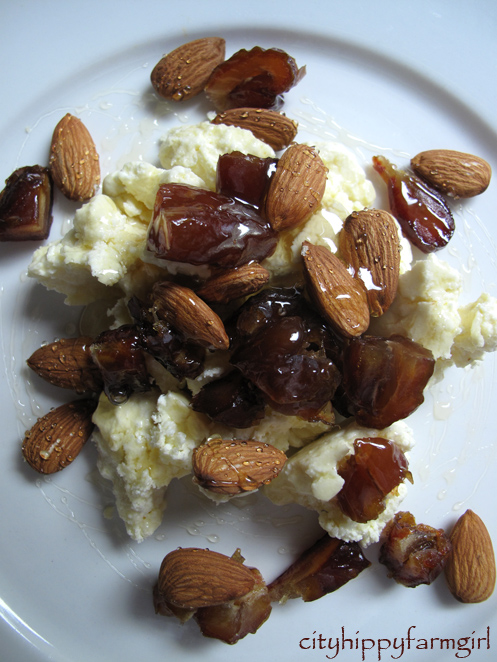
What’s for lunch?

Ricotta

raw almonds

chopped dates

drizzle of honey

* For more information on Australia’s cheap milk problems please read here.

** For a different way to make ricotta and using goat milk, have a look at Linda’s The Witches Kitchen.

summer loving jam


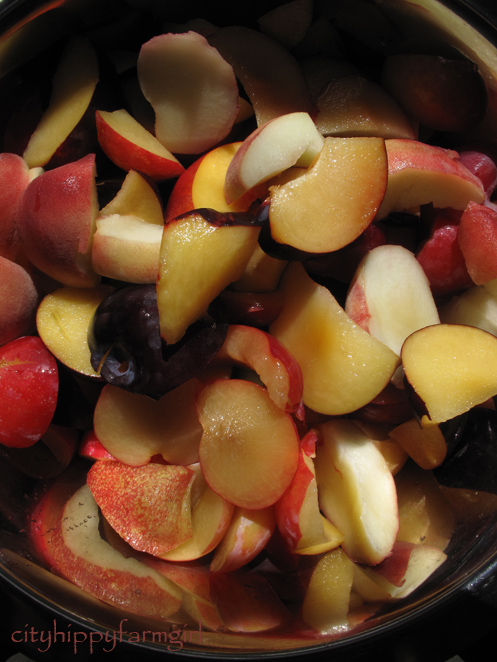
I don’t know if this was the best name for the jam. It’s been such an odd summer. Bakingly hot this week, a huge cyclone hitting the country and catastrophic flooding in recent weeks. The middle of the night being woken by the smell of a fire, it’s certainly been an odd summer. Fruit and vegetable prices are set to increase due to the natural disasters effecting so many farmers, so I actually feel kind of lucky to be able to even make this jam. To be in a position to cook up and store some of summers beautiful stone fruit offerings. Eaten mindfully and enjoying every spoonful that’s for sure.

Jam really is so easy to make. It’s been said countless times before, but it really is such a great way to preserve the season.

Equal parts sugar to fruit, (generally) if needed some pectin of some sort. Cook it up until it thickens and hey presto, done.

Summer Loving Jam

plums- two kinds

peaches

nectarines

juice of one lemon


ratio

1 kilo fruit

1 kilo sugar

500mls water

I just roughly chopped the fruit and then gently with a hand held mixer, blitzed any big lumps. If you don’t have that, cut it finer, (or enjoy your lumps.)

Cooking at a rolling ball, until cold saucer test stage. In to sterilised jars and store.

chevre, it’s a little bit goaty

I’m having a bit of a goaty moment. Not the whiskers on my chin kind, but goat cheese. Otherwise known as Chevre. I had tasted a few really great goat cheeses while I was in Tasmania and I wanted to continue the love when I got home. However, I didn’t want just any old goat cheese. I wanted to see if I could find a great local one. A quick search, and hey presto…I found Willowbrae.

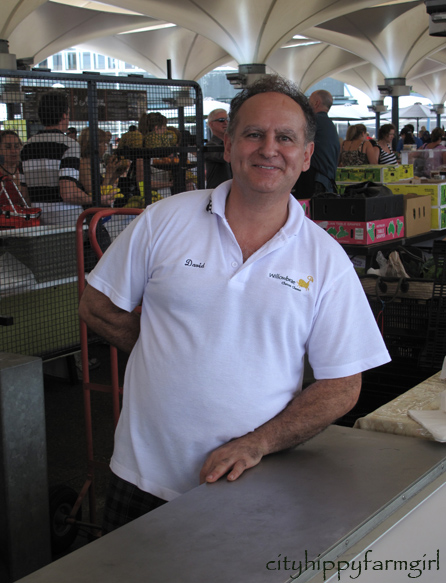
Willowbrae is a family run goat farm, based at the foothills of the Hawkesbury Valley. They produce a number of products; from an unsalted 8 hour cream, the very popular fresh curd, marinated fetta, and mould ripened cheeses.  Talking with David (at Fox Studio Farmers’ Market) who runs the front and back end of the business, (as he described) he milks the goats twice a day, while his wife and daughter do the cheesemaking.

The more I try of goat cheeses, the more I like. The very popular fresh curd is subtle, creamy, and really soft on the palate. I find this kind of cheese is really versatile to play around with. Whether it’s teamed up with a savoury style dish or something sweeter.

So what does Chevre mean? It translates as goat in French, and is a generic term used for any goat cheeses. Musing on this I wondered if Italians called Chevre…well Chevre. Apparently not. Caprino is their term for goat cheese. Again derived from the word capra, meaning goat. I kind of liked the sounds of caprino. (But then as many people before me have said…everything sounds better in Italian.)

Back to the Chevre. Where to buy some of Willowbrae’s delicious cheese? See here for market days and times.

And what to do with it once you have the tasty little goat milk goodness in hand?

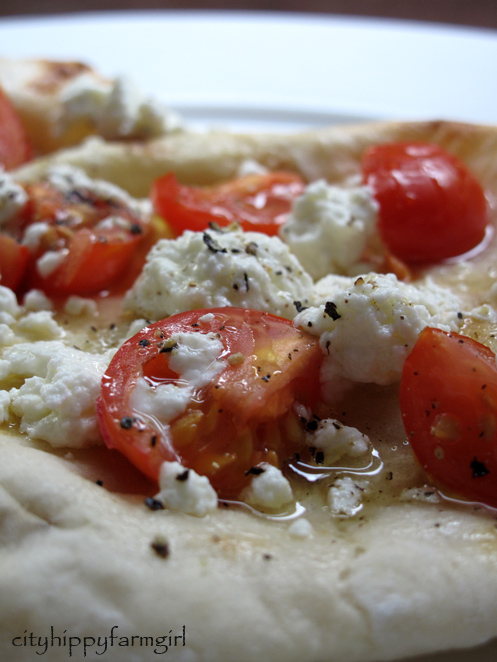
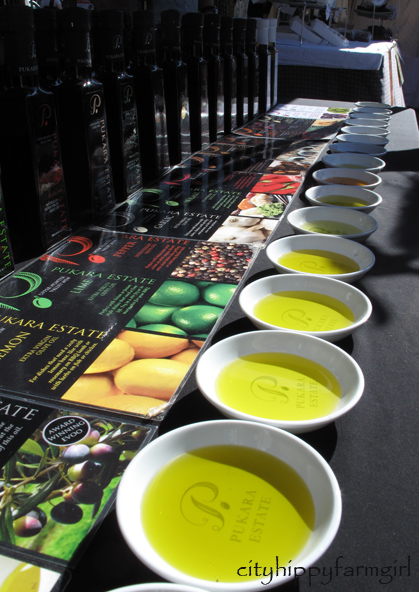
First up, I quickly made up some sourdough flat breads. Some of my dad’s garden cherry tomatoes, (the sweetest I’ve tasted in years.) Some of the creamy chevre, and a drizzle of The Little General’s olive oil.

Simple, I know where it all came from and damn tasty.

hamburger with the lot, thanks love…

Hamburger with the lot thanks love…

If you are an Australian, you may have heard these words before. If you like your burgers and frequent take away places regularly, you may have even heard it a lot. If you’re not Australian and are wondering why bother posting about a burger, it’s because it’s not any old burger. You see it has beetroot and pineapple on it, which are the two crucial ingredients to take it up to Aussie Burger status.

Around the country, patties have been flipped, onions have been sliced and cans of beetroot have been opened. Money exchanged, and great mouthfuls of burger have been hurriedly eaten before the whole thing lands on your lap. With this many ingredients its hard to keep a firm hand on it all and show that burger who is boss.

Back in my burger flippin’ days, we would have competitions to see who could make the biggest one, without letting anything fall. The heat of the grill, the timing of the orders piling up, challenge of building your burger to be the greatest heights a person had ever seen! However once the burger was out of your hands, and into the customers, it was up to them. No blame could be taken if their burger became a tumbling pile of slop in their lap. With beetroot stains down their post beach kaftans, it was up to them to wrap their chops around the towering extravaganza.

So how to make your own Aussie Burger with the lot?

Burger bun; I made up some sourdough rolls. Easy, and healthier than your standard old white ‘fluffy’ bun.

Now you have to build…

lettuce

sliced beetroot

sliced pineapple

tomato

fried egg

burger pattie

cheese

tomato sauce

onion

Good luck.

If you are making burgers at home, there are so many things you can add. They don’t have to be a greasy pile of slop. Swap the beef pattie for a lentil one, or some grilled tofu. Or even just keep it as a salad. Make your own tomato relish or add caramelised onions. Swap burger buns for flat breads and roll it up.

The possibilities are endless.

Now just be careful with that beetroot…


This recipe submitted to yeastspotting

How to tell a farmer you love them

Farmers’ Markets. I’ve said it before and I’ll probably say it another 5000 times.

I love them.

Having that contact with the growers and producers makes the food taste so much better for it. Knowing that my rhubarb was picked the day before. My milk comes from a single herd, and my tomato comes from an heirloom variety thrills me to bits. (A feeling I don’t tend to get coming out of the supermarket.)

Visiting Orange Grove Farmers Market recently I was actually quite excited to see the place had grown since I was last there. At 8.45am the place was jumping. Baskets were emptying, queues to pay were forming and independent stall holders were all doing their thing.

With the recent devastating floods around the country, I feel this is the time to make that special effort to support our local producers. By shopping like this I am showing my support for what they do. Giving them some love in the form of our dollar. For an idea of what it is like as a farmer on the other end please read Kate’s, (from Daylesford Organics) recent post. I can’t begin to imagine how hard it must be.

Buying straight from the producers gives you a freshness that just can’t compete with buying in a supermarket. That oddly misshaped heirloom tomato the size of a babies head, you are not going to find it in your leading supermarket. Tasting of summer, with seeds squirting down your chin. Team that up with some locally made cheese and you are in business.

Heirloom, natural, organic, single herd, artisan, picked yesterday, seasonal, fresh, locally grown….it’s all there, just go take a peek. Our job is the easy one, go that extra kilometre, pay that extra dollar and show them your love.


picking your own blueberries

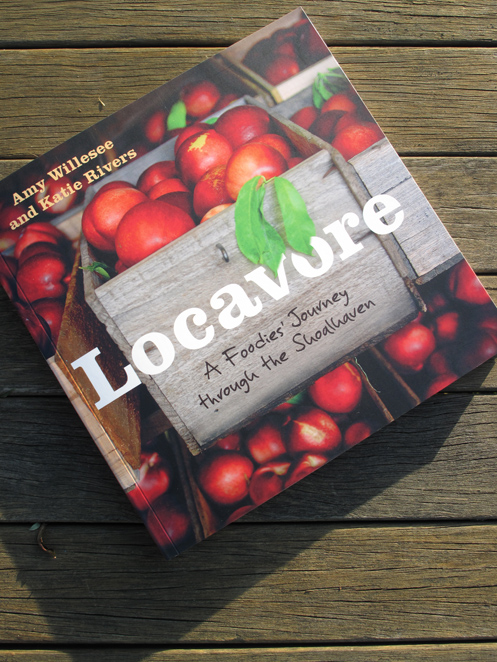
Standing in Berry Sourdough Bakery, waiting for coffee. My eye catches sight of a rather enticing book; Locavore, A foodies journey through the Shoalhaven. Hello, what have we here?..The Shoalhaven is an area that sits just south of Sydney, and according to this book there is a whole wealth of wonderful food deliciousness just within reach. Now I already knew of a few, but to discover more? Well, I had to buy the book didn’t I?

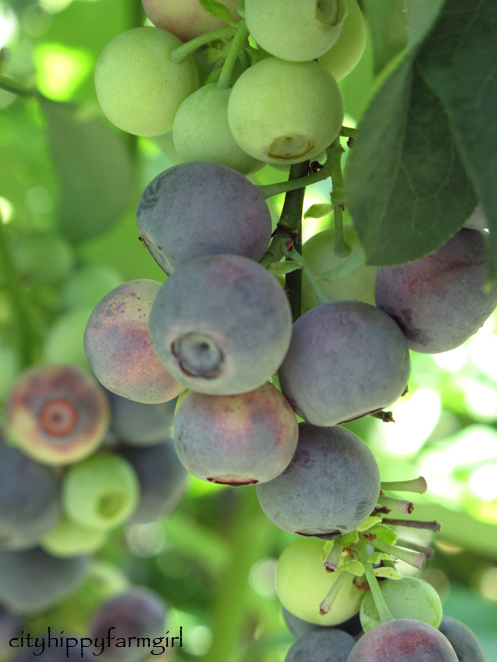
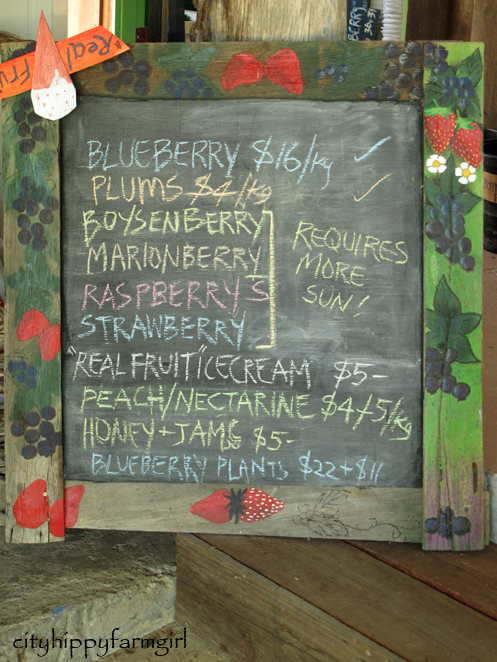
One of the places mentioned is Clyde River Berry Farm. A place where you can pick your own fruit. Primarily a blueberry farm, it also has a variety of other berries, peaches, plums, nectarines, honey and jams.  A slight detour on a dirt road and we were there. Obviously very popular, as the place seems to be rather busy. It’s bakingly hot, the middle of the day and we still had a long way to drive with The Monkeys. We wander through the orchard rows, picking blueberries, nectarines, plums and peaches as we go. At least now, we had something to munch on in the car.

Munch we did. It was so lovely to be able to taste fresh fruit. Really, fresh fruit. Selected by the grubby paws of Little Monkey and Monkey Boy, nothing could be finer.

Some Blueberry tips:

* Let the berries stay on the bush for a week once ripened.

* Once the fruit has been picked, it can stay in the fridge for up to a week plus.

* If still uneaten after a week, can be easily frozen.

* Don’t wash them first before freezing, as they won’t defrost well.

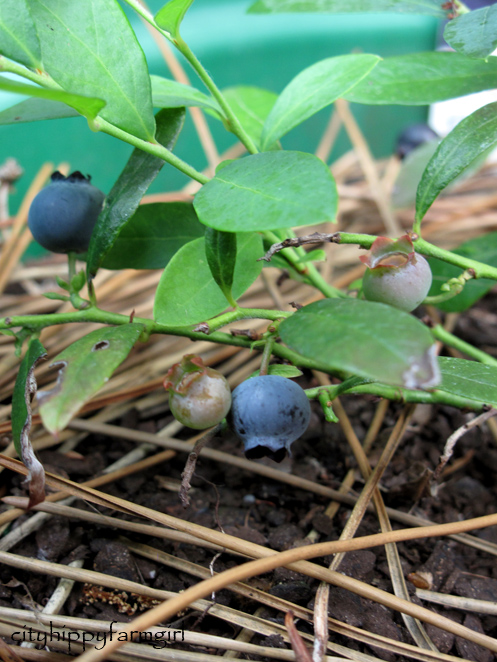
Awhile ago a reader suggested I try growing blueberries after hearing of my rather dismal gardening in pots effort. The next week I went out and bought a bush. I still haven’t killed it, (hooray!) it seems to be quite happy in a pot, no critters have demolished it, and I have now tasted my very own blueberries from it. So Lotte, if you are still reading…Thank you.

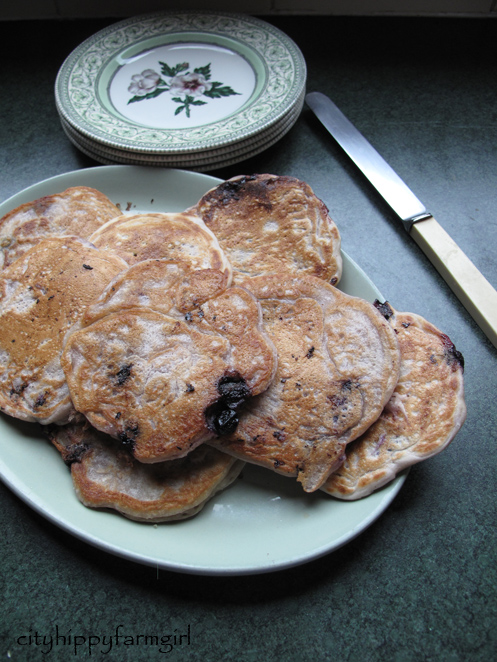
sourdough blueberry pancakes

Clyde River Berry Farm is open December- January. 10am-6pm.