the humble crumble, and a little bit on what I think…

I’ve waffled along on a few other people’s blogs recently about a few things food related. Things that I have felt are important, and before I know it my fingers have typed out half an essay. Rather than completely taking over someones comment sections saying what I think I’m going to try to rustle up a few brain cells and see if I can form an opinion here on my own blog.

Here’s a little snippet of what I think…

(Scroll down to the bottom if you want to skip the soap box waffling and go straight to the crumble.)

* I think it makes sense to eat seasonally.

* I think it makes sense to try and get a lot of your foods as locally as you can, (if you can).

* I think it makes wonderful sense to know what you are eating, and where it came from.

* I think it makes a huge amount of sense to know how to cook.

You don’t have to be cooking like a chef, but a little cooking knowledge can go a long way. You need to eat, so maybe you need to cook. Seeing pre-cooked rice, and avocado in a tube in the supermarket makes me sigh. Is this becoming our normal? Cooking rice, surely is no more difficult than learning to tie your own shoelaces, (maybe not at the same age.) It’s tricky to begin with, gauging the right way to do it, but then with a little practice it becomes second nature and you just do it.

Why do people say they can’t cook? This brings up so many questions in my mind. Is it because they have no interest in it or are daunted by being in the kitchen? If kids were brought up watching other adults go about preparing evening meals, I think it becomes second nature and an almost default setting for them. Here, stir this pot while I chop this. Turn it off when you see bubbles. Do this enough times and without even noticing you child has just absorbed some valuable cooking experience. Maybe that experience won’t be drawn upon completely while they are still living at home and busy being an insufferable teenager, but that experience will be invaluable when it’s time to move out. (No need to buy pre-cooked rice and avocado in tubes then.)

It’s never too late to learn to cook. My grandfather in his late 70’s started to cook, and I’m really proud that he has taken that on. Not out of necessity, as my grandmother still produces the majority of the meals, but out of interest. A school fundraising cookbook landed on his lap, and something in the bottom of his belly was ignited. He started to bake. Under the watchful eye of my grandmother, he starting producing snacks and meals and getting an obvious enjoyment from it. I think he also cottoned on to the fact that if he cooked, he could cater things to his own taste buds and not what someone else wanted him to eat. Sweeties!

Simple cooking doesn’t have to be tasteless. I’m sure some of my most stand out meals have been the ones with the least ingredients. Zucchini quickly cooked in some diced local garlic and olive oil, with a little sourdough on the side and I’m a happy woman. For a lot of lucky people there is an amazing amount of choice of foods out there. Simple doesn’t have to mean an un-interesting diet.  Olive oil, garlic, asian/middle eastern style spices, and legumes can be cheap and all help in making a meal mind blowing within minutes. Choice is a wonderful thing. I really value the fact that I have food choice and I don’t want to feel indifferent about those choices.

Celebrity and competitive cooking shows aren’t a bad thing. In prime time television in every corner of the globe there is probably a cooking programme going on. A lot of people have embraced the celebrity chef and televised cooking competitions. If this encourages people to cook, to jump off the couch and head towards the kitchen, surely it can’t be a bad thing.  A celebrity chef as a pin-up idol seems to be a much nicer alternative to some C grade celebrity famous for being famous. If I had a tween, I would much rather posters of Jamie Oliver on the wall than ….some toad who just got arrested again. There will always be some negative things to watching these programmes, but I really think the postitives far out way. I’ll take watching and learning how to cook a souffle over another dead body in CSI something or other any day.

Knowing where your food comes from, brings a sense of value. I love knowing where my food comes from if I can manage it. When ever a meal is produced from either making it myself or buying the ingredients from a producer I have met or know something of… pickle me in ginger if I don’t feel warm and fuzzy from it. I’ll be more inclined to eat in moderation and be mindful of how it tastes. Mouthfuls aren’t being thrown back willy nilly without a backwards glance to the plate.  If I’ve just spent 2 days making that sourdough, I’m damn sure I’m going to appreciate every crumb of it. I’m really proud to be able to produce something tasty to go on the family table. I have a lovely memory of the first time Monkey Boy helped out making dinner. The pride he had, and the joy he got in telling Mr Chocolate, “I made that…isn’t it delicious!”

Knowing how to cook helps with staying on a budget. Knowing how to cook and stretch the ingredients that I have, has taken time and practice, (and still with much more learning to go.) Knowing how to cook gives you cooking options. Cooking to a budget, also makes you resourceful with ingredients. I’m sure that as a family unit we are spending less on food now than when Mr Chocolate and I were Monkey-less. It bugs me serving up the same meal for 3 consecutive nights, I lose interest and so do The Monkeys…But, I do get a kick out of ‘upcycling’ the meal into something else.

Bolognese- to mexican beans- to huevos rancheros

Left over rice- to bread

Dhal- to lentil burgers

Porridge- to sourdough oat bread

I also get a huge kick out of being able to preserve the seasons. Jams, chutneys, marmalades are staples and used daily in our family eating habits. Jams are used to sweeten homemade yogurt, marmalades to jazz up toast and chutneys to take a simple dinner to another level. In time to come, (with more space and more access to produce) I would love to have preserved fruits, tomato sauces, passatas and other goodies all lining my cupboards, but for the moment I’m happy with what I am doing. They aren’t tricky, and it saves us money. Oodles of it, I’m sure.

Having my own vegetable garden would be lovely, but… I can’t grow more than a few token extras where I am. So, by choosing to buy from local farmers markets, or using CSA boxes when ever I can, (and it’s convenient) it helps with buying locally, eating fresher and knowing what’s in season. When I shop at the local fruit and vegetable shop or supermarket, yes, it’s convenient by being all in the one spot, but I wouldn’t have a clue whats in season. Not a tooting clue.

The internet is full of recipes. Lots of them. You can learn how to make just about anything you could possibly imagine at the click of a button, and this I think is rather lovely.

So tell me…  what do you think? Everything up for discussion if you have the time and the inclination…

The Humble Crumble

There are so many variations on the humble crumble. It can be a quick an easy dessert stand by, and without it in my life there would be a huge crumbly hole.

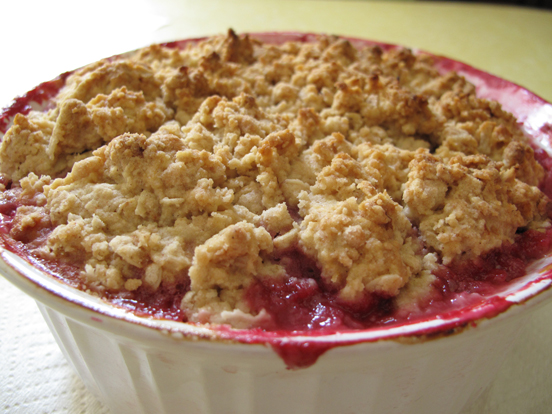
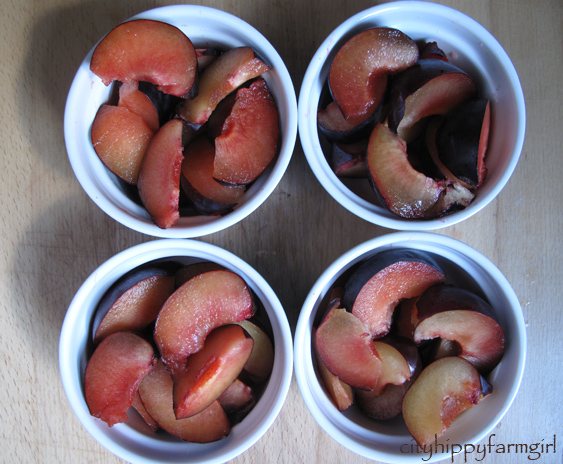
The quickest and most basic way I have found is to…. melt 100gms butter. Add 1/2 cup brown sugar, and then add one cup of plain flour. Fork it through so it resembles bread crumbs and then lay it on what ever seasonal fruit you have.  Chopped fresh plums, cooked apples, mixed berries….endless possibilities. It can go in single ramekins, a large deep dish, a low flat dish, an oven proof pot. What ever you have that is bakeproof is fine. Fruit in and crumble mixture on top. From those three topping ingredients you can build. Additions of oats, lemon zest, ginger, coriander, vanilla, almond meal, make it cake-like, crispy, cobbler-esque…

So many combinations of deliciousness! Then bake it all at 180C, until golden.

sweet potato leaves, it’s Frugal Friday

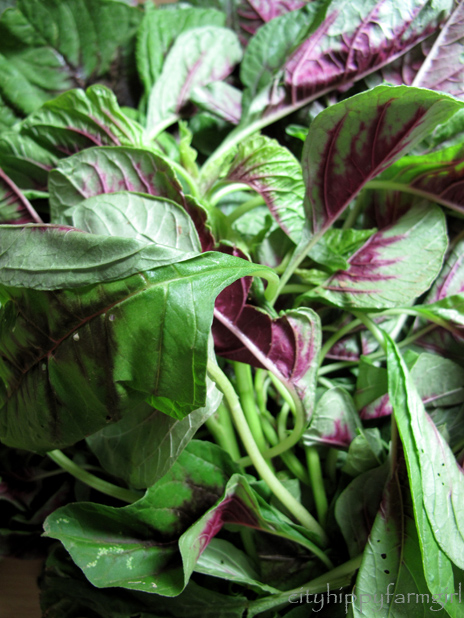
Sweet potato leaves have come up a few times in my Foodconnect box. At first (along with my red amaranth) I didn’t know what to do with it. A little playing though and another healthy leafy green vegetable to add to my growing list of all things good.

Now what to do with it?

It cooks up similarly to regular spinach, quickly and in a wilty kind of fashion. I used it here with potatoes, as I seem to have discovered there are good potatoes to be had in this world. Who knew!

In my trusty flat bottomed wok, (or use any old pot).

I added 2 good slurps of olive oil

an onion and diced garlic

pop in some already cooked chopped potatoes

give it a one two

add some sliced capsicum (peppers)

and the plucked whole sweet potato leaves

wilt it all on down for a minute or two

serve and drizzle with a little extra olive oil and a squeeze of lemon.

cooking with red amaranth- Frugal Friday

Red Amaranth is a delicious leafy vegetable that I had no idea what to do with. Lifting the lid of my Foodconnect box, sitting pretty up the top of the vegetables, I first wondered what it was and then what the devil I was going to do with it?

Plenty it seems. It’s used in Asian and South American cooking and can easily be used as a substitute for spinach or any other leafy greens.

*****

In a flat bottomed wok add,

diced garlic

sliced onion

vegetable oil

sesame seed oil

Cook it up for a few minutes and then add

amaranth leaves (any other leafy green vegetable you might have, spinach, silver beet…)

a slurp of kecap manis (Indonesian sweet soy sauce)

a slurp of fish sauce

stick a lid on it and let it wilt down. Team it up with a bowl of basmati rice.

In the flat bottomed wok, crack an egg. Cook it through, and pop it on top of the rice and amaranth (leafy greens).

Back to the wok, add a small handful of local nuts (sesame, pecans, peanuts, whatever you have in stock…).

Once toasted add to the top.


Bubbles, bubbles, bubbles…

Bubbles Recipe

Glycerine    1 part
Dishwashing liquid    2 parts
Water   7 parts

(Recipe is approximate. You may have to play with the ratios a little.)

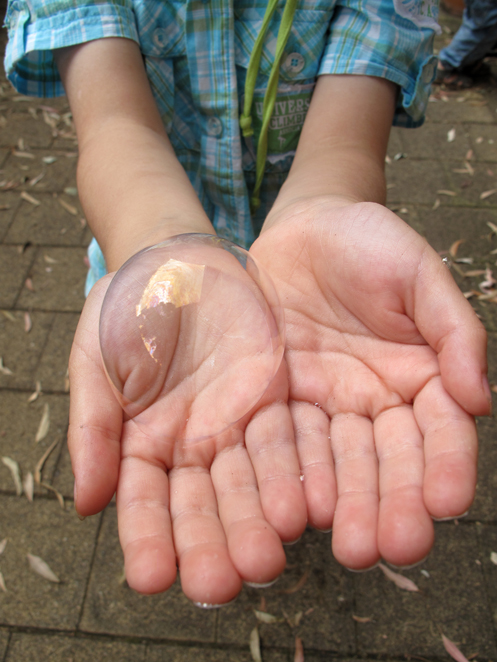
Most kids get a kick out of bubbles. Actually I like bubbles, so perhaps there are a few adults out there too that would be keen for a bubble recipe. I just use my kids as an excuse to use them.

Bubbles love a wet environment. So if it’s humid, rainy kind of weather, perfect for bubbles. In the bath, with the bathroom door shut (trapping that moist air in ) perfect for bubbles. Snowing outside…I have no idea, but give it a go. It could  be perfect for bubbles. When the bubbles pop straight away they are drying out, the glycerine helps to stop that, and the moisture in the air as well.

Make your mixture up and leave it a few hours, or even over night (I’m not sure why, but it seems to work.)

You can use anything as your bubble maker. We had an empty container that had been given to us previously, but an old wire coat hanger twisted in to a circle can work just as well. Bigger bubbles!

Now go get to those bubbles.

(they also make a great inexpensive gift.)


* Where to buy glycerine from? Your local chemist. Not expensive and will do you quite a lot of bubbles.

Travels with Sourdough

Almond and Raisin Sourdough

The underside of the Almond and Raisin Sourdough. A toasted almond crunch to a slice.

Wholemeal sourdough.

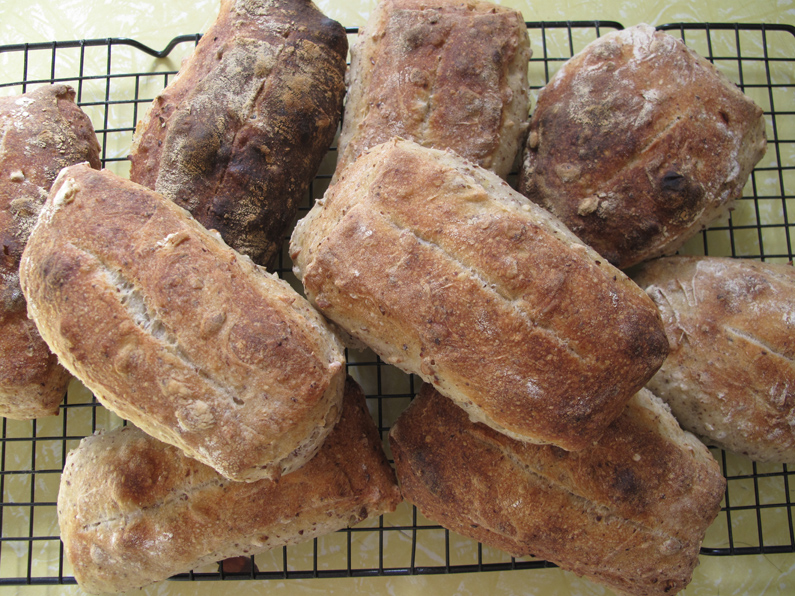
Sunflower and Linseed Sourdough Panini.

Date and Pecan Sourdough

350gms starter

600gms flour

2/3 cup chopped medjool dates

1/2 cup chopped pecans

1 tbs raw sugar

good shake of cinnamon

1 1/2 tps salt

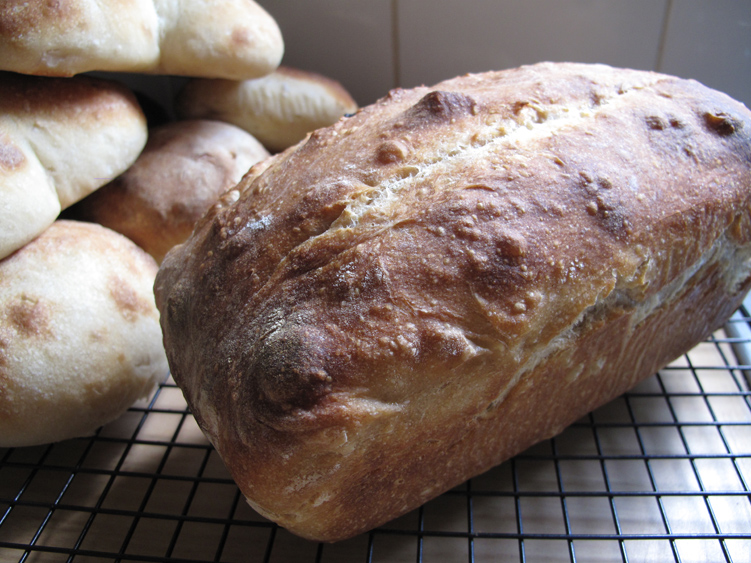
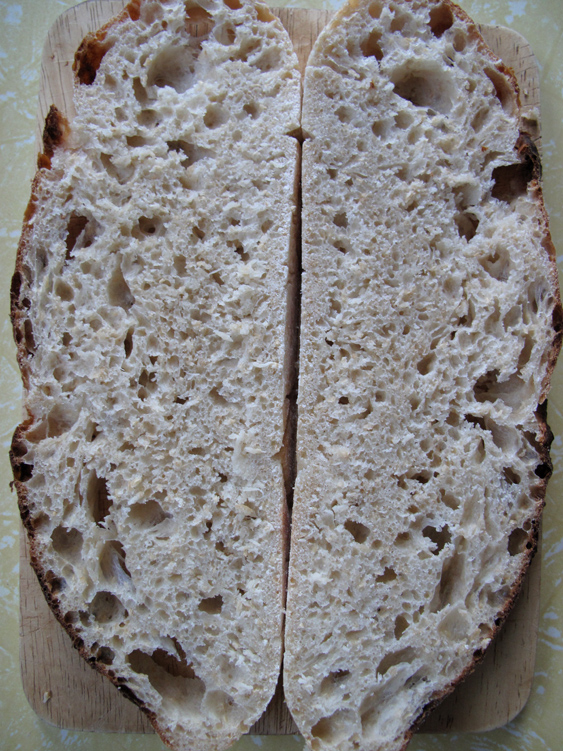
I made this sourdough on the warmest day so far that I have toyed with the sourdoughs. Consequence- a lighter sourdough then I would normally make as it rose so quickly. I did two lots of folds in between proves. Verdict- um yes please! (My mum liked this one too, and said that I could make some next time I came down to visit. Have starter…will travel.)

10 tips for cleaning with Bicarbonate Soda

Bicarbonate of Soda (Baking Soda) is great for cooking when something needs a little lift. All it needs is a little wet and acidity and whoosh! Instant leavening agent, (it actually gives off bubbles of carbon dioxide, which are trapped by the baking.) It can also be used as an acidity regulator, used in things like the Sourdough Oat Cakes.

Cleaning purposes- It is a naturally occurring product which makes it perfectly environmentally friendly when used for cleaning and, and neutralizing. For cleaning it’s similar to when used in cooking, whoosh!..and its clean.

10 Tips for what to do with your Bicarb Soda

* A mixture of bicarb, vinegar, dishwashing liquid and eucalyptus oil is my standard clean EVERYTHING solution

* A combination of bicarb and water mixed together to form a paste, then put on to clothing stains. Let it soak in for a while then wash as normal.

* For smelly shoes add a good sprinkling of bicarb soda over night.

* For smelly bins, sprinkle a good layer on the bottom, leave overnight and wipe clean.

* Deoderise carpets with a sprinkling over area and then vacuum. With stains on carpets, mix up a paste of bicarb and water, leave to dry and then vacuum.

* Polishing up jewellery and silverware, and chrome make a paste of bicarb and water, scrub with old toothbrush and then just wash off.

* Clothing whitener, add 1/4 cup bicarb to half bucket of cold water, leave clothing to soak overnight in a bucket and wash as normal. (No need for things like Napisan)

* For tea stained cups, add a paste of bicarb and water, leave for a little while and then rub clean.

* Sprinkle bicarb soda over cat litter tray. It absorbs any moisture and neutralizes any odours. Cat vomit on the carpet, same thing.

* Cleaning out your washing machine add, 1/4 cup bicarb to the soap area and 1/4 cup vinegar to the softener area- short cycle.

There are sooo many other things you can do with Bicarbonate of Soda. Its cheap, its environmentally friendly and it has a cleaning use for just about everything you can think of.

Monkeys dance the Banana Tropicana

Their eyes raise expectantly.

Looking at me, ready.

His toe starts wiggling. His brothers foot starts tapping.

The knees start bopping up and down. Their heads begin to nod along with the beat.

The music builds up and so do they.

An arm gets pushed to the side like a puppetier is controlling it. Each jab of the elbow is timed with the pounding beat. Feeling the rhythm from deep within, heads held back, the music takes them over.

The Monkeys dance.

Dance like their lives depend on it.

They dance for a slice of cake.

****

Banana cake has long been a staple in this household. What to do with a few manky bananas?… Banana smoothie, banana bread, banana muffins or banana cake. Now banana cake is usually a bit of slap and dash sort of affair. I cook with what I have at hand, and that depends on whether it is a healthy one or not (honey instead of sugar, substituting seeds for flours etc.) I thought it was about time I gave the old Banana Cake the respect it deserves.

Banana Tropicana Cake

4 mashed up bananas

125g softened butter

1 teaspoon vanilla

1/3 cup rum

3/4 cup coconut

2 1/2 cups s/r flour

Mix wet ingredients together, then fold in coconut and flour. Pour into greased and lined tin. Cook at 170C for approx 1 hour, or until skewer comes out clean.

This is a lovely moist cake with medium tones of rum. Actually The Monkeys didn’t get to sample this one, as I thought it was a bit too rummy for them. Plus I wanted it all for myself. Three days in and it was still a lovely moist cake that tasted just as good as the first day.

Sourdough Oat Cakes

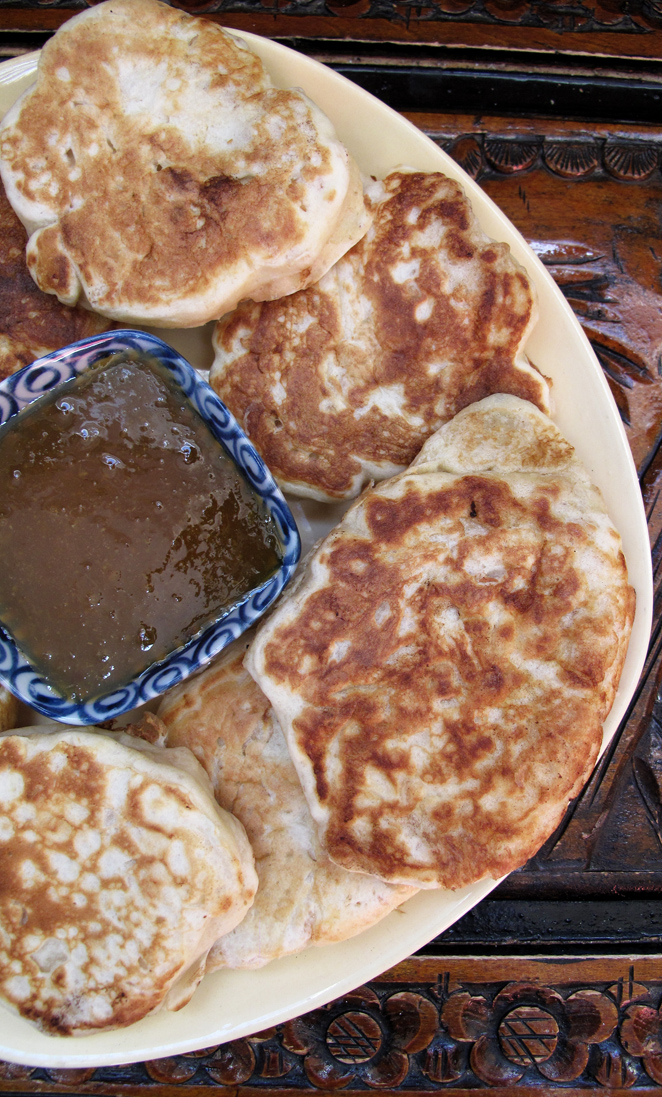
Are they a pancake or are they a pikelet? Or a they simply an oat cake? I started making pancakes with oats in them quite awhile ago.

1/ It was something to do with left over porridge. (as an alternative to my grandmothers staple ‘mock brains‘).

2/ I added a lower glycemic index to the old pancake.

3/ I thought it was a bit tastier and more substantial than a traditional pancake recipe.

Not that I don’t love the traditional kind, but I am always hungry not long after, and with the added oats it keeps The Monkeys going longer as well. One day while talking to a Scottish friend, these little pancakes came up. She said that she had always made them and back home she called them oat cakes. There you go… oat cakes sounds much more appealing than porridge pancakes.

Now seeing as though I was well and truly aboard the sourdough train, I thought lets see what happens if I add some starter. I had originally wanted to make sourdough crumpets, but didn’t have any rings to cook in them so this was somewhere between. I was mixing it all up and Mr Chocolate went past asking what I was making… just playing. Seeing what will happen if I add this and this and then do this…

Verdict?

Deeelicious! Well thats what Monkey Boy said anyway. I’m sure the Little Monkey meant it too with his cheeks stuffed full like a squirrel. My oat cakes will now always be sourdough oatcakes. Gobbled up with in minutes.

Sourdough oatcakes

1 cup sourdough starter

1 cup plain flour

1 cup milk

50 gms butter

2/3 cup whole oats

1/2 tps bicarb soda

Put butter and oats in microwave together, (butter on top) and heat till melted. Add starter, flour, milk, buttery oats to mixer (I used a dough hook) and mix until well combined. Fold in bicarb soda and let sit for 3 hours in warm spot. Spoon into frying pan and cook as you would pancakes.

Evolution of Frugal Food

To me the evolution of food is fascinating. How dinner plates get changed over the years, dependant on where you live and what is available. Asking my family recently about food they grew up with had me fascinated as there were details there that I hadn’t been told before and I hadn’t even considered.

My grandmother grew up during the depression, in rural Australia. Born in 1930, her childhood years saw the brunt of the depression years followed by World War II. With both these factors, frugal dining wasn’t a life style choice, it was way of life. It was the only way of life that she knew for those first formative years.

A dinner meal might have what ever vegetables were able to be grown in the back yard. Such as potatoes, carrots, turnips, (turnip tops were eaten as greens). Mutton was the meat of choice with all parts being eaten. Mock brains were a favourite. Which consisted of left over porridge, beaten egg, salt and pepper rolled in to a rissole and fried. Rabbit would quite often replace chicken as it was cheaper and more readily available.

There was a lot of rationing during the war time, so this meant that everyone stretched out there dinner plate. Waste was not an option and anything ‘leftover’ was turned into something else. Every gram of fat dripping was used, and any meat that wasn’t as fresh as it could be was cooked up as a curry. A lot of people had chooks in the backyard, so there was always eggs.

Whats for dinner in 1930-1940 at Grandma’s house?

A boiled leg of mutton, with some boiled potatoes, carrots and turnips on the side.

When it came time for my grandmother to feed her own children, waste was never an option again. Even though bringing up kids in the 50’s and 60’s was much more a time of plenty. For my grandparents there was a certain amount of comfort brought with a steady doctors income and no Depression or World War lurking. However, to be wasteful of food was not going to happen. Those frugal beginnings were now in built.

My father would often eat food such as lamb brains, …. Much to his now disgust, offal was often served to both him and his younger siblings. This was a generation that hadn’t seen hard times, but still my grandmother liked to put on the table all parts of the beast. Those meaty offcuts so relished by her family during her childhood days. Meat was served at every dinner, in the form of lamb shanks, liver and bacon, rissoles. Spaghetti bolognese emerged and desserts were simple, such as bread and butter pudding.

Whats for dinner in 1950-1960 for my dad?

Meat and 3 vegetables. Lamb cutlets with steamed carrots, potatoes, peas.

After my father left home and had met my mother it was a time of the 70’s. New tastes were on plates. Things were appearing that hadn’t been available before. Food stuffs that were foreign and exciting. With more immigrants coming to Australia, also brought different ideas. For two young hipsters, living out the back of a kombie however food remained frugal. My parents were inspired by the ‘hippie’ earth magazines of the time, bringing new often Indian inspired dishes to the table. Spices such as cumin, coriander, tumeric, that hadn’t been used by their own families growing up.

My childhood, also saw its fair share of frugal food dinners. The dollar being stretched to feed myself and my siblings. There always seemed an abundance of food available, but looking back I can see that my mum would work for many long hours in the kitchen to achieve those delicious tastes. Fruit was preserved, jams were jarred, fish was bought whole, vegetables were bought in bulk (if not grown), and bread was made third daily. Chooks were always in the back yard. This substantially decreased our weekly food bills.

A frugal dinner in my childhood was often a bowl of lentils, Indian style. This dinner, some 30 years later is still a favourite with my siblings. A source of comfort? A nurturing food memory perhaps? Not one for cereal, my sister would often be on the brink of tears, if there hadn’t been enough lentils left over from dinner for the following breakfast. Yoghurt was emerging, vegetables such as capsicums were becoming available and olive oil was rearing its head as a food item rather than a medicinal one.

Whats for dinner 1970-1980 on my childhood plate?

Indian style lentils, served with brown rice.

Cooking a frugal dinner now. Jeez, so many options! So much produce is grown in Australia now, so many wonderful things to make while still keeping within a budget. My monkeys are lucky I think, so many great things. I’m sure as they get older there taste buds will mature, and my cooking habits will evolve as well. A diet that surrounds so many dishes that my grandmother in her childhood would never have heard off. Pesto, dhal, zucchini, capsicums, houmus, pizza, cherry tomatoes, all regular stars of the weekly dinner plate now.

So what is for dinner in the 2000’s on The Monkey’s plates?

Spaghetti with garlic, olive oil, diced capsicum, cherry tomatoes, and shaved parmesan.

So cheap, so easy, and utter silence at the table. Nothing but the sweet sounds of chewing and slurping. Just as it has been done for 3 generations before them.


Frugal Friday

Once more Friday rolls around and there is not much left in the fridge. Not quite so little as to go shopping but not quite so much as to have many options. What to do with some organic pumpkin, carrots, and some flaccid celery and still get the monkeys to eat it? Carrying on from the Indian theme from last Friday, I think it was going to have to be dhal. Add a little red lentils, vegetable stock, some garlic, a fistful of spices and I had myself a tasty, healthy, budget friendly, monkey friendly dinner. Add a little natural yoghurt on top, and some fresh naan bread and dinner was done for ‘Frugal Friday’.

Naan bread I had tried to make a number of years ago, with the end result being little hard round bricks. That was the last time I had attempted them. Naan bread being a firm favourite here and with an excellent little Indian take away around the corner to happily oblige us when the taste for naan over comes us.

But not today. I wanted to give it another crack…..

160ml warm water

1tsp dry yeast

1 tsp sugar

2 cups plain flour

1 tsp salt

2 tbls oil/or ghee

2 tbls yoghurt

Mix the water, yeast and sugar together in a bowl until dissolved. Leave in a warm place for 10 minutes. Add flour salt, half the oil and yoghurt. Mix to a soft dough then knead on floured  surface until smooth and elastic.

Place dough in a bowl with wet tea towel over the top in warm place for approx 1 1/2 hours or until doubled in size.

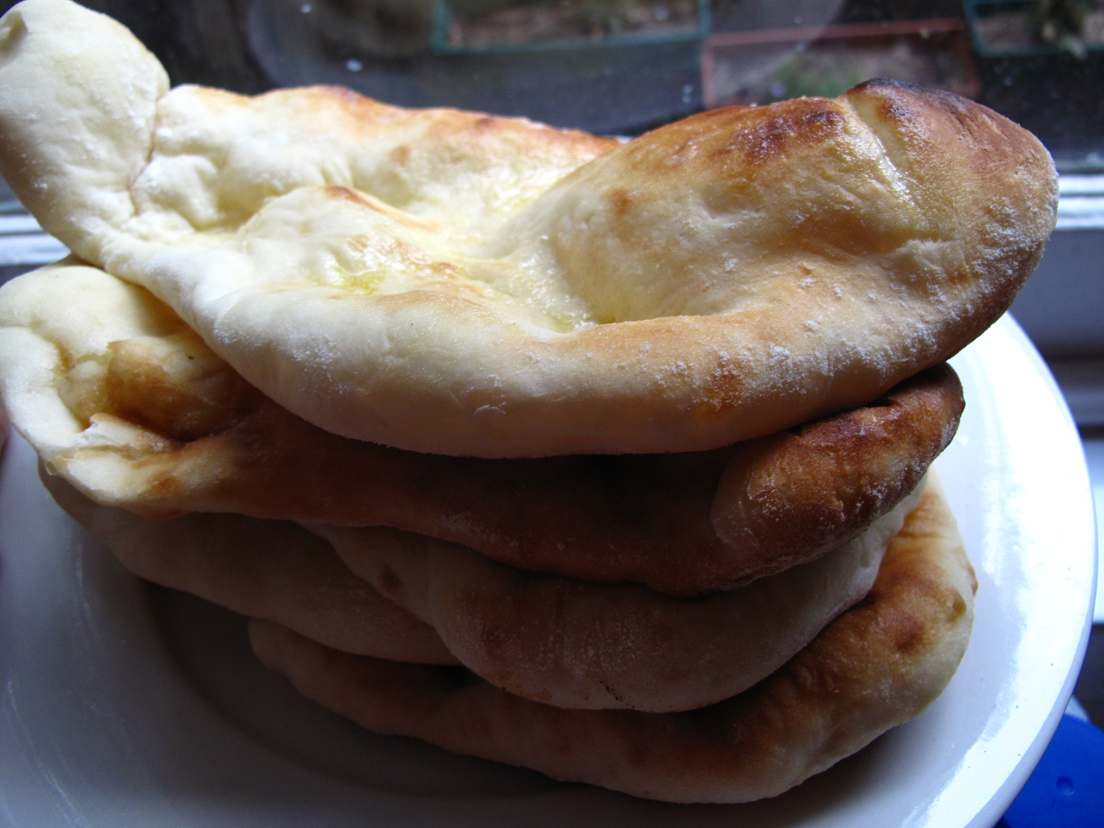
Knead dough on floured surface for 5 minutes, then divide into 6 portions. Roll out into rounds. I pulled one side to get the traditional ‘teardrop’ shape that you would get if cooking in a tandoor oven.

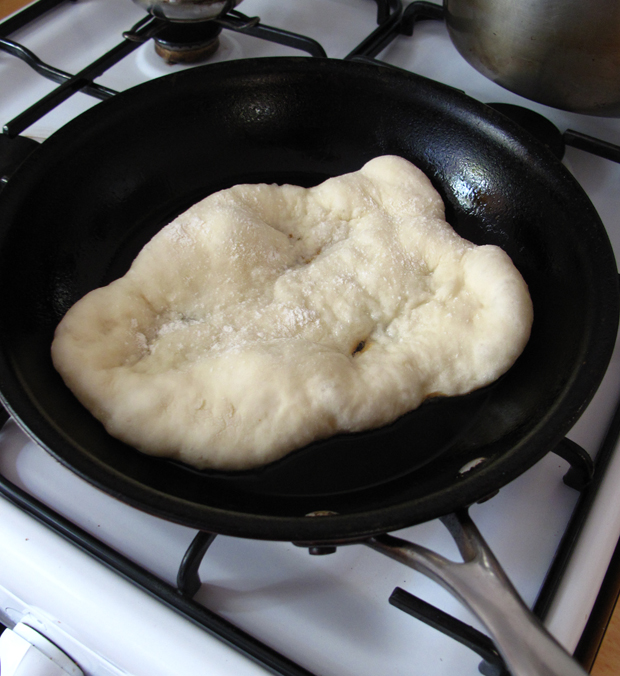
Cook in a very lightly oiled frying pan and pop the frying pan under the grill to get those distinctive brown puffy circles to finish it off. Brush naan with remaining ghee or butter.

Community Exchange System

Todays post is about giving the local trading network a bit of a mention. Its a great concept, and if more people got involved who knows what could happen!

So what is it?

The Community Exchange System (CES) is a community-based exchange system that provides ways  for its users to exchange their goods and services, both locally and further a field. A global trading network that operates without money.

Say what?… No money?… uhuh.

The CES has no physical currency. So no money changes hands at all.

Around the world these systems may be called-  Community Exchange SystemsLocal Exchange Trading Systems (LETS), Mutual Credit trading systems or Time Banks.

Here where I am its called LETS. Or Local Exchange Trading Systems.

Every members time is of equal worth. One hour of time is worth 20 ‘operas’ (depends on the area is what they call the currency). Every member has an account that they set up on joining. When Jackson pays Mack 20 operas for a personal training session then it goes into the account. Jackson is -20 and Mack is +20. So Mack has just ‘created’ his own money. Which he can then use for a massage with Julia.

And so on and so forth. There is no limits. Everyone has something to offer and people always want something.

Some examples of what could be on offer.

House cleaning

Babysitting

Personal trainer

Kids face painting for parties

Cakes

Gardening

Holiday accommodation

The possibilities are really endless….

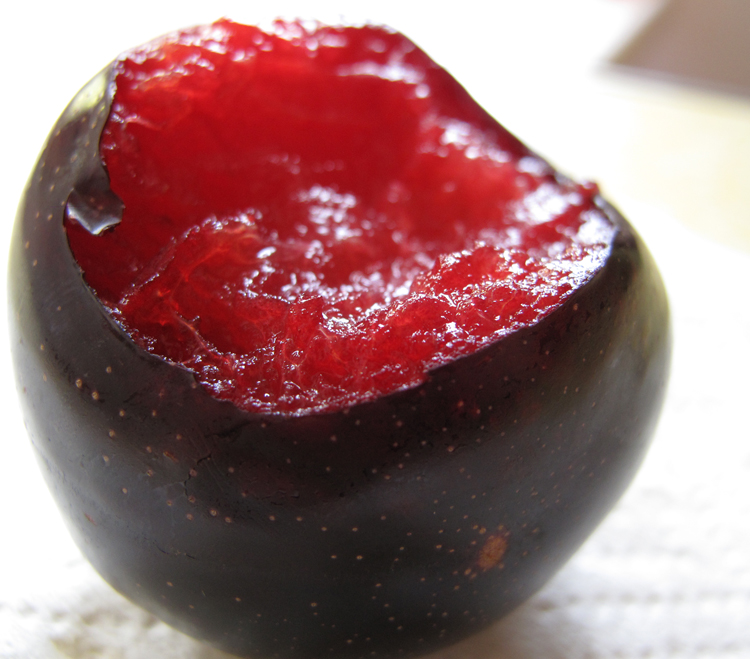
Plums Plums Plums….


What to do with a huge box of plums destined for the garbage as considered too ripe? Bring them home and make…

Plum Jam– not quite the same without the vanilla bean, but certainly passed the family test. My 18month old opened his mouth like a little bird, “more, more”.

Plum Crumble– the humble crumble is a staple in our household. Even though its been a regular on my cooking list for a really long time it still is a favourite. So versatile, use what ever you have got as long as some kind of fruit and butter goes in everything else is interchangeable.

Plum BBQ Sauce– not sure about this one yet, I haven’t made it before. The sort of thing you taste, let it roll around on your tongue a little, swallow and then you are still not sure so you try it again…

Plums stewed– straight into the freezer for another time.

Plum puree– also in to the freezer for food colour of a birthday cake at some stage.

I do get a certain sense of satisfaction making all these things from something that was just going to be tossed out. If I could only get more jars I would be making pots and pots more of jam. It is such a good thing to store in a cupboard or for a little present for someone.