landshare Australia

Last year some time I wrote about communal gardens and roof top vegetable patchs in the city. From there I was put on to the organisation Landshare in the UK, brought together by River Cottage (Hugh Fearnly- Whittingstall). That in turn led me to the Australian Landshare project, which hadn’t yet launched…(still with me?) Well now it has launched. It’s off and racing and needs peoples support for it to be as successful as the original one.

So what’s it all about?

“Landshare Australia brings together people who have a passion for home-grown food, connecting those who have land to share with those who need land for cultivating food. The concept of Landshare began in the UK, launched through the River Cottage television program in 2009, and has since grown into a thriving community of more than 57,000 growers, sharers and helpers across the country. Now that Landshare is here in Australia, we welcome you to come and take part in this fantastic initiative.”

Landshare is for people who:

  • Want to grow vegetables but don’t have anywhere to do it
  • Have a spare bit of land they’re prepared to share
  • Can help in some way – from sharing knowledge and lending tools to helping out on the plot itself
  • Support the idea of freeing up more land for growing
  • Are already growing and want to join in the community

Landshare Australia

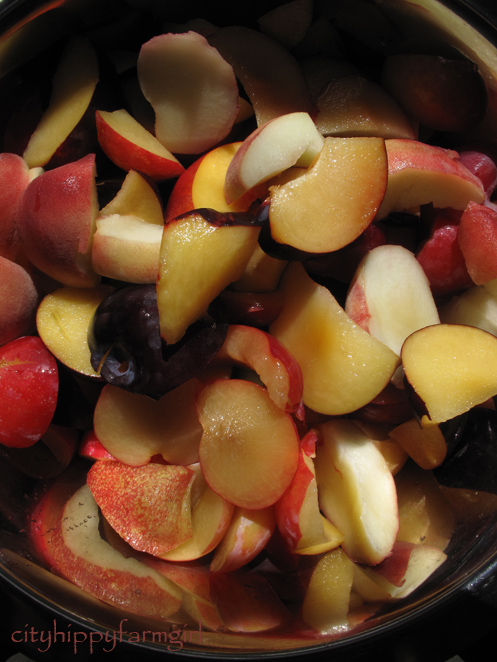
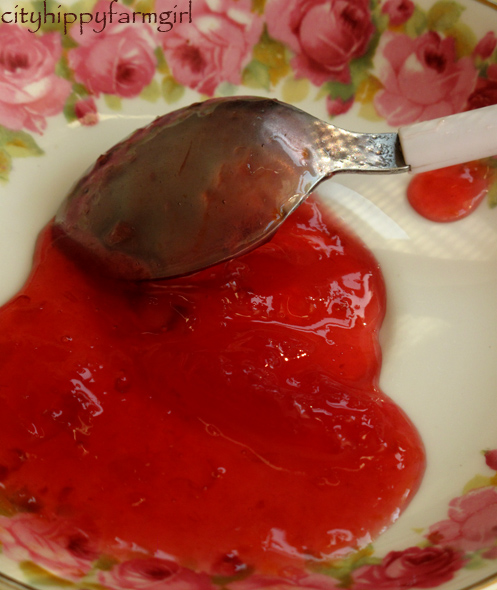
summer loving jam


I don’t know if this was the best name for the jam. It’s been such an odd summer. Bakingly hot this week, a huge cyclone hitting the country and catastrophic flooding in recent weeks. The middle of the night being woken by the smell of a fire, it’s certainly been an odd summer. Fruit and vegetable prices are set to increase due to the natural disasters effecting so many farmers, so I actually feel kind of lucky to be able to even make this jam. To be in a position to cook up and store some of summers beautiful stone fruit offerings. Eaten mindfully and enjoying every spoonful that’s for sure.

Jam really is so easy to make. It’s been said countless times before, but it really is such a great way to preserve the season.

Equal parts sugar to fruit, (generally) if needed some pectin of some sort. Cook it up until it thickens and hey presto, done.

Summer Loving Jam

plums- two kinds

peaches

nectarines

juice of one lemon


ratio

1 kilo fruit

1 kilo sugar

500mls water

I just roughly chopped the fruit and then gently with a hand held mixer, blitzed any big lumps. If you don’t have that, cut it finer, (or enjoy your lumps.)

Cooking at a rolling ball, until cold saucer test stage. In to sterilised jars and store.

a new hook in town…it’s crochet time


I’ve always kind of liked the traditional ‘nana’ crafts. Making jams and marmalades was fun even as a teenager. Knitting, although certainly not skilled at it. I find knitting straight up and down rather therapeutic, (and one can never have enough scarves in a mild temperate climate.) I have an ambition to make cakes for the CWA. I like getting up early. My mother plays music to loud. I’m prone to the odd nod off on the couch during a movie. And sensible shoes make sense, high heels don’t.

See. Me and being a nana, it would work.

Now one thing I had always dismissed as truly an old lady craft was crochet. Old ladies did that. Ones that couldn’t knit properly. Crochet was for cheap man made fibres crocheted together to make lap blankets. Dismissed. I also couldn’t do it. Some how I had missed that hands on lesson as a kid. My older family members could all do it, but not nana girl here.

Something happened though. Somehow my nana rader was switched on and I knew there was another craft that needed to be looked at. My crochet light had been ignited. I wanted to play.

One lesson with my mum. Her saying, I taught myself as an 8 year old helpfully floated around my head.

A kids how- to book from the library was borrowed.

I was off. How much fun is a little hooked stick and a ball of wool!

Now I am still practising, and my efforts still look like that of a child’s, but jeez its fun. The possibilities are endless.

Little crocheted purses filled with chocolate for Christmas gifts (bottom picture), an alternative to ribbon (top picture) dressed gingerbread men


Next, I’m thinking crocheted tissue box holders, underpants, and toilet seat covers.

Now how good will that be.

meat…could you? would you?

I have meat on my mind. Not the usual thing on my mind and a little less exciting than the next sourdough to construct, but non the less it’s there.

A few things in blogland had prompted the thinking and also just a natural progression I guess of wanting to know where my meal comes from.

This household doesn’t eat a lot of meat. Monkey Boy and Mr Chocolate really enjoy it, but Little Monkey and I can take it or leave it. Free range chicken, organic minced beef, free range ham, and organic sausages seem to be the usual selection of what we choose from. Nothing too exciting there. Over the years, other meaty items just slowly got bumped off. Canned tuna, daily ham on sandwiches, fresh fish…all for various reasons, now don’t usually find themselves on our every day dinner table.

In my little world, the majority of our meat is bought from the supermarket, butcher, or if I’m lucky enough some farmers markets. Ideally what am I looking for? Meat that has been ethically raised, sustainably produced, not compromised on taste, and at a budget that doesn’t hurt the hip pocket. Is that just too hard though on a day to day level for most people?

Many people can’t argue with the convenience of a supermarket. However there is an increase in buying organic, local, free range pieces. If I can manage to get it, I love being able to buy meat either straight from the producer (easier at a farmers market) or at least knowing the area in which it is from and buying through a middle person.

Some of my recent meaty prompter’s…

Pick a pig– Friends put me on this link from the UK. A system that lets you buy your animal, it’s reared by the farmer, slaughtered and then gets delivered to you in the cuts you ask for. A large up front cost, but….you are getting a whole lot of pig there. Also you know where your pork cuts are coming from. I would love to know if there are any people doing something similar in Australia. On a large scale this is a really interesting way of cutting out the middle man. Another similar scheme again in the UK is Yorkshire Meats

Perennial Plate, an online short documentary style programme on sustainable foods- warning it is a little graphic.

Gourmet Farmer– you know I am a fan. What the man has documented on his show is his journey of going from city fella, to small town living. Rearing animals for his own consumption, learning how to kill chickens, and send his heritage breed pigs to the slaughterer.

Slow Living Essentials- cute fuzzy ducks, and I was thinking dinner.

So whats my beef? (every pun intended.)

Have we become completely desensitized to seeing animals being killed for our plate? I know I don’t feel completely comfortable with it. I would like to think I could do it. Raise an animal, bump it off and then eat it, but could I? I feel if I am willing to eat it, I should be willing to admit that cute little piglet is going to get its head taken off and make some truly delicious ham. It could be a real turning point to vegetarianism for me. However… I would like to think I could rear an animal and either assist in some way in the slaughtering process or do it myself…. Confronting as it most certainly would be.

When you see the meat being sold in the supermarket all wrapped in styrofoam and plastic, all cut up and ready to go. There is usually very little to show you that this pink piece of flesh was once a mooing four legged creature. Feathers still stuck to your chicken pieces? Most people get rather unhappy if this was the case. I remember unloading some groceries from the supermarket in Italy once and there tucked away under the cling wrap and styrofoam was Ms Guinea Fowls head still intact. In my world, I’m not used to that. If I see meat I don’t expect it still to look like the animal it once was. I don’t want any happy memories of a life it once had floating around the room still. But this also seems ridiculous…almost a little precious. It is meat, which means it used to be an animal. Is that as silly as denying a chip in front of me used to be a potato growing in the ground?

Is it merely enough to know what you are eating and where you bought it from? There being no need to kill it yourself, when some one else can do it for you? Will more people begin to choose their meat while thinking of it being sustainably sourced, organically produced, locally harvested and ethically raised. I would like to think so, but feel we have a loooong way to go first. It’s turning around a whole mind set. A whole meat eating culture that needs to be slowly changed.

Should we be taking a moment to acknowledge and honour the life that has been giving up for our plate?

I understand why someone would become a vegetarian for ethical reasons. I also understand why people truly enjoy eating meat. (we still talk about that pork dish at ARIA.) I do think however, that people should know where their dinner came from if at all possible. How many primary schools would teach young children about where their meat comes from? How many parents would talk about it to their young children? How many highschool students would get to study the make up of an animal, different breeds, how to raise them, slaughter, and then cook them? (Agriculture is a chosen subject, in very few highschools.) If this is a part of our every day lifestyle why wouldn’t we be able to learn about it from the beginning.

English, maths, science, food*.

Incorporate it in to learning how to grow, and harvest vegetables. Surely these are important principles that people seem to be so far removed from these days.

I’m still trying to work out where I stand with it all. It’s not easy. Do you eat meat because it’s there, it’s healthy, it’s what everyone else does? Do you eat all parts of the animal avoiding any wastage? I’m not a fan of any kind of offal, however it does seem rather silly to breed a huge beast for consumption and then only eat half of it.

I would like to think that any meat I ate was treated as humanely as possible in their life beforehand. A chance to live as a young calf, piglet, lamb should, before going ‘down town’. Being mindful of every mouthful of meat that I eat. Being thankful that a life has been given up to feed my families belly’s. Thinking about it where it came from and not taking it for granted that I am here and I need and deserve to eat that eat meat! Happy paddock loving animals look differently to large production ones. Australians are one of the top meat eating countries in the world. A weekend BBQ isn’t usually a success unless there is an array of meaty goodies on offer.

Now I could waffle on and on about this meaty topic and go round and round in circles. For the sake of not boring you all to numbing tears I wont. However I will pass this over for discussion. (Feel free to disagree.)

What do you believe in?

Is buying our meat at the supermarket simply progression? Modern times. We have moved on from backyard butchery. A time now of convenience of food…

Do you consider where you meat comes from when selecting it for the dinner table?…

Do you like having that distance between you and that furry beast/ succulent juicy steak on your plate?

Could you rear and slaughter your own animals for eating if you had access to it. (Either via someone elses farm and livestock, or your own.)

…and would you want to?

*******

* I know that in some wonderful schools the Edible School Yard programme or Kitchen Garden programme is up, running and doing really well. This is still a minority in most schools as far as I am aware though. It is also still dependent on the community to get it up, running and maintaining it.
garlic

Allow me a rant, just a little one…

Big inhalation now…so I can feel the rant build up a little.

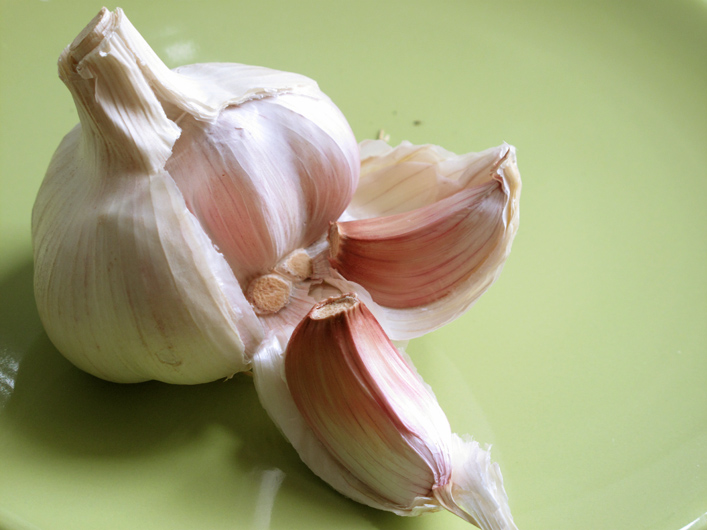
Garlic. I’ve mentioned it a little before, but have restrained myself in the past, because…it gets me a little het up. (Garlic and canned tomatoes, but I’ll save that one for another post.)

Today though, I’m letting the garlic flag fly…

I love cooking, and I love using garlic in my cooking, and yet in recent times, there haven’t been too many dishes with even the hint of garlic in them. Why? Because I don’t want my garlic to come from China. Nor Mexico, or Argentina and these are the countries that we frequently import our garlic from here in Australia. I have nothing against these countries, I just really want to eat Australian garlic. From my readings, it seems that the majority of our imported garlic is from China where every bulb is rayed, sprayed and then resprayed against ‘critters’ coming in at quarantine. (Strict quarantine laws in Australia, require many products to be treated with methyl bromide.) That is a lot of handling for a little bulb, that by the time it gets to the supermarket shelf it’s old, wrinkled, soft, and bless its little heart ready to try and shoot. Tasteless and disappointing.

Where have all the different varieties gone? Where have our garlic options gone?

Garlic happily sits in so many flavoursome dishes. It brings a tasty depth, that few other vegetables can compete with in the same way.

I’m getting garlic envy from all the lovely blogs I have seen with tantalizing pictures of their freshly harvested garlic. I recently bought some “spring garlic” or green garlic from the farmers markets and it was divine. Stalks and all, a little bit more subtle than when its has been dried, but truly delicious and locally produced. Every meal that those little green stalks and bulbs went in to was treated as it should. With gratitude and thanks, and more than a little smacking of lips. It makes a meal. (Maybe wouldn’t make a cake…but I wasn’t going for the garlic chocolate cake combo anyway.)

Garlic is planted in the cooler months and harvested in the hotter months, approximately 17-25 weeks after planting. If you have any space at all, I highly recommend giving growing your own a go. I don’t have any. I tried doing it in pots and it just wasn’t in the right position for growing. So now I just get to look longingly at others growing it and put my nose in the air in a huff when I see the sad little excuses for garlic for sale in the supermarket. That is, until I see some locally grown garlic for sale and then will be pouncing on it with gusto.

So tell me, where does your garlic come from? What types can you get? Do you grow it? Do you find it tricky to grow? I would love to hear your garlicky stories…

*****

More information on growing garlic here.


bees and honey

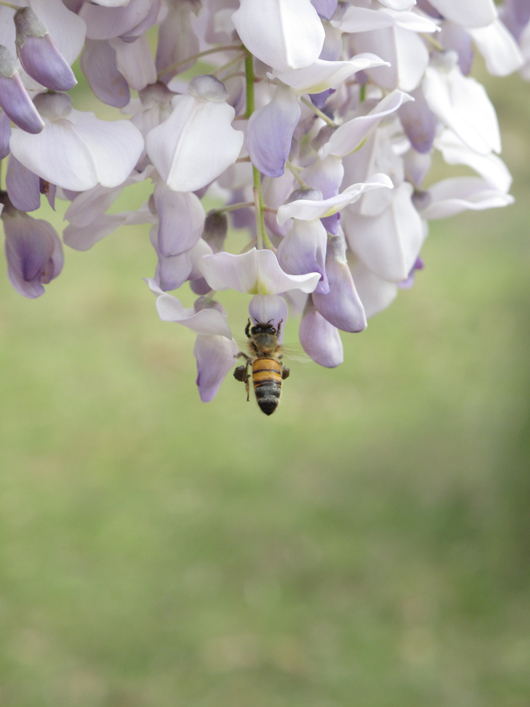
I was watching some bees recently. Silently going about their business, buzzing around from one flower to another. Watching how their pollen sacks got more and more full. One poor bee could hardly keep himself up he was so laden down with pollen goodies. It was so peaceful just standing still and watching them.

From where I was standing I could see about 50 bees all gathering their pollen to take back to their hives and create liquid gold. Honey.

We had passed some hives earlier on, and it was quite possible that these little fellas would be making the 4km trek back to these same hives. Bees may travel for up to 10km in search of nectar, pollen and water if they have to. So would it be these same bees? Or were there enough flowers in their immediate hive area. In an ideal setting a bee would travel just 200 metres in search of food.

Within Australia many bee keepers will move their hives along with the changing flowering blossoms. By doing this the apiarist helps the bees find the best nectar around. The hives are usually moved at night when the bees are sleepy, and tucked up in bed.

Five little things about bees and honey

1/ Bees talk in vibrations

2/ Honey doesn’t go off.

3/ Honey can be linked back to Egyptian times.

4/ Honey can be used to soothe a sore throat, ease a coughing fit and aid sleep.

5/ Honey is a natural exfoliant when used as a face mask. No need for expensive chemical laden products.

The European honey bee was introduced to Australia in the early 1800’s. This is the type of bee that most commercial apiarists will use. There are native Australian bees, (approximately 1500) however the majority of these only produce enough honey for their own use. Only 10 out of the 1500 types of native bees produce and store honey. Sonya from The Novice Bee Keeper is a great place to start if you are interested in keeping bees or just want to know more of the processes involved. Spice and More has also just started up some backyard bees, for another interesting peek at beekeeping.

Honey is such a magnificent product. I can’t help but be a little in awe of it when I am spooning it out and drizzling it on some toast. The flavours that can be so different. The subtle changes in the different types. If you want a more flavoursome honey, try a darker variety. Generally these will be the stronger in flavour ones. Here in Australia the majority of our honey comes from the hundreds of types of eucalypts, with a few other native plants added in for more subtle flavours.

Leatherwood (from Tasmania) stringy bark, yellow box, and blue gum are just some of the types of honey produced here in Australia. So much tastier than a blended bland super market honey.

With that production of honey also comes fertilization. Fertilization of so many crops that we depend on both here in Australia and the rest of the world. (A list here on the extensive amounts of crops requiring pollination from bees.) What will happen if that pollination doesn’t happen?…Why wouldn’t it happen? Pesticides, parasites, disease, loss of habitat, farming methods all are possible contributors to the world’s downfall of bees.  Colony Collapse Disorder is a name that has been thrown around a lot in the last 5 years. Are we going to be hearing of it even more in the next 5?

Did you know that the honey bee speaks Parisian street slang? Many city centre roof tops are producing honey from their own bee hive or two. Helping out with pollination within the city limits and producing gorgeous honey for its city dwellers living downstairs. I’ll be right back dear, just popping up to the roof for some honey… I can certainly see the appeal in that.

So what can you do?

* support local honey production, buy some of the liquid gold.

* plant bee (and other pollinating critters) friendly plants. You don’t need a whole garden. Even a single pot is something. Some plants bees are attracted to, lavender, bottle brush, eucalyptus, rosemary and basil. These are just a tiny few of the possibilities for plant attracting. Have a look in your area and see what is available and suitable to the climate.

* If you have the right space consider some back yard (or rooftop) bees.

There is so much information on bees, home bee keeping, colony collapse disorder, honey that I have only just skimmed the surface with this post. So many things to think about while watching the next little buzzing bee quietly buzzing about doing its thing.


foodconnect

For quite awhile now I’ve been frustrated with my vegetable eating options. Actually…no. It’s not the eating options, it’s the buying options. Ideally, I’d love to be growing them. However living in a flat in the city with a designated area that’s not optimum for growing, my growing in pot choices are limited. So what are some other choices available to the average city dweller?

* Super market bought fruit and vegetables- big business

* Independent green grocer- small business

* Farmers Markets

* Wholesale Markets

* Box schemes- quite often delivered to your door

* Community gardens- add your name to the waiting list and grow your own

* Food Co-ops- member owned and operated, bulk goods

* CSA- Community Supported Agriculture

Choosing how you get your fruit and vegetables depends on many things, so it feels like it’s been a long time coming that I’m finally happy with a fruit and vegetable scheme that works for us.

Four weeks into my new CSA fruit and vegetable box and I couldn’t be happier. It suits our family, the quality is fantastic and it works for me. Hoorah!… I found it in Foodconnect.

Foodconnect uses local sustainable farmers, bringing their produce to city folks like me. Box gets dropped off at a local drop off point, where you pick it up once a week, and go home happily munching on the seasonal goodness. All boxed and ready to go, all you have to do is pick it up from a local ‘city cousin’.

So it’s local, organic, seasonal, easily pay from 4 weeks- to a year, it’s not the same fruit and veges each week, supports regional growers, farmers get a good price, super super fresh, has got us eating different vegetables, (I was in a vegetable rut and didn’t even know it) if I don’t like something there is a swap box and I don’t have to do anything but pick up the box. Pretty good deal I think.

* I’m always happy to see a caterpillar or slug in my organic produce. To me, it means it was pretty darn happy just to hang out in the leafy goodness, and also shows that it’s really fresh. Saying that, I would prefer to find them before I eat the leafy greens and not after, wiggling out of the kitchen sink. All this does to me is question my washing skills and did I just inadvertently eat its sluggy cousin?

Now there’s a cheery thought…

Sydney Foodconnect

Adelaide Foodconnect

Brisbane Foodconnect

wrap it a little differently

I really like thinking of new ways to give presents to people. I’ve always thought it was a bit funny the idea of buying gift paper, wrapping a present and then watching it being ripped to shreds by the recipient. Not that I don’t like giving presents, I do. Actually I love it. However, if it’s expensive beautiful paper it seems like such a waste and if it’s cheap, well it’s still a waste. I’ve mentioned before using chocolate wrappers which if you go through the quantity that our household does certainly puts it to good use.

Christmas is still a little while away, but if you like these wrapping ideas they may take a little while longer to accumulate.

1/ Old maps make perfect wrapping paper. They are square and flat. Easily bought in second hand shops where they are quite often sold very cheaply as areas change. Places get outdated easily. Looks funky too, well I think it does. Add a ribbon or some wool, tying it up and gift is ready.

2/ Old movie or music posters. Quite often sold in music stores cheaply as they were advertising a band or album that was coming out. For the music or movie  fan this can make an exciting present….(well the wrapping of it anyway.)

3/ Turn your head slightly on the side and look at your food packaging slightly different. Bulk rice bought in a bag can be a wonderful way to present a gift. Linen sack of oats, beans, coffee can all be done the same way. Just have  a look around. This one is a zippered 5 kilo bag of basmati rice.

4/ Second hand stores are usually brimming with baskets of varying sizes. Save wrapping a present altogether and present it in a basket.

5/ Use retro fabrics, easily picked up in second hand places, (or auctions). Hold the fabric together using ribbons or wool.

6/ Use simple brown wrapping paper that hasn’t used dyes and decorate it yourself. Draw your kids hands all over it and get them to decorate it. Paint some flowers all over it. Or write little messages all over.

So many possibilities.

Bamboo Toothbrushes- you might want to try it

A little while ago I was trying to find out what my alternatives were to using the conventional plastic handled toothbrush. I’d like to keep my teeth, so the brushing twice a day for the rest of my life is quite the long term plan. Now if I changed my toothbrush every 3 months as reccommended. Add in the odd change of toothbrush after illness. Times that for the next 60 years (I’m optimistic). That’s a lot of toothbrushes!

All sitting in their landfill graves. Silently sitting and waiting to break down. Waiting…waiting…waiting…waiting…

Now there are a few alternatives out there on the market at the moment and I’m sure give it another few years and there should be a lot more readily available options to the average consumer. However for the most part, the average plastic toothbrush is what sells. Looking at a few of my options, I could get a 100% recycled plastic toothbrush, made from yoghurt tubs, (made in USA). I could use a twig from an appropriate tree, or I could use a bamboo handle toothbrush… Bamboo sounded good.

Step up, The Environmental Toothbrush. Simple biodegradable packaging, looks just like the picture and how does it brush?…

Really well! The head is small enough to get in at the back teeth. The bristles are soft, works well on the gums and that little fella knows how to clean. To be honest I was slightly hesitant when I first saw it. How can something so basic looking work so well? However after giving it a go, I was left nodding to myself muttering that’s a good tooth brush, and with sparkly clean teeth to show for it.

The toothbrush was designed by an Australian dentist. It’s biodegradable, environmentally sustainable. When you throw it out, it simply breaks down into compost.

If you would like to give this toothbrush a red hot go, (not the one I was using obviously!) I’m giving one away. To get one for your pearly whites, tell me something about teeth or bamboo. Anything you like. An interesting fact about bamboo, or a story about your Nana’s false teeth, what ever takes your fancy…Post a comment by the 3rd of November…seriously, it’s a really good toothbrush.

* Top photo from G magazine online.

EDIT- Congratulations to Christine from Slow Living Essentials for getting the Bamboo toothbrush.

5 tips for Clove Oil use

Clove Oil comes from the flower buds of a clove shrub or tree. It has many different uses. From being used in cooking (the dried spice) to numbing a painful tooth, to inhibiting the growth of mould. It has antibacterial, anti-fungal, and anti-inflammatory properties. It can be used as an analgesic, expectorant also as a mood uplifter. This is another little to thing to add to your household must haves. (Along with Bicarbonate of Soda, Eucalyptus Oil and Vinegar.)

Clove Oil is very potent, and a strong skin irritant so be careful when using it, (also around kids).

5 Tips for Clove Oil Use

1/ Clove Oil is a mould inhibitor, so can easily be used for wooden furniture with mould spores. Clean area first then allow to dry. With a dry rag add a few drops of the oil and rub over the effected area. It will inhibit the growth of more mould.

2/ Clove Oil can also be used as a dental anaesthetic. Dip a cotton bud into the oil and then dab on to the tooth or surrounding gum area that hurts. It has a numbing effect.

3/ Used in aromatherapy, the oil has a calming effect on the nervous system. If using an oil burner, just one drop should do the trick and get the lovely smell wafting through the air.

4/ For mould in bathrooms, especially ceilings. First clean effected area with bicarb/vinegar solution, then using a spray bottle use diluted clove oil with water to spray on the effected area- this inhibits the growth of mould spores. A dry rag with a few drops on it and rubbed in to the area also works, (depends how high your ceilings are.) Big plus, it smells so much better than cleaning with every day cleaning chemicals.

5/ Clove Oil can be bought just at your local chemist, usually in the dental area.

Permaculture Diary and Sustainable House Day pictures

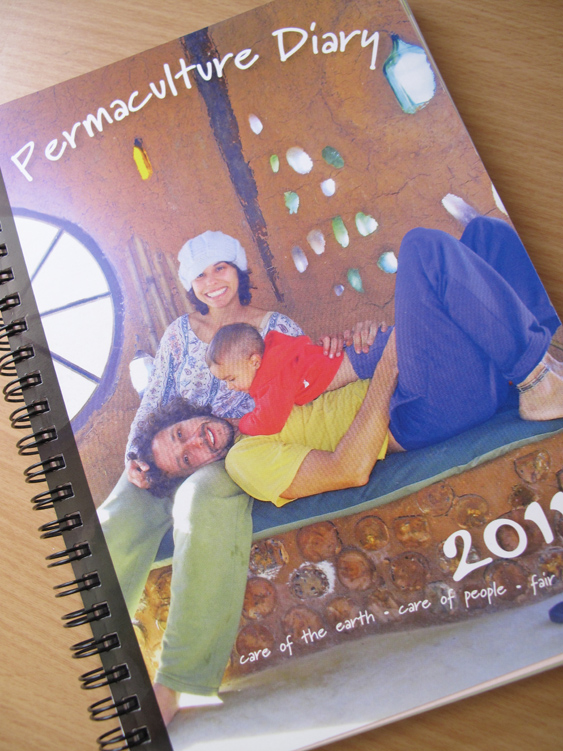
I just got my 2011 Permaculture Diary and I have to say I am thrilled to bits at the quality. It’s printed through Permaculture Principles and so much information is in there that you will be skipping ahead to see whats happening in the next month.

From seasonal planting guides to introductions to some truly inspiring people. The lovely Dylan from frugalist massive is in there talking of suburban wwoofing. Happy Earth and how they have transformed their suburban back yard along with lots of other inspirational people doing their ‘thang’.

Now even if you recoil at the sight of dirt in your finger nails, and think double glazing is only for donuts- it’s still a great read, and you get to write all your doings in the calendar bits.

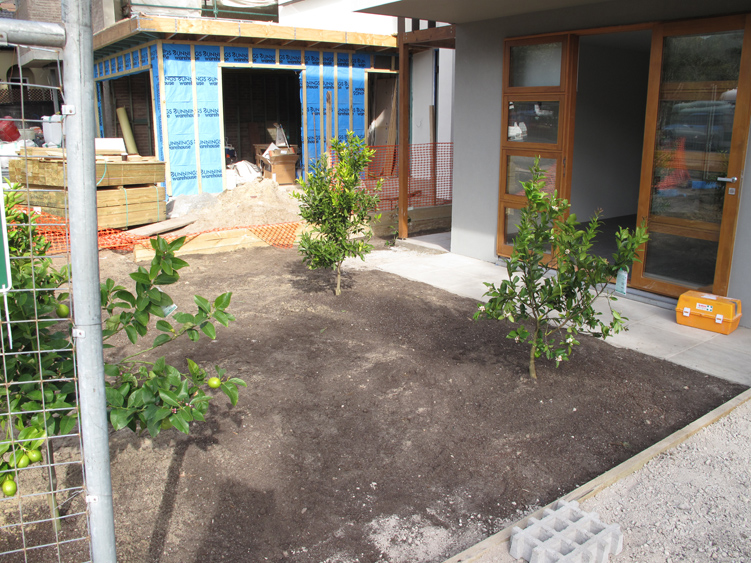
Sunday was Sustainable House Day and a few photos of some of houses we visited.

This particular one I was thrilled to see, especially after writing about lack of edible gardens in this post. A new building due for completion later this month. Four citrus trees planted in its front garden, with more edible gardening out the back.

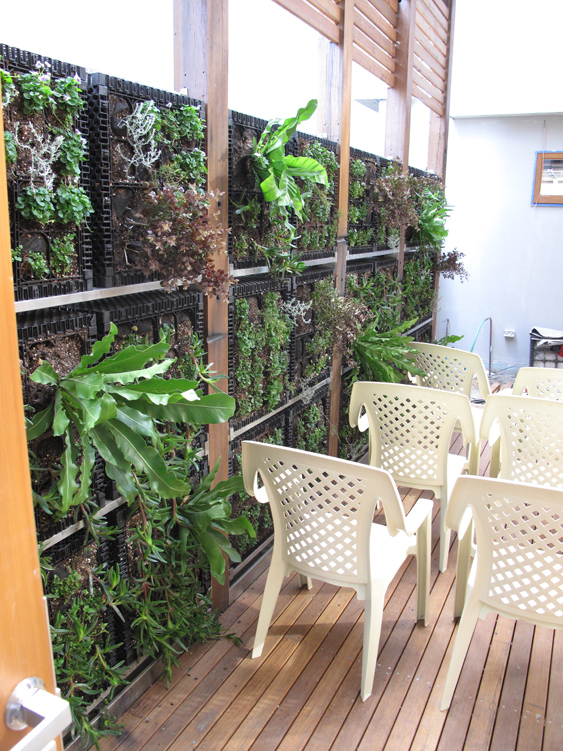
An internal courtyard, with louvred roofing. This makes it possible to cut out sun and rain or open the whole area up for cooling. (No air conditioning in this house.)

The side of the internal courtyard had a green wall. Filled with all sorts of plants, some edible and others just to add more lovely greenery.

Over all we spent a really interesting afternoon getting to check out 3 totally different houses. From simple renovating ideas, new building constructions and a tour around a sustainability consultant/architect own house.

More ideas for us to chew on and The Monkeys didn’t break anything!